Off the Cuff and On the Rail with Carson Kressley


In this episode of The Long Ride Home podcast, we are joined by Carson Kressley, Emmy Award–winning TV personality, style expert, fashion designer, interior designer, New York Times best-selling author, and lifelong American Saddlebred rider whose love for the breed began when he was just 13.
Long before the television career and the world of fashion, horses were already shaping Carson’s life. What started with one unforgettable encounter with a Saddlebred became a lifelong connection to the breed, the people around it, and the lessons that come with being part of the horse world.
Carson and Alex look back at the unexpected turns that took him from horse shows to New York, Ralph Lauren, and eventually television, along with the people and opportunities that helped shape the journey. They also talk about the ways horses have influenced how Carson approaches preparation, creativity, showmanship, and even success itself.
The conversation eventually turns toward the Saddlebred world today, from Carson’s recent win at Louisville to a bigger question about visibility: how do more people discover a breed they may not even know they are looking for?
Episode Chapters
02:49 - Carson’s early life around horses and ponies
05:09 - The Saddlebred that stopped him in his tracks
09:38 - Where his love of fashion began
14:40 - How horses helped open the door to New York
18:33 - The unexpected path to Ralph Lauren
20:52 - Saying yes and following unexpected opportunities
34:01 - What horses have taught him about life and work
37:20 - Preparation, improvisation, and knowing when to go off script
39:44 - Winning at Louisville after nearly 40 years of attending
41:10 - Social media, visibility, and getting more eyes on Saddlebreds
50:18 - What success means to Carson today
55:31 - His advice for anyone thinking about coming back to horses
Through every unexpected turn, the horse world has remained one of the constants in Carson’s life. And after decades spent both inside the Saddlebred industry and in front of much larger audiences, he brings a perspective that reaches beyond the show ring: on what keeps people connected, what makes someone fall in love with the breed, and how more people might find their way into this world in the first place.
Connect with Carson:
Linktree: https://linktr.ee/carsonkressley?
Podcast: https://www.youtube.com/ @OfftheCuffwithCarson
Follow us on Social Media:
Facebook: https://www.facebook.com/thesaddlebredpodcast/
Instagram: https://www.instagram.com/thesaddlebredpodcast/
YouTube: https://www.youtube.com/@thesaddlebredpodcast
#americansaddlebredpodcast #saddlebredindustry #equestrianlife
02:49 - Carson’s early life around horses and ponies
05:09 - The Saddlebred that stopped him in his tracks
09:38 - Where his love of fashion began
14:40 - How horses helped open the door to New York
18:33 - The unexpected path to Ralph Lauren
20:52 - Saying yes and following unexpected opportunities
34:01 - What horses have taught him about life and work
37:20 - Preparation, improvisation, and knowing when to go off script
39:44 - Winning at Louisville after nearly 40 years of attending
41:10 - Social media, visibility, and getting more eyes on Saddlebreds
50:18 - What success means to Carson today
55:31 - His advice for anyone thinking about coming back to horses
Alex Husner
Let's go back to the beginning a little bit and hear the story about how you got into horses in the first place because you've been in this for almost your entire life.
Carson Kressley
So it gets back to little Carson S fancy three-gated horse almost ran me over. And I was like, what was that? And the woman had on like a tuxedo and a top hat, and the tail was, you know, big and beautiful and fluffy and arched over its back. And I was like, I need this. I was just, you know, captivated, mesmerized.
Alex Husner
Everybody that you've mentioned so far, they've known you before you are the celebrity version of you too. Those people knew you so much before everything else that has taken shape in your life.
Carson Kressley
The horse show world, I think the thing I love about it most is it's a permanent family for you. Land at a horse show and you're just like exhale and you're like, ah, I'm with my people.
Alex Husner
You just won at Louisville this year with your pony.
Carson Kressley
So congratulations on that. How cool is that? I'm still on Cloud Nine. I still kind of did that really happen. I have been to that horse show for 39 years to win there. It's always unbelievable. It's ethereal.
Alex Husner
We talked a lot about the media impact, collective numbers and the millions of how many people she reached with this content is unbelievable.
Carson Kressley
We really need to figure out a way to harness that attention. My theory is that you don't know you want it until you see it in the window. What's the new window? Is it online? Probably. And how do we harness that?
Alex Husner
Welcome to the Long Ride Home. I'm your host, Alex Husner. This show is about honoring where we come from, pursuing what still calls us forward, and trusting the power of timing in both life and in sport. Through honest conversations with riders, trainers, and leaders in the American saddlebred world, we'll explore the stories behind the horses and the people shaping the future of this industry. Come on this journey with me. Welcome back to the long ride home. I'm your host, Alex Huesner, and I have a very special guest today. I'm joined by none other than Carson Cresley. Carson, so good to see you.
Carson Kressley
Great to see you. I'm glad to be here. I love any chance I get to um, first of all, I love doing pods because I love blathering on, but I also talking about horses, especially saddlebird horses with a fellow lover of the breed is always fun for me. So thank you.
Alex Husner
Yeah, absolutely. And uh you actually just started your own podcast recently too, which is pretty exciting.
Carson Kressley
I did, yes. Let's do a plug right now. It's called Off the Cloud, and it's a celebrity-driven podcast with, you know, some of my famous friends. But I'm hoping that will expand to a lot of different topics because I just I like talking to interesting people about interesting things, and I'm curious. So we launched, I think, almost a month ago, and it's doing really well, and we've had some great guests. So after you listen to this podcast, everybody, go and listen to
Carson’s early life around horses and ponies
Carson Kressley
Off the Cuff with Carson. And it's available wherever pods are cast.
Alex Husner
Yes, absolutely. It's great too. I I've listened to I think three episodes now. And the first one that I listened to was with Robert from Shark Tank, who I've always been I say Robert from Shark Tank because I can't say his last name. But I've always been a huge fan of his. And gosh, he's just got so much incredible insights and knowledge and just good nuggets that he shared in that episode that was really cool. Yeah.
Speaker 1
Yes, thank you.
Alex Husner
Awesome. Well, to get started, so and I mentioned this when we did our pre-call. I have an audience that, you know, it's a lot of people that ride saddlebreds, but there's also people that are not in riding or just maybe not in saddle seat and saddlebreds that listen to the show. So let's go back to the beginning a little bit and hear the story about how you got into your horses in the first place, because you've been in this for almost your entire life. But take us back to little Carson.
Carson Kressley
Okay, picture rates. Sicily, 1930. No, actually, I grew up in the suburbs of Allentown, Pennsylvania, actually more in the country, um, in a rural community right outside of Allentown. And my grandparents, curiously, or really my grandmother, had a pony farm. And she grew up on a farm and there were work horses around, which are, you know, you're not really allowed to have fun with those or play with them. And she would die to have a pony, never did. And then the 1950s or late 40s, that there was a pony fascination in the United States. Westerns were really big on TV, gun smoke and banans and all those things. And people were moving to suburban situations, and the dream was to have a pony in your backyard. So that was a really big part of pop culture in the 50s. And she decided she would get my dad a pony. Well, my dad only likes race cars and you know, mechanics and things like that. So he had no interest, but it was a way for her to get herself a pony, actually.
Alex Husner
Yeah, sounds like it.
Carson Kressley
And um, one pony became two and two became four, and pretty soon they were breeding lots of Shetland, Welsh, hackney, crossbred ponies in Pennsylvania to the point where they had a couple hundred on the farm. And my granddad was a car dealer and my grandmother ran the pony farm. So they were able to do it. And it was a time when it was much less expensive, and they had hundreds of ponies. So I grew up around that and they had production sales, and I still get messages on Instagram like, you know, in 1975, my dad bought me a pony at your grandparents' farm, and we, you know, it brought us
The Saddlebred that stopped him in his tracks
Carson Kressley
so much joy. So I was born in an equestrian family, and we would go to horse shows and we would show Hackney Roadster ponies and mostly roadster ponies because they were the easiest to kind of have at home. And, you know, we didn't have the fancy equipment and the more complicated shoeing that maybe a harness pony or a cobtail pony would require. But we would go to saddlebred horse shows because that's what ponies showed traditionally, along with saddlebreds. They weren't showing with Morgans or Arabians. And when I was about 13, we were at the Quentin Riding Club, and you might have been there when you were with Cricket Hill.
Alex Husner
Children's Benefit, I think. Wasn't that the show?
Carson Kressley
Yeah, it was a fantastic old-fashioned fairground, showground riding club with a clubhouse and really charming rings and old red barn stabling. It's all gone now. I'm sure it's it's like a mega Walmart or something. And um, that was like the biggest the Quentin Riding Club Fall Horse Show was like our like Louisville or our Eastern States Exposition or our North Carolina State Championship. Like every region back then had a big show that wasn't Louisville or Kansas City, but it was kind of the pinnacle of showing in your area. Went to the Quentin Riding Club with my grandparents to show road ponies, and I can still see it. I was, you know, in the warm-up area and some, you know, fancy three-gated horse almost ran me over. And I was like, what was that? And the woman had on like a tuxedo and a top hat, and the tail was, you know, big and beautiful and fluffy and arched over its back. And I was like, I need this. So that was really my first introduction was being at a horse show where there were saddlebreds while we were showing ponies, and I was just, you know, captivated, mesmerized. I just loved everything about them, which I think is an experience for many people. When you first see this breed, you're just like, I've never seen a horse like this. They are so beautifully exotic and so charismatic that, you know, you're just drawn to them. And that was my experience. So I made it my goal to get a saddlebred. And the other thing that was very fortuitous in the mid-80s, there were saddlebred riding barns in and around Allentown. And in fact, my grandparents sold one of their farms to a man named Gail Person who had a place called Blue Gate Farm. And it was really kind of a library stable. Like people owned saddlebreds. That was their breed of choice. And they taught lessons, and we all kind of took care of our horses by ourselves. They weren't in training. You paid board, and if you wanted to, you could pay extra and they would exercise them. But it was a very do-it-yourself kind of situation. And there were places like that in the 70s and 80s where you could do that rather affordably. I think my board back then was like $125 a month. Oh my gosh. Wow. So I was lucky. I had a contact in town that my family knew. This trainer would go to Tattersalls and buy horses and bring them up and then resell them to locals. And I got my first horse, and he came from Brent Jacobs, Workway Stables, and his name was Daddy's Money, which everyone got a great chuckle out of that at the barn. I was like, no, it's actually my money because I stayed to get that horse. And we showed in country pleasure and he knew how to bow and he did tricks and had a great personality. And we did it all ourselves. And I remember bringing him home to our backyard one time before a horse show because we had, I don't know, maybe the barn where we kept in didn't have hot water and we wanted hot water. So we decided we would wash him in our garage. And um, coming out of the trailer, I don't know, he did something stupid and like pulled back and like ripped the lead rope and was running around our suburban backyard loose.
Alex Husner
Oh my goodness. The neighbors must have loved that.
Carson Kressley
But we were just like, please don't, you know, go to the highway. And I think we, you know, caught him rather quickly. But that's how I got started. It was not fancy, it was not very professional, but it was a way in. And that's the most important thing is that there's avenues for people to one, discover the saddlebred, and then two, be able to take riding lessons and learn how to ride and learn how to appreciate the breed. And then hopefully the third step is getting to a horse show.
Alex Husner
Yeah, exactly. I I think your points there are so perfectly that it has to start somewhere. But and even if it's messy in the beginning, you know, those are great memories that you'll never forget, I'm sure. Figuring it out on the fly. I was listening to one podcast. You said that in the way of the horse show, a bunch of the buggies, they like came off the top of the trailer.
Carson Kressley
Yeah, that was another, that was not my fault. Our trainer would take us to, you know, small horse shows, and they were all over. There was one in that that one was in Middlesex County, New Jersey. And almost every weekend we could go to like a small regional show, and we thought it was, you know, incredible. And yeah, somebody
Where his love of fashion began
Carson Kressley
we had mostly pleasure horses, and maybe there were 10 people in the barn that had pleasure horses. So there were 10 carts on the roof of a very big trailer, and someone had taken the rubber, you know, bungee straps off of all of them to unload them. And then somebody in the meantime said, Hey, we got to move that trailer. Yeah. And then when the trailer moved, all of the carts fell off on top of each other, and there was a lot of crunching, and um, everyone was very dismayed because it was at the beginning of the horse show. But somehow the damage wasn't too bad, and we did make it work. And I still have pictures like from that day um showing at that horse show, like in you know, 1985.
Alex Husner
And when did your love for fashion come about? Was that at all influenced because of the fashion that you saw at the shows or kind of what was the impetus there?
Carson Kressley
I think that predated that. And again, it's gonna go back to like the time. And I grew up in the 70s, like I said, in the far, far suburbs of Allentown, Pennsylvania. But in the 70s, it was still a time when there were a lot of independent clothing stores. There were certainly department stores, and we'd just gotten like a Macy's, which was, you know, revelationary to me. But clothing was very, very unique. It wasn't all the big brands, it wasn't just Ralph Lauren and, you know, all the big brands that you see today. It was much more unique and people dressed for the occasion. And my mom was always very stylish. And the thing that I remember is that she wore the right thing to the right occasion. And that's always been my mantra when I'm talking on TV about fashion. It's not like what you wear, it's like where are you wearing it? Because that really is the key to dressing successfully. So I had a great role model of someone who had good taste, who liked nice clothes. We were not wealthy by any means. But back in the 70s, there was flair to dressing. And if you went to a cocktail party at a neighbor's house, I remember her wearing like a long, you know, silk hostess skirt and like a little, like, you know, maybe sparkly jacket. It was very the ice storm, if you ever saw that movie.
Speaker 1
Like, oh my gosh, yeah.
Carson Kressley
I don't think they were, you know, putting their keys in a bowl or doing anything. But I just grew up knowing that you wore a certain thing to church, you wore a certain thing to school, you wore a certain thing when you're, you know, you're at play clothes. And I just got a good education from watching my mom. And I knew clothes were important because of that. And then I would say as early as, well, I know as early as the fourth grade, it was the mid-70s, and designer jeans were really hot, and Calvin Klein was the one that you wanted. I mean, there was uh Sergio Valente and Jordan Ash, but I wanted the Calvins because I thought they were the most sophisticated. And um, there was one girl in school, her name was Nancy Calb, and she was quite fancy and she had them. I was like, girl, I gotta get these Calvin Klein jeans. So I think for Christmas that year, like in fourth grade, I did snag some Calvin Kleins. And from that point on, I knew that dressing well could make you feel powerful, could make you feel empowered and cool and give you a lift. And I just really loved it. And I've always loved clothes and presentation. And then I think horse shows and horse showing are very similar without all of those details. It's about literally about turnout. So you can see someone can have the exact same kind of horse, but if the tail isn't, you know, clean and if the tail is crimped like at Louisville, it's like, oh my gosh, this looks so much better. And if the stockings aren't absolutely white and the feet aren't, you know, sanded and blackened, all those things can make a horse look not as good. And the same thing goes for a person if you don't have the right accessories on, if your shirt isn't ironed, those same details can make you look not as good. So there's a lot of parallels there. And I'm sure showing horses as I got older into my teens, and this is something I say all the time, I met so many incredible people. I mean, I was just, you know, a little country kid from outside of Allentown, Pennsylvania. But when you're at horse shows, you're um definitely mixing and mingling with such an interesting group of people. And we showed a lot New England circuit because it was pretty close to Pennsylvania. So going to the Big E, I met, you know, all these fabulous New England types who were like very preppy and did that look. And then sometimes we would go to the North Carolina State Fair and you'd see like more southern glam. And when, you know, ladies drove pleasure driving horses, they had big hats on. So I was definitely influenced that way as well.
Alex Husner
Yeah, that's interesting too, because the way that you described your mom sounds very similar to my mom and also my grandmother, that they always liked the nice things. And it really was kind of the same thing that whenever somebody talks about my mom who passed last year, people always say, you know, she was always so well dressed. And like not that she was always wearing the fanciest things, but she always had the right outfit for the right occasion. And yeah, when I think back to riding as a kid, which my mom and grandmother also wrote, that's how I got into it. Um think of how many things are really connected there of putting the picture together and just little details. And it is so important because you can for sure win a class based on those little details if you have all the details to another level than somebody else doesn't.
Carson Kressley
Absolutely. Details are not details, details are like the most important thing. And that's either we're showing horses or putting together clothes or designing clothes or designing a room. The details are the most important thing. Yeah. They're the separator.
Alex Husner
Okay, so you were about 13 when we last left off as far as the roads. Right. Have you continued since then, or did you ever take a break from it? Or what did that mean?
How horses helped open the door to New York
Carson Kressley
Yeah, no, I was really lucky. I've never not had a horse in my entire, you know, even before 13, I had other horses. I had quarter horses and, you know, ponies and things like that. But I've always had a saddlebred since I was about 13 years old. And I've never not had one. And I was one of those lucky kids that was fortunate enough that my parents, when I was in college, would pay my board and training. So I still got to show. And not as much because, like, you're busy when some of the fall shows are going on or you're in school when the spring ones are happening. But yeah, I always had a horse. I was very, very lucky that I had parents that allowed me to do that.
Alex Husner
And so when you got into fashion as a career, did that start with Ralph Loren?
Carson Kressley
Well, actually, horses again are part of this story because someone that I knew from riding, her name is Lori Drews. She wrote it Jan Lucas, who you know, of course. And she was working at the American Horse Shows Association, which is now the United States Equestrian Federation. And their offices were always in New York since, you know, the days of the Vanderbilts when they started the American Horse Shows Association to regulate and standardize equine competition throughout the United States. She was working there as like the person who handled all the saddlebred Morgan Arabian hackney stuff. Okay. And she was like, wow, you could come and work here. And I applied and I got the job. And I was still a senior in college, and this was maybe like in April of 1991. She was having a baby that summer. I started literally, I finished school like May 5, 91. I took the bus to New York to start working like May 7th of 1991 and like found a place to live. And I remember that it was my paycheck was $31,000 a year. And I was like, oh my God, what am I gonna spend all this money on? But I got in New York and they were like, rent is $1,200. I was like, what? Um I was like, that's more the board and training. I mean, then you had to like buy food and you know, like your clothes and everything. And I got a real education. It was fantastic because again, it kept me in horses. I had a job. It was a bad time to get a job. A lot of my friends from college were not working. I was like, no, I've got this lined up. It was a good salary for someone right out of school. I had friends that were making like $18,000. So I thought I was killing it. And it got me to New York City, which is where I wanted to be. So it was like, oh my gosh, this is like serendipity. And it was because of horses that I got this job. And I had never shown at a really high level. I'd always, you know, shown locally in the Northeast, Syracuse and Devon, and they're nice horse shows, but I would, you know, I'd never shown at Lexington or Louisville as a kid. And this new job working for the American Horse Shows Association, I had these committee, saddle break committee, roadster committee, Morgan committee that I would have to facilitate. There'd be rule changes and they would have meetings and they would be at the horse shows and I would take notes and wear a cute outfit. But I got to meet like the most important people, the movers and the shakers in the business, because you know, the saddle break committee was like chaired by Red Crabtree and Tom Moore was on it. And I would run the judging clinics or help to run them. And I remember distinctly being at the Gold House in Louisville, and Tom Moore was going to give the judging clinic, but he wasn't in the room. And I had to call his room and I was like, hello, Mr. Moore. And he was like, Yes, son. I was like, um, it's time for you to come down and do the thing. And he's like, I'll be right there. And I was terrified. I was calling Tom Moore on the phone. Um probably the legend of all legends. But it was really, it's how I got to meet Sally Wheeler, who was like so important and influential to me. And I got to know Red Crabtree and just amazing people in the Morgan business, because those were all my all the people that I had to work with for American horse shows. So it was a great education. I met Ms. D. Miller when she was showing national show horses. Like I worked with that group. So I met a lot of people. It was a great introduction. It kept me in the horse show orb. And I did that for about five years, three to five years. And then I was just like, oh, this $31,000 does not go very far in New York City.
The unexpected path to Ralph Lauren
Carson Kressley
And this was a great way to get to New York, but I really want to work in fashion. And I just I made a list of companies that I loved. And it was Calvin Klein and it was Ralph Lauren. And I serendipitously, and I'm going to use this word a lot because that's how I feel like my life has gone. I was at the gym and I had a total Ralph Lauren outfit on with like Blackwatch, those wind pants. Remember, they were like nylon and they made boys. I had those on, and then I had a gray sweatshirt of a teddy bear wearing that black watch plaid tracksuit, holding a basketball. And I can picture this perfectly. I was holding the plaid basketball as well because I got that for buying $75 worth of fragrance at Bloomingdale's. And I was at the gym standing around, not working out, just there to meet cute people. And it worked. I did. It's I met some of my best friends there. A woman there said, Who are you? Like, you're so Ralph Lauren. You should work there. And I said, I know, right? And she was a headhunter and she got me an interview. Like three days later, I go to Ralph Lauren. I have a really good, you know, I have the whole rig on, as we called it, with like embroidered lobster pants and a gingham shirt and a uh Gro-grain ribbon belt and penny loafers. And um, we had a great meeting, and like she's like, Yeah, you're hired. And like the next week I was working for Ralph's brother Jerry. So um things have a way of like, you know, I say this a lot of times when I speak to young people or colleges or graduations. Like, I was so envious of people that had a path, like, oh, I'm gonna be a dentist. So I'm gonna go to dental school, and then I'm gonna be a resident, and then I'm gonna hang a shingle, and then maybe I'll become a specialist. I had no idea. I liked so many things. I liked fashion, I liked interior design, I liked horses, I liked travel, I liked hospitality, I liked hotels. I didn't know what I wanted to do, and I was always envious of the people that had a clear path. But this circuitous way actually, I went with the flow, and the flow took me to great places.
Alex Husner
Well, and think about it though, all those things that you just said that you love, that's I mean, your lifestyle right now, all those things. And the the horses, the fashion, the travel, hospitality, you know, I mean that that's so cool. And it's so true. And I love your use of serendipity here, because that's that is what it is. And I think this might have been on your episode with Robert that he was talking about, and I think you were too. When you look back on your life, you don't know in the moment the decisions that you're making and things that you're doing that where that's gonna lead you to go. And sometimes it's like, you know, when you're at
Saying yes and following unexpected opportunities
Alex Husner
a decision point, you have to just make the decision because even if you the decision you make doesn't take you where you want to go, it's taking you one step closer to where it is you want to go. It's really hard in the moment to remember that. But for sure, with in my life and in my career, we always use the Steve Jobs quote that it's like you don't know the dots are going to connect until you look backwards to see that they really did connect all the way. But you have to have, you know, that faith in it too, that things are gonna work out. And even if they don't, they're not gonna work out for a reason because you're supposed to then pivot somewhere else.
Carson Kressley
Yes, yeah. It's hard to sometimes believe that in the moment, but yeah, I'm a big believer in that. And this will be jumping ahead substantially, but it segues into this perfectly. Even in Hollywood, people will be like, oh my gosh, you like, you know, work all the time and you take all these jobs. I'm like, yeah, I say yes to almost everything. And there's a saddlebred connection here because William Shatner, I think, has this same mantra that he says yes all the time. And he did things that were unheard of. Like being a spokesperson for a big company was not normal, or like maybe like getting stock in that company was a risk, but then it wound up being, I don't know, one of his big, you know, corporate. Deals that have made him a lot of money. So he was a person that said yes to a lot of things. I am a person that says yes to a lot of things. And what I say is that the yes might not lead you to your dream job, but it might lead you one step closer. And my great example was I got a request to do this show called Skin Wars. And at first I thought it was skin warts. And I was like, is this about dermatology? I was like, why are they asking me? This sounds weird. And but it was about body painting. And they would, you know, paint these people to look like they were blending into a wall of soup cans in the grocery store, or they would paint them to look like they were blending in with a bunch of like greenery and some peritone. But it takes hours to paint the body to like blend in. Yeah. Oh my gosh. A special art and and they thought it'd be a fun show to show how wacky this is. But the host of that show was RuPa. And when I was there for hours and hours and hours and hours waiting for these people to be painted, he said, Oh, why haven't you been on my show? And and Drag Race said, I think this was in 2011. Drag Race came out in 2009. I said, I would love to. I don't think anybody's asked me. He called me the next day. I still have the voicemail on my phone. And now I've been doing that show. We just uh finished our 19th season, and it's the most Emmy winning show in reality TV history, possibly even any non-scripted. I think it has like 40 Emmys. It gave me my second Emmy, so that was great. And um, but you never know. And that came from doing some weird show like in a random parking lot in LA just one day.
Alex Husner
Yeah, isn't that incredible? You never know who you're gonna meet in these different situations, but that's so cool. And so you were at Ralph Loren for a long time, right? Seven years or something?
Carson Kressley
I was there about seven years and I loved it. And I would say it was like the devil wears Prada when I got there, but everyone was very preppy and very nice in that I was working for Ralph's brother, Jerry, and scheduling all the design meetings and picking up, you know, shampoo and getting him sardine sandwiches for lunch. And I highly recommend a job like that because you learn everything about the company when you work one of the basically the CEO. And I learned all about licensing and I learned all about who made each different product. Like Ralph Lauren doesn't make the shoes, they would license it out to a company that knows shoes and interesting. You know, we would make the clothing and the neckwear, uh, but we wouldn't make like the barware and the home goods. So I learned everything about the company from the top down, and I was able to have a vantage point to say, oh, I'd really love to work in this area. And I knew I wanted to work in design and I had done a great job for a couple of years. And, you know, I had charmed my way through that building. And Jerry said, You can do whatever you want. Like just tell me what job you want. And if there's an opening, we'll try to get you in there. The power of also great people and help is really crucial. And um, so I worked in golf and tennis design, which I knew nothing about, and then met Fortsware. And then I had a friend there who worked in advertising. And again, it was like somebody's leaving. This is this great job, you should apply. And I did, and I got to manage the advertising and style all the shoots and you know, travel the world to the Isle of Man and Bermuda and the Bahamas and Antigua and Malibu, all the places we would shoot catalogs were beautiful. Yeah. Um to travel all over to great places. And at that time, there were so many department stores, and that was my turf. I had worked with the department store brands. So, like in New England, it was like phylenes, and in the south it was Oh yeah, gosh, I forgot about phylens. And in the south, it was Parisians, and out west it was Robinson's May. And uh in the Northwest it was, I can't remember, but in the south it was Florida, it was Birdines. Every one of them had a catalog. Every one of them had Ralph Lauren on the cover because we were their biggest retailer. And I had to go to every one of those independent shoots and make sure it, you know, had brand cohesiveness and we had the right models and we had the right merchandise and we had the right accessories. So for years I traveled around with two big rolling, almost like tack trunks, full of belts, shoes, and moccasins and blankets and watches and ID bracelets and, you know, to make the ad look really Ralph Lauren, we needed all of those things because those individual stores weren't bringing that. And I would go and style all those pages and I would work on the national ads with Bruce Weber. I would help style the show. I, you know, we go to Milan. Ralph had bought a palazzo in Milan around that time, probably around like 1999. And I would get to go to style the show in Milan in my 20s, and I'm sitting in like the first class of like Alitalia next to Calvin Klein.
Alex Husner
Oh my God. Did you tell him about the jeans?
Carson Kressley
I was all awash in Ralph Lauren. Like I had like a cream cashmere slipper and like cream uh trousers and winter white wool, and then I had chocolate brown slippers that had RL on them, and he got a load of me. Um swinging into his aisle, and he was like, Oh God, who is this? We didn't chat too much, and he was not super into me, I think, because he knew I was from one of the opposing teams.
Alex Husner
But yeah, yeah, you're a competitor.
Carson Kressley
I had an amazing, amazing time. I when anyone asks me about my time at Ralph Lauren, I can only say fantastic things. Great people, great product, great culture, loved every second.
Alex Husner
That's so cool. I can't even imagine all the stories from the travels that you had, and just to have that opportunity is so cool. So after that, though, this is kind of when you made a big leap and you had an opportunity that really changed your life as far as now where the career was going to go in this new realm. So tell us a little bit about that.
Carson Kressley
Well, all of those photo shoots have a producer, just like a TV show does. And the producer like books the models and the location and makes sure our travel is all connected and finds the hotels and works with the photographer and makes sure the location is going to tell the story that he wants to tell. And then my job is to bring the merchandise and book the models and make sure it's styled beautifully and interface with the photographer. But one day that producer came in and said, Oh, I was in a car riding to work in a cab and I heard about this show on the radio called Queer Eye. And it's, you know, they need like a five gay guys, and one of them has to be a fashion expert. You should try out for it. Well, this was, you know, 2001 or two. There was no Google. So I was like, I don't know how one tries out for this. She didn't know why it was on the radio. To this day, it's a mystery because the producer's like, we never talked about it on the radio, we never put an ad out. But somehow it had gotten to her. There was no Google. At work, we had a computer and we had this program called Ask Jeeves.
Speaker 1
Oh, I remember that. Yeah.
Carson Kressley
Yeah, the question she just asked Jeeves. So I was like, she said it was going to be Bravo. So I was like, where is the Bravo T TV network? Jeeves says, Oh, it's you know, in Jericho Long Island. Here's the phone number. So I being scrappy, and that is something I always have been, is very scrappy. Like, I find a way to get what I want and how to make things happen. I called and they said, Oh, this is Bravo. And it was on Jericho Long Island. I said, I want to be on this show called Queer Eye. How does that work? And they're like, ma'am, we don't make the shows. And I was like, Well, first of all, um they're like, we don't make the shows, we just, you know, air them. The production company makes them. But I think that's being produced by Scout Productions in Boston, Massachusetts. So it's like, great. Click, go back to click in the classroom. Where's Scout Productions? Go back to Ask Jeeves, where is Scout Productions? Oh, they're an Allstead mass. Here's the phone number. I call, I'm like, hello, I want to be on this show. They didn't think I was a lady, which was promising. And they said they're in New York right now, they're at a like a casting place. You can send a headshot and like a resume. And I'm like, I had like a shot of me with like, you know, holding a bunch of cashmere sweaters with two like samoids, you know, that Bruce Web got. I sent that. You had to messenger. I don't think there was a way to send, like, you know, there was no PDFs back then. Um, I messengered that down. They called me back. They said, come down. I went, I razzled them. They're like, we love you, we'll get back to you. And then, you know, crickets, as is the way of any audition in the world. And I don't know, like about a month or two later, they called and said, Hey, we're gonna make a pilot. It's gonna be in Boston, and that was in 2002. And uh, it was on Newberry Street, and we stayed at the Lennox Hotel. Yeah. And it was my first, you know, I fell in love with Boston because there were so many great memories. It was so fun. And they had picked five guys for the pilot. I said, Oh, I can dress them all. So I borrowed a car from my dad's car dealership. I had a white Cadillac sedan deville, and it was bouncing up the mast pike, and the trunk was full of Roberto Cavalli and Ralph Lauren and anything I could gather from my closet to dress the cast. And for two or three days, we made a pilot on Newberry Street in Boston. And then in typical fashion, it was crickets for like a year. Oh nothing. So I just thought that was a fun, that was a fun little project, and heard nothing about it. And then in 2003, in the early part of the year, uh, the producer called and said, Oh my gosh, you know, Brava was purchased by NBC. The new guy running it loves this show. They want to make it the cornerstone of the new Bravo, which is getting a total revamp. Obviously, you need to be in this show. So we're starting in March. This is maybe like in February. They're like, You need to quit your job. And I was like, quit my job.
Alex Husner
I was like, guys, it was like ghosted me for a year now.
Carson Kressley
They're like, oh, it's like, you know, $2,000 an episode. I was like, $2,000 to eight. You know, that's not enough money to live on in New York City by any means. And I'm I have dental insurance and a 30% discount on clothing. This is really hard. But again, talking about great people, my boss at Ralph Lauren, a woman named Liz Paley, said, This is an amazing opportunity for you. I think you should do it. And if it doesn't work out, we'll figure out a way to hire you back. So that gave me the confidence to say yes immediately. And I thank her in every interview. I hope you're listening, Liz Paley. And yeah, we started making that show in March. It was on the air in July. I remember I was at Children's Benefit Horse Show at the Quentin Riding Club when it came out. And people were like, you know, I think I had said, like, I'm gonna do this TV show. And people were like, yeah, right. Um, and then it came out and like, I don't know how or why, but it was somewhat of an overnight sensation before there was, you know, internet and the way of communicating and things going viral. It somehow went viral. It was on the first week, it was a big hit. The second week, the numbers doubled. It was still when you had to like be home and watch TV and like you didn't really record it or have TiVo. And that was July. By August, we were in LA. We were on the Tonight Show. We were on the Ellen show. Uh, in September, we were going to the Emmys, and it was just, it was a whirlwind, and we just, I think we were so good at it because we didn't know anything. We were totally unaffected in making the show. We weren't self-conscious. We didn't have a standard to be like, oh, we should do it like this. There really wasn't anything like that.
Alex Husner
We were just you're writing the book as it was being written. Yeah, that's so cool. And you know what also really just strikes me too, relating it into the horses is that everybody that you've mentioned so far, they've known you before you are the celebrity version of you too. And that's really cool that you have people that, you know, you're still doing the sport that you love, but that those people knew you so much before everything else that has taken shape in your life. And that's really special.
Carson Kressley
Yeah, the horse show world, I think the thing I love about it most is it's a permanent family for you. And I've known my horse trainers, Randy and Danessa Harper, since I was like 15 years old. So everybody's, they're very proud of me, but everybody's, you know, it's not a big deal, even when it was really pop and people were non-plus. So, like, yeah, we know him. We've known him since he was like nine. Yeah. That was around horse shows even before I was showing saddlebreds with the ponies. So um Skipton will be like, I remember you when you were like 10 years old at Devon and like getting in the way in the warm-up ring. Yeah, people have known me forever. It is so special. I love that about the business that you have this extended family that is always there. And it I don't love change, and that is one thing that doesn't change that much. And it's really nice to like land at a horse show and you're just like exhale and you're like, Oh, I'm with my people. Oh, there's Debbie Foley, oh, there's Peter Cowert, like we're home.
Alex Husner
Exactly. Yeah, yeah. And honestly, like that's the same way that I felt coming back to this because I mean, after 26 years, my close friends and people
What horses have taught him about life and work
Alex Husner
I've worked with, they've seen me grow over the years professionally and personally too. But coming back to the horses, there's so many people that are still in it that I remember from back in the day. I mean, so the ones you just mentioned. And it's just, it's really cool to go back to something and be able to self-reflect too, of this is still so important to me. It was important to me then. And these people are still here and they're still doing it. And I agree with you. It is, it's like when you get to the horse show, it is, it's a kind of a big sigh of just, oh man, you feel home. You know, I mean, that's kind of the premise of the whole podcast, too.
Carson Kressley
That's definitely the feeling, and I love it.
Alex Husner
And I mean, what would you say you've learned from horses that you've been able to apply to your professional career?
Carson Kressley
There's so many. First of all, humility. Horses are the most honest uh creatures ever. You know, if you're having a bad day, they don't care. They are always going to just be themselves. There's no pretense. And they will, you might think you're the greatest in the world and then, you know, go in there and lay a big fat egg. And it's just, they really keep you humble in the best possible way and realize that, you know, you can't control everything. And sometimes you're not going to have a great day. And everybody's human, everybody's equine. We're not machines. So humility is a big one. Responsibility, you know, uh, horse people, horse girls, everybody knows that, you know, sometimes you're up all night because one is colicky. Sometimes you're, you know, up at four in the morning to get ready and go to a horse show. When you love something as much as you do showing horses, it requires you to do extraordinary things to make it happen, whether it's doing physical stuff, whether it's sacrificing financially, whether it's like, you know, there are many times I'm just like, oh my God, I could have gone on a cruise around the world for the last three years, but they're showing horses and it's it's gonna be expensive, but it's what I love to do, and you make it work. So it's taught me humility, it's taught me sacrifice, responsibility, it's built a fabulous network. And I was watching another podcast with another horsewoman, Lindy Ware, who's so talented, and I don't know the name of the podcast, but it was very good. And she was saying, you know, your net worth is your network. And I don't think I had heard that before, but you know, everybody says this, and Robert Herzhavik says it, and all the gurus say, like, if you want to be successful, hang out around successful people. If you want to be wealthy, hang out around wealthy people. Like there's an osmosis there that makes you want to rise to that level. And I think we have a tremendous network and horse showing that has been so valuable to me beyond the great friendships, beyond feeling like I'm going back to a family event every time I go to the horse show. I've also just met amazing people that have connected me to other incredible people. So the network is really a huge thing. And then the other thing I think horses teach you is sensitivity and how to ask. You can't force a horse. You can, I guess, but it doesn't usually work out too well. So it's about asking and grace and being sensitive and being a good communicator. I could go on and on. It'd be like a full day of all the things that you know.
Alex Husner
Yeah, basically everything that you I mean, there's everything in your professional life, it's in some way or another has been impacted by the horses. You know, that that's at the end of the day, I think that's the truth for all of us. And I know for myself personally, you know, being away from it so long, I in many of those 26 years, I would think about, and my dad says it to me all the time. He's like, you know, you've become successful in large part because of the experience that you had
Preparation, improvisation, and knowing when to go off script
Alex Husner
as a kid riding horses. I mean, you have to be determined, you have to be dedicated, you have to work hard, you have to, like you said, you've got to work through those situations where it's not a great ride. And that's it can be heartbreaking sometimes, but you got to get up again tomorrow and go back and do it. So, you know, I think the lessons that kids learn riding, you know, are just incredible things that you can't necessarily get that from every sport. I mean, a lot of sports you can still learn a lot of that, but the horses bring in the variable that's completely uncontrollable and changes things.
Carson Kressley
Teamwork and also grid, I suppose.
Alex Husner
And um, you had a funny story you told when we chatted last week and just kind of a your take on the fine line between rehearsing something and winging it and the being able to have the freedom to go off script. But how does that apply to horses and in business?
Carson Kressley
Well, I applied that same theory to horses and to showbiz for a long time, which is you know, I work in reality TV, it's off the cuff, it's unscripted. I don't need to rehearse or prepare. I'll just fill it in it. And I did a little bit the same with horses, where I've been riding since I was a kid. I know how to ride a gated horse, I know how to ride a walk-trot horse, I know how to drive a horse. Like, I, you know, as long as it's well prepared, I don't need to practice. And I recently bought a gated horse, and you know, we all thought that was going to be the scenario. And then again, horses make you humble. Like I would think I didn't need to practice. Oh, I needed to practice. And then there's even things like on drag race where you need to, if we're doing a musical all about Olivia Newton-John, I need to know everything about Olivia Newton John so I can say, oh, you referenced this, or oh, this was the look from this video. So you need to do your homework. In Showbiz, we rehearse and we rehearse and we rehearse, which I don't love because I don't want it to be stale. But guess what? When you rehearse so much that it's in your body and you know things intrinsically, and it's the same on a horse, then you're able to go off script and have fun with it or react to something that you didn't know was gonna happen. So if you know your horse so well inside and out that they're not gonna swap leads when you pass somebody cantering, you know that you can probably go around and pass somebody cantering instead of stopping and getting all bunched up and ruining your class because you're standing on the rail at a standstill and the judge is now looking up, thinking, oh, well, you're the one that wasn't cantering. Or you might see a spot in the ring that there's nobody and you're gonna do like a dramatic, you know, pass kind of a little bit like through the middle, and hopefully your horse will be high-headed
Winning at Louisville after nearly 40 years of attending
Carson Kressley
and ears up. But if you don't know your horse well and they don't like to be, you know, all alone, maybe they're gonna do something stupid when you do that. So you need to know your horse, you need to know your script, you need to know your storyline so well that you can riff on it with comfort and not have it be a big fail. So know the script so you can embellish the script and have fun with it. Know the dance. When I did Dancing with the Stars, like it's very like bump, bump, bump. You gotta know that, and then you can add your flair and showmanship. So that's a lesson that applies both to my work and to showing horses. That's a really good way to look at it too.
Alex Husner
And I'm curious, I mean, well, one, you just won at Louisville this year with your pony. So congratulations on that. How cool is that?
Carson Kressley
Thank you. I'm still on cloud nine. I still kind of am like, did that really happen? I had won there before. I had a really fabulous skated horse um in the mid-2000s named Enchanting Memories. And I won an amateur class with her there, and that was great. And then in the heartbreak and the reality of horses, she had wound up getting sick there and dying there the next year. So it's I know how precious it is. And then this year winning, I mean, I have been to that horse show for 39 years. Next year will be my 40th year. I've been going there since 1987. And so to win there, it's always unbelievable. It's ethereal, it's the best of the best. It's a huge accomplishment. I take very little credit. I learned to drive this pony who has gotten to be just very fun
Social media, visibility, and getting more eyes on Saddlebreds
Carson Kressley
and easy. And it was just our time. Our stars had aligned. We had a great year, and we were, I know what that feels like because it felt that way with that gated horse, too, where you start doing a lot of winning and there's some momentum, and you're just like, oh, this could actually possibly happen. So I would will that it did. I don't remember much of it. I've watched there's a video. This is actually a good point. Saddle Threads put up a video. I reposted it. It has 1.7 million views. Oh my gosh. Wow. I'm hoping out of those 1.7 million times, someone says, I should get one of those.
Alex Husner
Yeah, what is that? I want to go see what that is. Yeah. No, exactly. I just had um Carly Morgan on the show last week, actually. Yeah. And we talked a lot about the media impact. And as of when we had recorded, I think your real probably got the most, I'm guessing, because you have such a huge following. But I mean, the collective numbers and the millions of how many people she reached with this content is unbelievable.
Carson Kressley
We really need to figure out a way to harness that attention. And we had talked about this. My theory is that you don't know you want it until you see it in the window. I try to stay out of high-end shopping centers because I don't want to spend the money on, but you see some, you know, gorgeous shoe or something in the window, um, you didn't know you wanted it until you saw it, and now you want it. And horse shows, I think, used to be our window. You know, they were a big sport. If you get old magazines from the 30s, 40s, 50s, even up into the 60s, we didn't have so many choices of entertainment. People would go to the horse show in Baton Rouge or in Dallas or whatever. It was their big social event of the year. Stands were filled, eyeballs were on our horses. And then of those horse showgoers, maybe somebody decided they wanted to do that and they wanted to get one of those horses. I mean, that's why I'm such a big proponent of horse shows that still have audiences like Devon and Pinoke and places like that, because that was my experience. I didn't know I wanted a horse until I saw one on a horse show. And we we have to figure out what's the horse shows are still wonderful, but they're not spectator-wise, they're not well attended. What's the new window? Is it online? Probably. And how do we harness that and then drive those people who see the horse and say, wow, what is that? to get more information about what that is, and then find a place where they can meet it and touch it and ride it, and then ultimately get them to the horse show because that's what our product is as a horse, as a show horse.
Alex Husner
Exactly. Yeah. And I think it's kind of like a multi-pronged approach here that it's like, okay, what is the draw that's gonna get these people to come to the show because they've heard of the show? Or is it something that's adjacent to the show? Like if there was, you know, at some of these different shows where there's tons of big parking lots outside and plenty of space, if there was a craft show that was paired at the same time, or a food truck festival, or you know, something that's different that would draw people in. And then you direct them, say, You want to go see these horses? Go in here. But then once they go in and they see the horses, there has to be something that's helping them get to that next. Next step of if you're interested in horses, like are we pushing them to go get a lesson or like what is the proposed track of how you move people through that circle? And actually, yesterday I was talking to my mother-in-law, who she's a huge fan of yours, and I asked her, I said, if there's anything that you want me to ask Carson, let me know. And she's become very knowledgeable in the last nine months about saddlebirds and just hearing from me. And we talk about at the shows that there's not a lot of the numbers that we wish they had. She said, Ask him if he thinks do the show organizers, are they cautious about bringing outside people in because they're not gonna, not that they're not gonna know what they're looking at, but there are kind of some ways you're supposed to behave. And if you had a bunch of people that were not from horses come in there, like is that a risk to maintaining that tradition of what the showing experience is? What would be your take on that?
Carson Kressley
I think people have done that over the years and they've invited like school groups or like the Lions Club, or like I think there were some shows where they brought people from like retirement homes and brought them to the show. So I don't think we have a problem with like, you know, decorum and people wouldn't know how to act or what to do. I think they would view it as, you know, like a sporting event, like going to see a, you know, like a baseball game or something you sit and watch. And my thing is the more the merrier, the more eyeballs we have, the more chance someone's gonna convert to becoming an owner or a writer or an academy participant, or I mean, ideal scenario, a breeder, which, you know, I don't know how we that's a whole other fish to fry. But I just think, you know, we need to constantly expose people to our breed because we have a premier product. Um, we just have to find our audience. And we have great people doing it. We have so many legacy families that, you know, my grandparents did it, then I did it, my niece did it. Like we're we're doing a good job there because again, we have a great product, we have a great environment, we have great people doing it. Those of us in the know know this is something wonderful and special, but we need to be able to get that message out to people. Now, I do know that there's a ride for free incentive, and I don't know if it's the UPHA, I believe. And that's a great thing. If I can go on TV and say, oh, this was me at a horse show and here's my saddlebred horse. If you, if you think they're cool and you want to wan ride one for free, just go to this, you know, website and we'll connect you to a local barn where you can get your free first lesson. I think that's a great idea. And I know that's like in motion already.
Alex Husner
Yeah, that's exactly it. There's got to be some directive that, you know, these people that are, I mean, you're probably at the highest level of exposure than any of us, but for anybody, if you're posting something, if you had a way to direct the audience to go find out more, it would be wonderful. Yeah, we'll definitely want to follow along on that. And you had a great idea too for talking about Thanksgiving and how the night before Thanksgiving, everybody comes home. Can you share what your idea is for Friday?
Carson Kressley
Yeah, so I did some, you know, unsolicited marketing suggestions to the Breed Association. It was with different leadership. And I really need to circle back and reapproach because I do think it's a good idea. I'm great at ideas. I'm not great at executing them. Like I'm the idea person. Yeah. Now, you go through that. But my idea was yeah, Thanksgiving is a time when everyone goes back to their hometowns. And traditionally, like that Wednesday night, all the local bars are full of, you know, the young 20s, 30s, even 40s-something people to reconnect with all their local friends. And I thought, well, what about that Friday after Thanksgiving when everyone's home? And if you grew up in a town where you rode at a saddlebred barn, maybe that Friday after Thanksgiving could be called Saddlebred Homecoming. And that barn opens its doors, hands out cupcakes or whatever, everybody's welcome. The Breed Association sends out, you know, an announcement saying, hey, this Saturday, all of our Friday or Saturday, all of our saddlebred barns throughout the country are going to have an open house called Saddlebred Homecoming. And if you rode there, or even if you didn't ride there, if you rode saddlebreds in the past, maybe you used to live in Houston, but now you live in Boston. Maybe you're going to go to Garones for Saddlebred Saturday, Saddlebred Homecoming. Just an organized event to say, hey, it's easier to get somebody back that knows everything about us and has already had a great experience. It's easier to uh regain a customer than it is to find, train, and get a new customer. So I talked to so many people online, you know, on my posts, like, wow, I used to show with you at Jan Lucins or I used to ride with you at the Jersey shows back in the early 80s. And I'm retired. I was a nurse practitioner and I would love to get back into riding. I think we have so many people who may have gone and done their careers and been successful and maybe raised kids. And let's be honest, it's mostly women that are attracted to the sport. And if we can somehow find a way to reach out to them, get them back interested in the sport, you don't need to buy a boat or put in a pickleball court. What you just need it's an acting pony. What you need is a five-gated pleasure horse. What you need is a Morgan classic pleasure driving horse. And thinking of ways to get people back into the business that used to be into it, very much like you.
Alex Husner
Yeah. I'm the ideal candidate for the type of person we're trying to target here for sure. Yeah. I love that idea. And I feel like that's it really is the lowest hanging fruit. It's the people that they used to do this. And to your point, you don't have to re-explain everything. And they already probably remember, even though their parents paid for it back in the day, but they know that it's, you know, there's an expense and there's certainly a time cost and commitment to all of it too. But I love the idea of the saddlebird homecoming on Thanksgiving weekend. And, you know, if that became a thing that all the barns promoted and, you know, their riders push it out and we do a hashtag, and it becomes something that we get those people that they've now they have a reason to go back, and even if it's not the barn that they rode with, but what a wonderful experience to get back in front of them. And I started thinking about earlier today, too, you know, from a data perspective. I don't know if if you could even still go back or even know if the data is good at this point, but to get information of the people who used to ride, you know, back 20 years ago and see if we can find where they are, you know, and maybe it's some sort of a specific marketing campaign to them. There's gotta be a way, but I think there's creative ways. I'm I'm excited to learn more about what the associations are doing too. I I haven't really talked much with them, but in conversations, kind of starting to learn my way around that. But there's opportunity for sure.
Carson Kressley
Yeah, I think the saddlebred homecoming thing is good because I think most of those people, you probably are friends with a couple of people you rode with at Cricket Hill that are no longer in it.
What success means to Carson today
Carson Kressley
You would be the person with this social campaign that would connect them, say, hey, this is happening. And then we're not combing through like old membership records of like their address from 25 years ago. I mean, yeah, I've recently lived in like 17 places since like I first joined the American Saddlebird Horse Association.
Alex Husner
Yeah, true. It's a good point.
Carson Kressley
It's Saddlebird. I know you used to ride, and I know you live in Houston now, but come to my barn with me in Houston. Yeah. So just a thought, everybody.
Alex Husner
It's a great thought. And I think that's where there's definitely room to bring more people back into it. And even if it's just, you know, every horse show has 20 more horses, 30 more horses, at the end of the day, that's a big impact for economic impact for the barns, for the local area where the horse show is everything. So it's like there's the benefits to it are huge. But um I I wanted to wrap up, Carson, on on a couple different questions, kind of to tie it all together. And the first one is so, I mean, when you look back at your life and your career, which now includes, you know, a lot of creative work and being visible, and it still includes the horses and working really hard at all of those things. What does success feel like to you? Like how do you define success when you've had so much success in your whole lifetime, really?
Carson Kressley
Oh gosh. That's a great question. I think, I think it's doing good work that has a positive outcome. And sometimes it's recognized, like winning that class at Louisville this year and you know, wearing roses and trotting down through the spotlight. That was just like, oh my gosh, all of the bits and pieces finally came together, recognizing and celebrating like there was a breeder who was a part of this. My horse trainers were a part of this, my family was a part of this, our grooms, our veterinarian. He has a masseuse and a dentist. Like I think the most successful things to me and the most gratifying are when all of those teams come together and they do something extraordinary. And it's the same thing in showbiz, like making a movie or a TV show. And you know, there's so many people. There's a person that makes sure we have breakfast, there's a person that does the makeup, there's a person that turns on this one special light, and there's a person that records all of it. When all of those people come together and then they're like, here, look, press this button, you can watch this amazing TV show. That's also so for me, success, I think, is when creatives collaborate and what we do in horses and in entertainment are both creative jobs. When teamwork comes together and you create something special, that's successful to me.
Alex Husner
Yeah. Oh, incredible answer.
Carson Kressley
Really, really good. Yeah, that's the most gratifying because I I love creating. And it can be creating a beautiful photograph when I worked at Ralph Lauren. It can be creating a beautiful room of things that I designed for Ballard design, creating a beautiful moment in the show ring with your stock and your team. Yeah, all of that. I just I love to create.
Alex Husner
And one sad story that we didn't get to this, I want to make sure we do talk about it though, but with Ballard designs that you just launched that this year. Yeah. And I told you when we chatted last week that actually when I had reached out to Andrea to come up and look at Merricky Farm, she said, I can't do this weekend because Carson Cresley is coming to shoot tomorrow. And I said, What? I said that's pretty cool. And she told me how you had had your team had found her barn there to be able to come and shoot because it needed to be in North Carolina somewhere. And the the footage turned out spectacular.
Carson Kressley
Yeah, no, see, that's another great example of the sword with my professional life and also being like family, because for that equestrian inspired line of furniture and home furnishings, I said to Ballard, Oh, come to my farm. I've just built a new barn, it'll look beautiful. Let's film it there. And they're like, oh no, no, we can't like ship all this furniture and everything from our North Carolina warehouse. Yeah. Where we shoot everything to Pennsylvania and then get it back. And I said, Hold on. I know somebody, and Amy Stinnet, who is the owner of the property at Merakai Farm, was so gracious and loves design. And we've been friends for a number of years. And she said, Yes, please come shoot at the farm. And Andrea was so wonderful. You know, there I am, like bringing in giant lights, and like, of course, I'm just like, no, no, don't do that around that horse, you know, like the boom and everything. Um, you're gonna get me killed. They were so gracious, and it was just it was a great way to, I wanted to showcase the product. Of course, I wanted a beautiful location, which Andrea and the stinets provided. And then I also wanted to get our horses in the shot.
Alex Husner
Yeah.
Carson Kressley
Um, and you know, we have a lot of quarter horses at home. My family's in that business as well, and sometimes I feature them. But if any opportunity arises to get a saddlebred in a shot in some media, I always try to do that. So that Ballard shoot turned out really well. The product looked amazing. We got a nice son of voulez vu in the shot that I got to road that Andrea and everyone was so uh gracious about lending to me. And these people at Ballard were just like, does he really know what he's doing? And I was like, I'll be okay.
Speaker 1
Like you've never promised. So I'll be okay.
Alex Husner
Yeah, yeah. I've done this a time or two. Not your first rodeo. And so with Ballard Designs, where can people see the catalog of things that you put together?
Carson Kressley
Yeah, you can always go to Ballarddesigns.com. We also have, I think, about 30 retail stores all over the United States, you know, Columbus to Connecticut to uh Florida, California,
His advice for anyone thinking about coming back to horses
Carson Kressley
Alabama, Nashville, Tennessee. So you can see the stuff. This is how I like to shop it. Go to the store. The flagship is in Atlanta, but any of your stores are going to have a beautiful display. See the merchandise, feel the merchandise, sit on the furniture, see all the custom fabrics, and then you can go online and see everything and design your pieces in an almost custom way if you want. You can see the full bread collection there. Uh, you can see how I've styled it. Um, so yeah, it's just, you know, website, catalog, brick and mortar, whatever you prefer, we've got that option.
Alex Husner
Yeah. And I'm like, I'm on the site right now. And I remember when it had launched, I went and checked it out. And there's a bunch of really cool things on there. So I'll make sure to put a link to this in the show notes as well if anybody wants to check it out. But one last question, Carson. So, for going off of what we were talking about, of bringing back more people like me that used to do this, if somebody's listening and sitting on the sidelines and thinking, you know, I've missed my chance or I'm too old or it's too late, what would be your advice to them?
Carson Kressley
I think anybody who's thinking about getting back into horses, if you've done it as a kid or a young adult or just a different phase of your life, you know it's a huge commitment. You know it can be somewhat expensive. You know maybe you're gonna have to drive an hour or two to get to the barn. You don't have to go all in immediately. My advice would be go to the barn. Um barns love visitors, watch horses work, volunteer at a horse rescue, brush some horses as a at a rescue, go to a therapeutic riding center and lead some kids who are in the program. Just being around horses is just so therapeutic. And sometimes when I'm like on the other side of the world or I'm like in the middle of a place where there's no saddlebads, it's not as good. But just going and being around horses and smelling horses and being around horse people is a very healing therapeutic, friendly, warm, fuzzy feeling. So start small, baby steps. Go volunteer, visit, brush, share a horse with somebody, maybe do a lease, go to some horse shows, see what it's all about. Take riding lessons. Yeah. You know, it's the grand scheme of things, it's not that expensive and it gets you on and it gets you active and it gets you connected to a community. You don't have to go out and buy, you know, not buy a boat and buy a show horse. You can just go to a barn and get reintroduced.
Alex Husner
I love that. I love that. And hopefully this Thanksgiving, maybe we can have something together for the saddlebred homecoming and start to push on this a little bit more.
Carson Kressley
I know the leadership at the association, the American Saddlebred Horse Breeders Association, is doing great work. And um, there's so many things we need to do, and there's not enough time, people or resources. Yeah. Um, and that's the other thing I would say. We have so many talented people in our business, people that are titans of industry, people who are wildly creative, people who um have invented amazing things, more involvement from owners into how our, you know, our breed association, our UPHA, National Academy Show, the Great Horse Show that Mary and Evan Orr do that's going to raise money for William Woods. There's so many places where you can give back. And we have so much to give. We've got the most talented people in our world. Everybody should get involved in a little something outside of the show ring as well.
Alex Husner
Yeah, absolutely. No, the collective pool of knowledge is outstanding within the industry. So that's a really great point, too. Well, thank you so much again, Carson. This has been great. I'm so glad that finally got to connect with you and just very grateful for everything that you do for the sport and and for being here. But I mean, everything that you do for the sport. And I know a lot of people agree with that too.
Carson Kressley
It feels weird and I get embarrassed when people say, All that you do, I don't really, I just I'm like an evangelist, you know. Like I've this is what I love to spread the word about. It's very easy. Evangelist is a perfect name. You know, when you love something, you want to tell people about it, and that's what I do.
Alex Husner
Yeah, absolutely. Well, thank you everyone for listening. If you heard this podcast, if you're not subscribed, please subscribe on Apple, Spotify, whichever podcast player you listen to, YouTube, all the social media channels, you can go to the saddlebredpodcast.com and that links you to everywhere that you would want to see it, but to be able to keep up with episodes. And until next time, thanks everybody.
Style Superstar
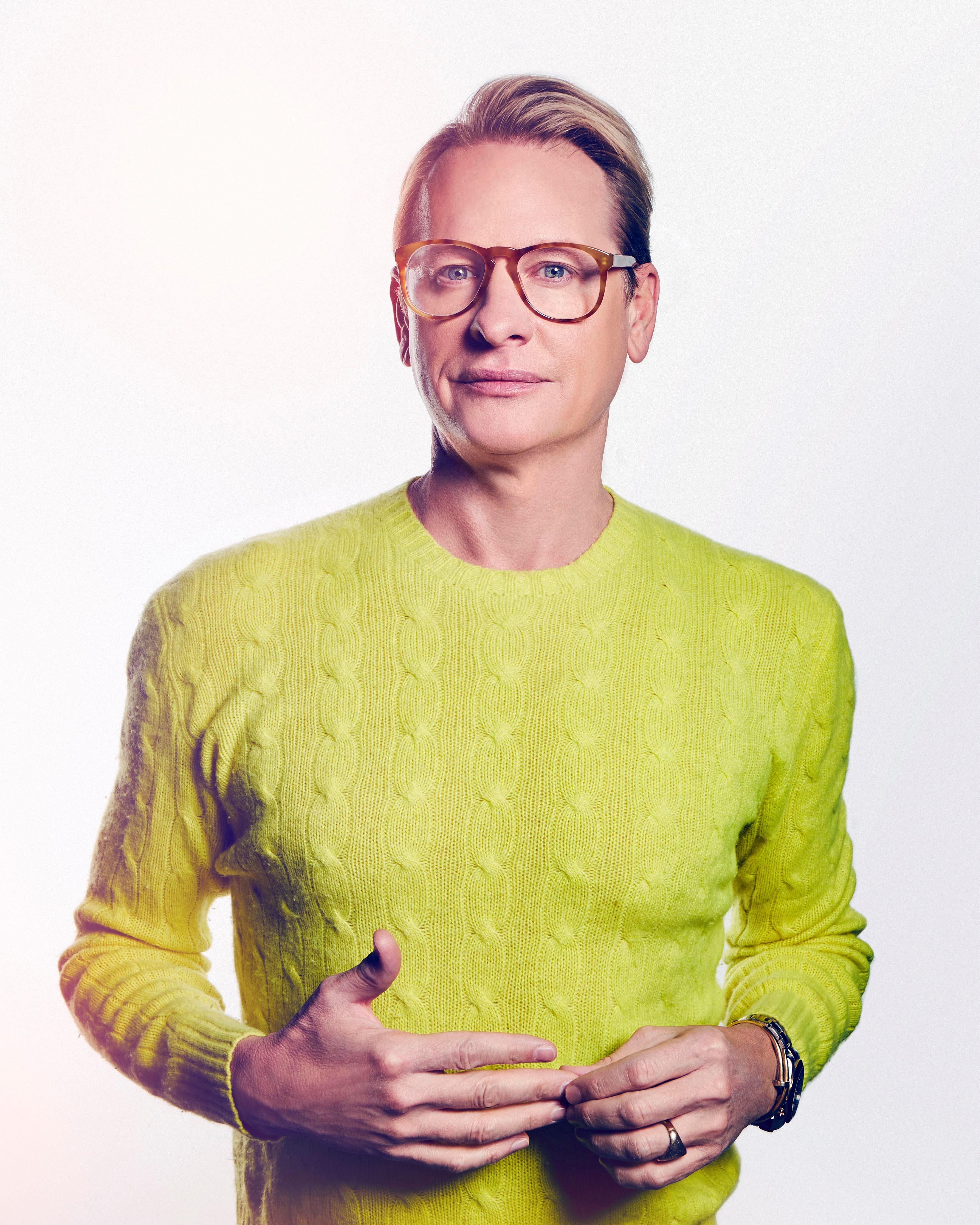
Carson Kressley is an Emmy Award–winning TV personality, style expert, fashion designer, interior designer, and New York Times best-selling author. A multi-talented and unforgettable presence, Carson has built an extraordinary career at the intersection of fashion, entertainment, and philanthropy.
Carson began his career as an independent stylist, quickly becoming an invaluable asset to top designers, including Ralph Lauren. He gained international fame as the breakout star of Bravo’s Queer Eye for the Straight Guy, which won a Primetime Emmy and introduced his signature wit and expertise to audiences worldwide. His collaborations with Oprah Winfrey helped transform America’s sense of personal style, and he went on to host multiple television series, including
Lifetime’s How to Look Good Naked and ABC’s True Beauty. Carson has also served as a trusted fashion commentator on The Oprah Winfrey Show, Good Morning America, and many other
programs.
As a television personality, Carson has proven to be a fan favorite on numerous reality competitions, including NBC’s Celebrity Apprentice, Food Network’s Celebrity Cupcake Wars, ABC’s Celebrity Family Feud, and season 13 of Dancing with the Stars, where he raised both
awareness and donations for multiple charities. He later reunited with his Queer Eye co-star, Thom Filicia, for the popular design series Get a Room with Carson & Thom.
Today, Carson continues to serve as a key judge on the groundbreaking series RuPaul’s Drag Race—the most awarded reality show in television history, with 71 … Read More