Rebuilding the Rider: Strength, Stability & Starting Again with Jack Latorre of Equibody Fitness


In this episode of The Long Ride Home, Alex Husner is joined by Jack Latorre, Founder and CEO of Equibody Fitness, for a conversation about rider fitness, body awareness, and what it really takes to come back to the saddle with strength and confidence.
As Alex continues her return to riding after 26 years away, she has quickly realized that remembering how to ride is only part of the journey. The body changes. Tension shows up in new places. Strength, mobility, and stability matter in ways that can directly affect the horse underneath you.
Jack shares his own path into horses, from starting lessons with his mom to competing in dressage and eventually discovering that his own body was becoming the limitation in his riding. That realization led him to build Equibody Fitness, a fitness program designed specifically for riders who want to improve how they move, feel, and communicate in the saddle.
Together, Alex and Jack talk about why saddle time alone is not always enough, how targeted training outside the barn can support better riding, and why rebuilding the rider’s body can be one of the most important parts of starting again.
In this episode, Alex and Jack discuss:
01:23 - Jack’s introduction to horses and his path through the dressage world
10:22 - How a Grand Prix goal exposed the limits of Jack’s own mobility and tension
14:49 - The difference between general fitness and training with a rider-specific goal
15:44 - Why strength, mobility, suppleness, and body awareness all matter in the saddle
16:19 - How a rider’s tension can affect the horse’s movement and responsiveness
17:58 - Why returning riders often need to rebuild more than just confidence
18:55 - How Equibody approaches rider fitness through movement assessments, video feedback, and personalized coaching
22:23 - What Alex has noticed in her own body since returning to riding
22:53 - Why the messy parts of the journey still matter
Connect with Jack:
Website: https://www.equibodyfitness.com/
Facebook: https://www.facebook.com/jack.latorre.18/
Instagram: https://www.instagram.com/jack.equibody.fitness/
Follow us on Social Media:
Facebook: https://www.facebook.com/thesaddlebredpodcast/
Instagram: https://www.instagram.com/thesaddlebredpodcast/
YouTube: https://www.youtube.com/@thesaddlebredpodcast
#americansaddlebredpodcast #saddlebredindustry #equestrianlife
Alex Husner: 00:03
Welcome to The Long Ride Home. I'm your host, Alex Huisner. This show is about honoring where we come from, pursuing what still calls us forward, and trusting the power of timing in both life and in sport. Through honest conversations with riders, trainers, and leaders in the American saddlebred world, we'll explore the stories behind the horses and the people shaping the future of this industry. Come on this journey with me. Welcome to The Long Ride Home. I'm your host, Alex Huisner. And today I am joined by Jack Latour, who is the founder and CEO of Equibody Fitness. Jack, it's so good to see you. Hey, Alex, good to see you too. So as I've gotten back into riding, one of the things that I quickly learned was that after 26 years, not only did I have to learn the skills back, but my body has changed quite a bit since 26 years ago. Probably no surprise there. And in that process of in the last three months just getting back into it, started doing some research online of what types of workouts I needed to do. And that led me to find your program, which I'm now about eight weeks into it. And it's it's been wonderful and has been really, really helpful so far in my journey. But we'll get into that in a little bit. But before we get started, would love to just know a little bit more about your story and how you got into horses. So I started riding when I was 10.
Jack Latorre: 01:25
I moved around a lot growing up. We ended up in San Antonio, Texas, for I think we ended up staying there for seven years. For most of my life, we would stay somewhere for like two, three years. We ended up in San Antonio for seven. And right when we moved there, my mom said, I uh she basically told my dad, she said, I'm tired of moving. So if we're moving again, then I get to learn to ride horses. That was kind of the bargain that they made.
Alex Husner: 01:43
I love that. That's a good bargain.
Jack Latorre: 01:46
And so uh no no horses in the family, like nothing like that. She was like, I want to learn this thing. I think I was in fourth grade, and I was like, that sounds really cool. Can I do that with you? And she said, sure. And then we started at like some lesson barn as like kind of up-down basic lessons, like a hunter-jumper barn. And then, like, I think within a year, we just got to like a dressage barn, and then it just kind of took off from there. But I know that we started because my mom was like, I want to learn to ride.
Alex Husner: 02:08
Yeah, that's so cool. And it's interesting too. I think that's kind of a commonality with a lot of riders that they're mostly maternal side. I would say that's probably more common, but that your mother, your grandmother, I know that's the case for me, but it's interesting that your mom started it that late in life and that you picked it up kind of at the same time. That's a different spin than if she had been doing it her whole life and just kind of passed it on. So she's like 40, I think she's 44 when she started. That's so cool. And so then in the rest of your career, obviously you you stuck with the riding, and I know you've had some pretty big accomplishments in your career. Can you maybe speak a little bit about where you've been and the horses that you've ridden?
Jack Latorre: 02:43
Yeah. So from first couple of years of riding, I think I was 12, and I was I was doing enough lessons to where I was like a decent rider. I had some skill, but I was now at like I was having a hard time progressing because I was basically too good for like lesson horses in the sense of like I had enough skills beyond that, but I was getting enough consistency to really start learning how to train. The trainer that we were riding with had this little like 14-3 hands. I was a paint pony, he was a total stinker. Um, but he was also he was also great. It was it was a great, great horse to learn on. And so my mom was basically like, I think that this would be a good horse for you, but you need to put together a pitch for your dad. And so I was like 12 years old, and I put together this like pitch deck on why uh why the horse, what the benefits were, what the cons were. And so we did it. But I wrote I rode him and then I did that, I think, to like second level. I don't think he had a change. And then uh, do you know London Gray?
Alex Husner: 03:34
No.
Jack Latorre: 03:35
So she's she's big in the dressage world. Okay. Two-time Olympian, and like her whole career has been dedicated to like the youth of the sport.
Alex Husner: 03:42
Okay.
Jack Latorre: 03:42
So right when I was like around like 14, 15, we did a clinic with her, and then it was around the time that we first came to Wellington, and that was where we got Benson, who was like around, he wasn't quite proven at Pre-Saint. But he was like kind of like third, fourth level. And so we we got him still in Texas. She came through for a clinic. We rode with her, and we were like, wow, this is like first time, like real, like classical dressage. This is awesome. Yeah. And so we rode with her, and she was like, Hey, we have this WIT program, which is where we do three months in Wellington with London, daily training, and it's basically like anywhere from like 10 to 20 kids around the country come down. Wow. I did that in 2018, and that was kind of like the springboard into like, oh, like this is my first realization of like, oh, so this is what dressage can look like. Yeah. We did that, competed through the juniors there, did my first CDILS there, which went well, which was great, and then uh wrote Benson for a long time and ended up training him through. We did like over 70% in Bree St. George, and then he had some health problems, and so we didn't take him further than that. But then he's still around today. He's a great little at home with my parents and my parents. Oh, cool. That's nice. And then we got horse number two, which was very different. He had done Grand Prix before, but he was retired for like three years. And I went and tried him, and I thought that he was really cool. I thought he was really interesting. He was very grumpy, but I figured he was he was like very grumpy and like kind of ordery, but you could tell, you know, when you ride a horse and you're like, you've a lot of like if I get you on my side, like you have a lot to try. Yeah, oh absolutely.
Alex Husner: 05:03
And it's gotta be their decision what you're working on.
Jack Latorre: 05:06
Yeah, so he was he was one of those where I was like, I think that you would do this, and that you like, I think you want to come back, but I think your body hurts. So let's try and like figure that out. And um, so we got him. Turns out he had like cushions and a bunch of other stuff that was making things work for him. So we took care of his health and then ended training him back up, and then we picked up at Precin St. George and then did I-1 and then into Grand Prix. We did not do particularly well at Grand Prix because at that point he had gotten pretty, I think he was like 20, 21. He was pretty old. But I got the experience of actually going through the Grand Prix test, putting it together. What is it like to train it? And uh the whole Equibody thing started during that time with him. And then we got Sakari three years ago, and then that was when I was in Germany for three months, and we found her there, and that was like my second experience of like the German side of dressage. I was like, wow, this is all it's like a new new level. I was like, wow, this is what dressage can look like.
Alex Husner: 05:50
That's just so interesting too, because I mean, dressage is a it's is a totally different world than saddle seat that you know I ride and that probably a lot of the listeners ride. But it's interesting that it's so different in different parts of the world for you. Is that kind of what you're saying?
Jack Latorre: 06:03
It's more um like so San Antonio, where I grew up, dressage world was very small. And so, like my concept of it'd be like if you lived in middle of nowhere, Alabama, and then you go to Mobile, Alabama. Just right now, so it's coming to mind. You go to Mobile, you're like, oh my gosh, this is a city. Yeah, yeah. That was my experience of Wellington. It's like, oh, like this is I can't believe I'm bringing uh Mobile and Wellington, please don't. So closely related. Yeah, oh, this is a first experience of a city, and then you go to New York and you're like, holy cow, this is like so. Wellington was my first of like, wow, dressage is this really cool thing. And then going to Europe where it's so deeply embedded into the culture. I went to Aachen and seeing like a stadium filled with people cheering for riding, I was like, this is bananas. Wow. And so like just see, I think it was seeing the the levels of the equestrian sport.
Alex Husner: 06:50
Yeah, and that makes sense, even in our sport. I mean, if you grew up in New Hampshire, rode at barns in New Hampshire, and there are great barns up there, but there's not nearly as many as if you go to Kentucky, for example. And in Kentucky, courses of all, you know, thirdbreds and saddlebreds are a way of life there. So it's much more normal. And I would say, you know, I mean, you're seeing like the best of the best when you're in those barns too, and and just widespread people around that understand it. So that's that's really cool. It's interesting your point, too, of like being in the stadium and like there's so many people watching. Somebody just shared a graphic with me on Instagram yesterday about the difference between horseback riding of all disciplines versus God, I can't remember what the other sport was. It was like football or something, like it was another major sport, and like the economic impact of horses is unbelievable. I mean, like it's like tied with, I don't think it was football. It might have been, I'm not sure, but it was another sport that's like a like a mainstream sport, and the the economic impact in the billions was much higher for horses. But the difference is horses aren't a spectator sport, but in some cases they are. I mean, I I think on your side of the world, it is a little bit more of a spectator sport than ours is, but you know, still not to the wide stream media as other things are.
Jack Latorre: 07:57
I think it's um my best friend and I we talk about a lot about this because we like because we care about the equestrian sport. I really love this industry, like that's what I'm really passionate about, is like the horse people and horses. And I went to a rodeo and before each event, they explain how the event works. So if you have no context as a rider, you can still come and enjoy it.
Alex Husner: 08:15
That makes so much sense. And that's a conversation that we have a lot of like if you don't know what it is, and especially for dressage, I mean, that makes a lot of sense too. Because I mean, even me as a rider, like I don't really understand dressage that well. But for most people coming to any of these events, like besides a race, the race is pretty cut and dry. But if there was education, or even just during while the show's going on, if there was, you know, and like the jumbotron of like kind of explaining what's going on, I think it would make a big difference overall for equestrians.
Jack Latorre: 08:42
Because I think it's like to make a sport interesting, you have to understand the rules, but important dressage, it's so subjective. And uh so my my wife is not force-related at all, which is one of my favorite things about her. But the she I brought her to a dressage show. I said, Oh, this is cool, this is interesting. And I was trying to explain it, so I was like, So she kept asking more and more and more and more questions, but then we went to a jumper show and went to watch like a Grand Prix, and I was explaining, and I was like, Okay, whoever goes fastest and doesn't knock things down. Yeah, yeah, I understand. You can actually see like everyone in the crowd got way more into the jumping because it's uh you it's you know when something's going well. Yeah, it's like it's just it's so cut and dry. And I don't know what that looks like for dressage. I hope we can figure that out. I have no idea how to make something so subjective, less subjective.
Alex Husner: 09:24
Yeah, well, it's exactly the same thing that the saddlebirds face right now, too, because our sport is for sure very subjective. And I mean, you can have in the same divisions, you can have a horse that's in the hundreds of thousands and then a horse that's twenty thousand dollars, thirty thousand dollars. And and for people in the stands watching that and not understanding, you know, really what the difference is between the horses, or even if they know that, it's hard to understand how you can have that different level all in one competition. And you know, judges have preferences too. I mean, each class and show is supposed to have you know certain criteria, but it it is also a preference thing. So that does make it complicated. So if we can maybe both figure it out together, that would be that would be great. But so let's talk a little bit about how you started Equibody and like what made you do that. I know you at one point you had a big event, a Grand Prix coming up, I believe, and you realized that your body was just like not able to do it. So tell us about that.
Jack Latorre: 10:22
My body did not work. So that was with uh Manny, who was the second horse. Are you familiar with um the off passage movements and dressage?
Alex Husner: 10:29
A little bit, yeah.
Jack Latorre: 10:30
So basically just like trot in place is the easiest way to think about it. So if you think about that, it's like you have to basically rub up the horse's engine, but you have to get the movement, uh, but then you have to recycle it and collect it and keep it back. So it's like you have to, if you you're too tight, you shut it down. If you don't have energy, then you can't obviously generate any of it. And so my problem is that I was so tight I could not do the PF or passage without the horse stopping. Passage is specific to the Grand Prix, it's like one of the things that kind of sets it apart. There's some of it in the some of the other tasks, like the IB, I think. But it's big in the Grand Prix, it's kind of what sets it apart. So very important to be able to do the feedback. Yeah, yeah. So I I was like, I was like two, two or three weeks away from the actual like when I was supposed to go down center line. Like I think everyone sees me on social media now as like very bendy and flexible and all the things. You're like Gumby. So I w I wish I had taken more pictures and videos prior to me being Gumby. Yeah. Right. And so the and I I was so tight and I was so locked up and I was so stiff that I was the horse would halt when we would try to piss auction. I was like, this is not great. And I got frustrated one day and basically said, uh, the the starting thesis of Equibody was if I can do the splits, I probably won't be tight in my hips. Oh, interesting. That was like the frustration of like, okay, my body clearly is not soft enough or supple enough to do what I needed to do. If I could do the splits, I would probably be supple enough. Most likely. Just pick a pick an extreme and then cool, if I can get anywhere close to that, it will probably benefit the ride. And uh it ended up working. That's why I got connected with like a mobility specialist, um, and he helped me with a few things. And I took the same, I because I had a strong like strength and conditioning background. So I took the same like weight lifting, strength training approach to the mobility of like making sure to progress it, making sure to be really intentional with it, and to give you context on how tight I was, I lowered my stirrups three holes in three weeks. Wow. Wow, that is wild. Results may vary, disclaimer, disclaimer, disclaimer. But the uh right, but the that was that was for me, and immediately like overnight, everyone was like, Wow, you're so relaxed. And I was like, really?
Speaker 2: 12:29
It worked.
Jack Latorre: 12:30
Yeah. And then I kept riding Nanny, and then when we got Sakari, that really came in handy was because she's a big mover, big, she's 17 too.
Alex Husner: 12:38
Yeah, she's she's beautiful. I've seen her on your Instagram. Very pretty.
Jack Latorre: 12:41
Beautiful, beautiful mover. But like she and she's very sensitive to feeling tension or tightness. Me working that through my body, getting to a place where my body no longer was the bottleneck, dramatically improved the riding.
Alex Husner: 12:51
The month before you were going to the Grand Prix and you realized how tight you were, had you been not riding for a while before in that time period?
Jack Latorre: 12:57
I was riding. You're still riding. Yeah. Yeah. Yeah. I was still riding. I'd been riding for a long time. I just had listened to everyone. So if you if you go around the horse world, I'm willing to bet that the five people you think of, most of them have some sort of injury, or they would say, Man, everything hurts. I'm really tight as a general. Yeah, yeah. And so I listened to that and assumed that that was normal. And so I just like my whole riding goes, Oh, I'm that's just how I am. I'm just tight. This is just my genetics. This is how I'm going to be. This is how I'm going to ride, and I'm just gonna have to deal with it. But when my trainer was like, No, you are literally not supple enough or relaxed enough to actually improve the training. Wow. It's like, I wonder if I could fix this. And then that's where I went to stream of it's like, okay, let's do the splits.
Alex Husner: 13:37
Well, it's such a weird feeling of when you for me it was coming back, but like knowing I know what I need to be doing and I know what it needs to look like. And then to get back on a horse and remember the feeling of just riding, but knowing that it doesn't feel exactly like it used to, but it's been so long that you can't remember what the difference is, right? And I mean, the one thing that we have now that we didn't have years ago is iPhones, and that has been just huge for me of having all my lessons and my rides on chapstick recorded so that I can see, okay, like I remember how that felt in the moment, and now I can see what I need to do to correct it. And you know, that helps, but it's also, I realize pretty quickly on, there's some things that it's like my body's just not going to do that. And, you know, even though I've worked out continuously basically my whole life, this is not the same type of workout that you need to be doing to become, you know, a great equestrian or to return to being an equestrian. And I hear people a lot in our industry, they're doing different CrossFit programs and they, you know, they run and they do, you know, weightlifting and core work and all these things. And all those are are good, but a lot of workouts are not going to move the needle as far as your riding ability. And I guess you must have realized that pretty quickly once you started building this program.
Jack Latorre: 14:50
I was in really good shape, like by all intents and purposes, like prior to like so I was riding the worst that I ever, I think I made a reel on point. There's a picture of me before I was, I could deadlift like over 300 pounds. Wow. I could do weighted pull-ups with 100 pounds attached, and I could run. I was very, very strong, I was very, very fit, I was very, very lean, and I was riding horrible. At least to the standard that I had. And so it made me really think through kind of the differences between there's a difference between exercise and differences between training. Exercise is anything that's good for your body. You're moving, your uh strength training is uh generally is good exercise. Training is I have a goal, I have something I'm trying to achieve, and I have a methodical plan to get me there. I didn't see that existing in the horse world. As I define it, I think the problem for riders is if you're thinking about your body when you're riding, that's kind of the problem. That's the problem. Yeah. Oh, good one. Well, you should be you should be thinking about the riding. And so anything that is you thinking about your body is a body problem. Yeah, those can be solved outside of the town. And that usually falls into two camps. One is we call it like the strength through length, but if you kind of break that down, on the length side, it is body awareness. It's like, can I actually feel where my body is in space, proprioception? Do I have the control to be able to put it where I want to? I have the strength to be able to maintain it. That would all kind of fall under strength for all intents and purposes. On the length side, can I get my nervous system to relax? Do I have access to my muscles? Um, do I have the mobility to maintain that length while I move, right? All of those sorts of things. Um but it's like usually if you have those two things and you can use your body well, you end up thinking about it less and then you end up as a byproduct riding better.
Alex Husner: 16:20
Yeah, no, that makes perfect sense. And I think riders generally just uh underestimate how much their body and their nerves and their tension, how that actually affects a horse. And, you know, even if your horse is going pretty good, if you were able to relax your body and you were able to have that more fluid movement and awareness, your horse would only go better, right? And at the end of the day, it's like it's actually creating a better experience for the horses when the riders are have that suppleness that you talked about.
Jack Latorre: 16:47
And I um I have so much empathy, I have so much empathy around the problem um because it's like most people aren't aware that there is a problem because it's it's been that way for so long. So it'd be like if you had if you had mold in your house and then you move to a different house and you're like, wait, I can breathe.
Alex Husner: 17:01
Yeah.
Jack Latorre: 17:03
You wouldn't have had the context to be like, oh, there's a problem because you need more and more mold, right? And so it's very similar of if your body has been doing something for 20 years, you've managed to get by. Yeah, it's just not to the degree that it could be.
Alex Husner: 17:14
Right. Yeah.
Jack Latorre: 17:15
Yeah, it's hard to developing your potential, really. Yeah. Your coach is Abby, yeah.
Speaker 2: 17:20
Yep, yep. Abby's great.
Jack Latorre: 17:22
She lives locally, and so we have um Olympian local to Wellington that occasionally we'll we'll go and meet up with and make sure that he's being taken care of, and he's one of our clients. And we were working on his back, and we were kind of noticing how he moves, is like his hamstrings are very tight, and so his body would borrow that movement from his lower back, and that was one of the problems in the lower back. And so it's like you've been doing something for 10, 15, 20 years, your body very much gets used to it, and then it gets very efficient at doing that thing. And so when you take a break from riding, which it sounds like you did, and then you do it, your body got very used to what it was doing in that time off. And then coming back, you're like, ah, it's not doing what it should be doing. Because it had to make it be able to do that thing.
Alex Husner: 17:58
Yeah, it's fascinating. I mean, it's it's way more scientific. And just returning to riding in general, I've said this several times, but it is far more complicated of a sport than I ever remember as a kid doing this because but I I also think, you know, when you're a kid, you're not thinking about your body. You are more in the moment, right? You're not worried about fear nearly as much, you know, the fear of falling or the fear of you know something bad happening or you looking bad. I mean, you're just your capacity as a kid, you're just not thinking about those things. But when you come back, it's like, okay, there's so many more things you can ask yourself and ask your trainer and ask ChatGPT and everything, because now you're trying to figure it all out. That's kind of what led me to work with you and your team on this. But tell us a little bit about the program. So how it works. Because I I know when I first started seeing your ads, I was like, this looks great, but I don't know where you're located. I highly doubt you're here in South Carolina. So I already have to drive three hours to go see my saddle, but I can't drive three hours to go find Jack somewhere.
Jack Latorre: 18:55
How does it all work? Yeah, that's a good question. I'm gonna add a caveat because we're making some improvements currently. And so, the in terms of like things that we're gonna add, if you hear this and then you come in and there's different things, just know. There's a reason. But basically, we like to talk to everyone before we work together, primarily to make sure that it is a really good understanding of who our best clients typically are. And that's usually like regular riding consistently. If you're not riding regularly, the biggest thing holding you back is that you're not sure what to be doing in the saddle. So if you work out and you add more capacity, more ability to do more in the saddle, you're not solving the main problem. And so we actually we kind of have isolated that down to really consistent riding and then making sure that there's not like a medical problem or maybe just making sure we can help you, it's kind of the main thing. And so assuming we can't help you, the first thing we like to do is a full movement assessment. I'm sure you did.
Alex Husner: 19:40
Yeah, and it feels so weird. I'm like, this is so bizarre. Why are they having me do this? But in my mind, I'm like, I get it. I know what they're trying to see here. So it was all good.
Jack Latorre: 19:51
So uh just getting getting a full full movement assessment, understanding. Basically, one of the most frustrating things I think for someone who's starting a workout program or doing the right thing, especially for riding, is like, okay, is this actually gonna help?
Speaker 2: 20:02
Exactly.
Jack Latorre: 20:02
Yeah. And so it's just like to be able to do that effectively, we need to understand, like, okay, on your initial consultation call, you're gonna tell us all the things that you're feeling. We need to go figure out what's happening in your body that's causing that. Yeah. And so we can take that context and then go through and be like, okay, got it. You're feeling this in your lower back. Now when we look at your hips, okay, this one's not moving the way that it should. Okay, why is that? And then we can start kind of probing into some of that and then basically come up with the basically one to two main constraints that it's like, cool, if we open up these two things, if we add more length here, if we add more strength here, more awareness here, whatever it is for the individual, then that's going to be the biggest needle mover for what they're feeling and what they want in the riding. And to make sure that we don't miss anything, we also look at the riding. And so we'll look at the video and basically take those three points what you're saying, what we see, and then what we notice in the riding, and then tie that together and be like, cool, we solved this one problem. That's then going to be the biggest carryover.
Alex Husner: 20:48
Yeah. And I know when I found you too, one of the things I first was just concerned about was does this program work for saddle seat riders? And I think it works for any discipline in riding because it is about the same fundamentals that it doesn't matter necessarily if your format is going to be a little bit different depending on whether you're riding dressage or saddle seat. It's it is the mobility, it is the strength, it is the core and the awareness at the heart of it.
Jack Latorre: 21:11
There's something in your body that's preventing you from doing the thing that you need to in the saddle. When we hire people, they have to have experience as a rider. Because I think the most frustrating thing is trying to translate what you're experiencing in the saddle to someone who doesn't understand. Right. Yeah. And so having that's like, okay, even if you if you understand riding, you understand what it feels like to be with a horse and how your bodies work together. That helps so much. And so then we take fitness professionals who have that riding experience, and then we can kind of tie it together and be like, cool, if we solve this body problem, we can help this in the running. But then in terms of the actual training, uh we focus on, I mean, it's I know it's a drag in the beginning, but we ask you guys to upload video on all the workouts so that we can see how you're moving to back to those the patterns that your body is stuck in. Those will stay there unless you can see them and we can cue you out of them. Right. So if you're doing a let's just say a squat for an example, and you shift into your right hip and then in the saddle, you're not loading your left hip, you're just So we're going to need to make some adjustments, make some cues and make you more aware of that so that we can solve that problem.
Alex Husner: 22:06
Yeah.
Jack Latorre: 22:06
Right. So that's why we want to look at all the videos. And then strategically, we like to sit down on Zoom, on the phone, make sure that, okay, cool. Are we actually seeing this translate over? And then if not, why not? Let's troubleshoot that. And then obviously all the other sides of coaching with it. That's like, hey, this logistical obstacle, or hey, I'm really struggling with this. Um, we want to be able to look through all that together.
Alex Husner: 22:23
Yeah. And that's been really fun of just sharing my horse videos with my coach Abby, too. And I mean, she's going through my workout videos each week that I do three different workouts, about probably 35, 40 minutes, I'd say each of them. But I also send her the videos when I get back from the barn weekends, and she'll pick up on things that are like totally different than I did or my saddle seat riding trainer did because she's looking at it from you know the body perspective and knowing the moves that we're working on when I'm not at the barn. This past trip up, there was one point in the ride that got a little wild. Uh, chapstick bucked, like a big, big buck. And it was, I stayed on for sure and recovered very quickly after. And I told her, I was like, you know, I'm almost embarrassed to show people that clip. But I'm at the same time, I've, you know, when I came back into this, I said, I this isn't about just showing the highlight reel. I think it's about showing how you get somewhere and how you progress and what that journey looks like. And the journey's gonna look kind of messy sometimes. So I'm gonna put it out there. But I showed that video to Abby and she was just like, oh my God, she's like, this is fantastic. And like when somebody says it's fantastic, that you almost got bucked off. But I know what she's saying, and my trainers at at the barn were saying the same thing too. They're like, you know, the fact that you could handle that is shows one, you're a good rider, and two, you're you're doing things to your body to be able to minimize that impact when something like that happens. 100%.
Jack Latorre: 23:43
It's fine, it's funny you mentioned Abby. So we have five coaches, and so the as we continue to build the, we have our kind of clinical team, and Abby's on that, as a physical therapist. And so it's being able to, I think that's one of the things I think kind of sets everybody apart is it's like it's there's not one trainer that like if we have a coach who's stuck on a client, like, man, this isn't progressing the way I want it to, it's not moving as fast as I think it should. That's like there's a theme where it's like, cool, hey, let's bring this up here and let's move that we troubleshoot this. And then Abby's kind of on that clinical side of that. So anytime there's an injury, any time thing, because people fall off horses, it happens. Yeah, I think that's uh one of the things I'm most proud of is like we have a really, really good team.
Alex Husner: 24:17
Yeah, she explains things from the scientific level. Yesterday I was saying, and this I've had this for a while now that there's a pain in the back right side of my neck. And I was asking, you know, what other stretches I should be doing. And she was like, Well, she's like, I will give you some stretches, but it's also it's about more exercises that we're gonna be doing for your neck. And she showed me this graphic of it starts with the skeleton, and then you add on different layers and you see like the first layer of muscles and the second, and then like the big core muscle groups on top. And the way she explained it, it's like the big muscle group is overworking because the ones underneath it are not strong enough. And it's like, I've never even thought of anything like that before. But it's cool that, especially for her background and like really understanding the physical trainer, I believe, and yeah. So she's very familiar on this side of things in school, but it's been really cool to understand that. And when I first started doing the workouts, kind of what you mentioned, they feel a little bit weird and you're not really sure, like, is this really doing anything? But and I'm curious. So I took one of the workouts and or a couple of them and I put it into Chat GPT and I asked, what do you think about this as a workout for returning riders? And it gave you rave reviews. It said that this is definitely a very scientifically put together workout that is better than 90% of what riders do when they're returning or, you know, in this phase, that you're doing the right things that are solved. It's almost like you're doing the things that you're taking it, the slow time right now to be able to go faster later. And I think people getting back into it like you're impatient and you want things fast, but understanding it now, I'm like, I get it. These are the things, and then workouts are going to continue to get harder. I know Abby has said, like, as we get those fundamentals done, but to see just the difference already has been spectacular. So, as far as when you're coaching people and or just talking to people about the program, I would imagine that a lot of riders, the pushback could be, well, I just need more saddle time. And we know that's a core component of it. Why is just more saddle time not enough? It's a good question.
Jack Latorre: 26:11
I always tell people riding is the best way to get better at riding. Abby told you about like my ladder of good riding. It's how I think through progressing riding.
Alex Husner: 26:18
No, please, please share.
Jack Latorre: 26:19
I'm very proud of this. Uh, every time that I post it, it always takes me more than 90 seconds, so it never gets the reach that it should. But it's basically so if you think of a ladder, on one side of the ladder, you have to have a horse. Like in order to get better riding, you do need a horse. So you won't get better, you're not riding. And like a scale of one to 10 for that horse, the more trained the horses, the higher quality, the more horses that you have, the more you can kind of build up that side of the ladder. Right. So hypothetical extreme, if you're a professional, let's say you're on an Olympic track, you're riding five horses a day, all the best quality in the world, pretty maxed out when it comes to that. Got a pretty good side of your ladder called other side of the ladder is your actual knowledge around riding. And so that would be how long have you been riding for? So, how much knowledge do you have? How much education? What type of trainers have you been riding with? Who's your current trainer, et cetera, et cetera. And so, again, if you want to hypothetically max this out, I've been riding my entire life. Actually, my parents were riders and I was in the womb while they were riding. And they all went to the Olympics. And so I've been doing that for an extended period of time, right? That would be kind of the hypothetical maxing out this side. Then the only other thing that could change that is how well can I apply what I know to the actual horse? And that comes down to those rungs that kind of make the bridge across. That would be your body for one, your brain in terms of like sports psychology. I think saddles have a role in there. Oh, for sure. It's all of the things that would play a difference in how do I actually apply what I know to the horse? And so the problem that Echo Body solves is hey, is your body doing weird stuff or does it hurt? Or like so that I always tell people, because people be like, well, I just need to ride more. I'm like, Yeah, but your back hurts. Like, do you feel like you would ride better if your back wasn't hurt? Yeah, no kidding. That's probably uh so it's it's removing anything that's gonna hinder your ability to apply what you know to the horse. It's always really cool to look at before and afters of riders when they have those two sides really maxed out, but there's a really clear, obvious physical limitation. Let's say you have a 10 out of 10 on the rungs here, and you're a two out of 10 on the physical. Yeah, and then you spend a year working on it, yeah. It's like you just it's the whole riding transforms, and it's really cool.
Alex Husner: 28:11
Does that make sense? Yeah, it makes perfect sense. I think it's coming back to it is about making that bridge and the early-on rides with Chapsuku. I mean, he he's only three and he's a little bit of a late bloomer and he started training a little bit later. So like I consider him, he's like a kid, like he's a little bit older than a baby, but he's definitely a young kid at this point. But you know, to be able to transfer the knowledge that I have from my experience and you know, remembering all that and watching my horse show videos and all that coming back to me, that next bridge is for sure the body part of it. But I would imagine a lot of people in that situation though, they might look in the mirror and just be like, I'm out of shape, which I think being out of shape is one thing, but the type of workouts that you do, I mean, it lends to becoming in shape. But since it's so targeted, it's like if you just go to the gym and get in shape, is that gonna solve the problem? No. I mean, if you were to take the opposite approach and say, okay, I'm not in great shape, but I'm just gonna do just these workouts, does that produce an outcome? Or how do you move forward with somebody when that's the situation, I guess?
Jack Latorre: 29:07
Uh, where the situation is they're not in good shape or they are in good shape?
Alex Husner: 29:10
Yeah, if they're not in good shape, like they haven't done cardio, they haven't been to the gym in in a year or longer, but like they have all the knowledge and they have a horse and a great trainer and they've got that. What's the best thing for them to tackle first? Is it to do the program that's gonna target for the rider or should they get in just general shape first? Well, understood. Good question.
Jack Latorre: 29:28
I'm gonna answer this in a kind of a roundabout way, so just follow me for a second. Okay.
Alex Husner: 29:32
Sorry, it was a roundabout question too.
Jack Latorre: 29:34
So um our average, because we track like the attendance on workouts, like a weekly getting people to do the majority of their workouts that they're they're setting out to do, we get about 85% of people to do that. The industry standard is significantly lower than that. Most people who sign up to do workouts typically don't do that. And so, uh, like just in most kind of fitness plans. And I think it's because generally I don't think people enjoy exercise. Yeah, it's just a general rule reason that most people are out of shape in the first place. Right. And so, in order to get into shape, there has to be an entry point. So it's like if that means, hey, I'm gonna do this so I can ride better, and that's gonna get me to strength train three times a week. Ah, this feels better. Okay. Do you feel like we could then layer on some cardio if you if that is the constraint holding you back? Yeah. Yes, I do. But we're doing it for the writing. So you can start building that in, but it gives an entry point where you can almost borrow the enjoyment that you get from riding, create a reason for doing, which then creates stick, which then allows for, hey, I'm gonna do this long enough to actually see a result. Yeah, makes perfect sense.
Alex Husner: 30:30
Yeah, I mean, tying it to a goal. And yeah, I think you're spot on with that. I think that's where a lot of workout programs just fall short, or people when they start doing it, is like they know they need to be doing it, but if you're not tied to a goal of why you're doing it, and that applies to a lot of things in life, you're not gonna get to that level of success that you maybe initially wanted when you signed up for it. Yeah, that makes perfect sense.
Jack Latorre: 30:49
So it's again, I would yeah, I would come back to like what is the exercise versus training? We operate in training. If you have a goal that you want to hit, we will do what we can to get you towards that goal. And so if the other, hey, I need to improve my cardio so that I can do my riding, great, it's working at cardio.
Alex Husner: 31:03
So it makes perfect sense. If you were gonna give some advice to this audience that are horseback riders, what's like a couple tricks or exercises that you recommend that all riders do on a daily or weekly basis, whichever one?
Jack Latorre: 31:17
Like so whoever is listening, there's something that you don't want to do, whether that's like, oh man, I love weightlifting, but I hate stretching, or I love stretching, but I hate weightlifting. Whichever one you don't want to do, do that one. Uh so your body is comfortable in the way that it's going. And so to iron out those imbalances, you have to do the thing that you don't really want to do. And so that would be kind of like 101 version. 201 version, it's gonna be a shameless plug. Go to my Instagram. We put a lot of content free, jack.equibodyfitness, I think might be. You look that up, you'll find it. Pick an exercise that you hear and you go, wow, that would actually really, really help me, or that looks like it would help me, and then do it three times a week for three sets of ten. That's not like perfect amount of like reps, there's no science to that. That's just if you do that consistently, you will see results. I would going 301 version on specifics, I would do seated good morning generally, really, really good one. Yeah, the butterfly for riders, elephant walks, very, very good one.
Alex Husner: 32:06
Yeah, yeah, they feel really weird. They work.
Jack Latorre: 32:09
They work. And then heel slides or heel taps with an emphasis of actually tucking the pelvis under. I would do those four, and I would do them two to three times a week for three sets of ten.
Alex Husner: 32:19
Okay, that's yeah, super good information. And I'll include that in the show notes if anybody wants to go write this down. Or for sure, your your Instagram page, it has so much great content. I love watching your videos. And I I before I started working with you guys, I did just take a couple of them and just start trying those workouts, and that's kind of what made me think like, okay, there's gotta be more to this. Super helpful content. So thank you for putting that out.
Jack Latorre: 32:42
We're currently supply constrained, so we more demand than we can actually handle from a coaching perspective. Wow. And so we're solving that problem. Once that problem is solved, then we're gonna do a lot more content, which I'm very excited about.
Alex Husner: 32:54
Very cool, very cool. Well, this has been super fun to chat with you, Jag, and just get to know you a little bit more. And I definitely recommend to anybody listening that is riding, if this was of interest to you, I would certainly go check it out because it's worked wonders for me in a very short amount of time. And I'm excited to keep moving along with it and seeing what the progress is. All right, and until next time, thanks for tuning in, everybody.
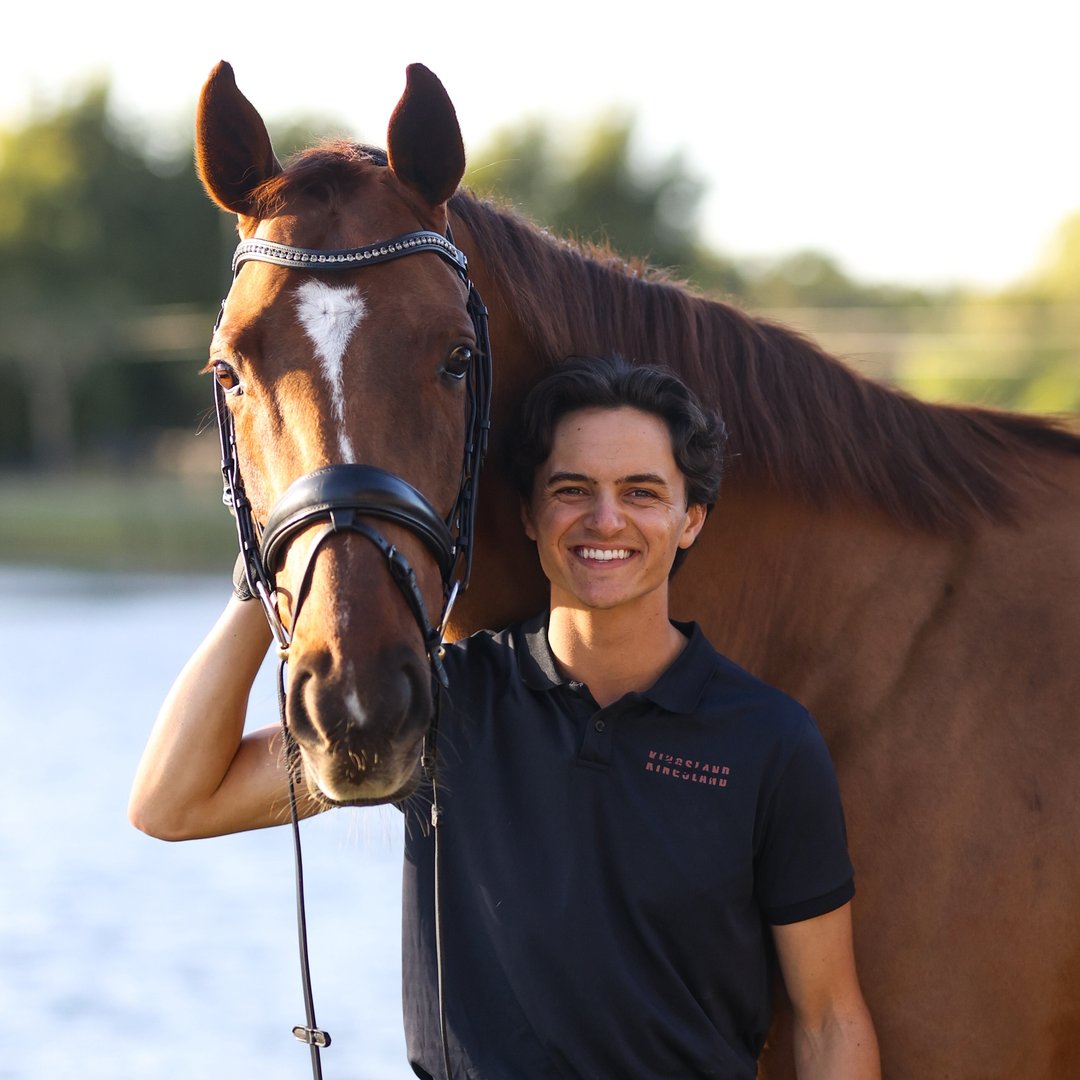
Jack Latorre is the Founder and CEO of Equibody, a rider-focused fitness and mobility program built to help equestrians improve how they move, feel, and perform in the saddle.
With a background in dressage, strength training, and mobility work, Jack created Equibody after realizing that his own body was limiting his ability to ride at the level he wanted. Today, Equibody helps riders identify the physical patterns, limitations, and habits that may be affecting their riding, then supports them with targeted training designed specifically for life in the saddle.