Writing Her Way Back: Emma Hudelson on Sky Watch and Returning to the Saddle


In this episode of The Long Ride Home, Alex Husner sits down with Emma Hudelson, author of Sky Watch, for a conversation about horses, writing, and the lasting pull of the American Saddlebred.
Emma shares how her fascination with Sky Watch deepened after seeing footage of the legendary horse at the American Saddlebred Museum, and how that moment led her into years of research, interviews, and writing. What began as a search to better understand one of the breed’s most iconic horses became something more personal: a reflection on her own return to riding and the memories, questions, and emotions that came with it.
Together, Alex and Emma talk about the story behind Sky Watch, the generosity of horsemen like Mitch Clark and Don Harris, and the challenge of writing about a figure whose legacy still looms large in the Saddlebred world. They also explore Emma’s journey back into the saddle as an adult, from lesson programs and first horses to motherhood, loss, and finding her place in the sport again.
This episode is both a look at Saddlebred history and a conversation about what it means to come back to something that shaped you. It’s about the horses who stay with us, the stories that ask to be written, and the long road back to the saddle.
In this episode, Alex and Emma discuss:
03:35 - How Sky Watch came to life
07:04 - Why Sky Watch remains such a powerful figure in Saddlebred history
15:52 - Emma’s return to riding as an adult
21:39 - The emotional reality of horse ownership, rehoming, and loss
26:57 - Relearning how to ride and what the body remembers
29:49 - Balancing riding, writing, and motherhood
34:16 - Finding her next horse and stepping into a new chapter
38:12 - Thoughts on the future and visibility of the Saddlebred industry
Connect with Emma:
Website: https://www.emmahudelson.com/
Instagram: https://www.instagram.com/efhudelson/
Facebook: https://www.facebook.com/efhudelson
Follow us on Social Media:
Facebook: https://www.facebook.com/thesaddlebredpodcast/
Instagram: https://www.instagram.com/thesaddlebredpodcast/
YouTube: https://www.youtube.com/@thesaddlebredpodcast
#americansaddlebredpodcast #saddlebredindustry #equestrianlife
Alex Husner: 00:03
Welcome to The Long Ride Home. I'm your host, Alex Huisner. This show is about honoring where we come from, pursuing what still calls us forward, and trusting the power of timing in both life and in sport. Through honest conversations with riders, trainers, and leaders in the American saddlebred world, we'll explore the stories behind the horses and the people shaping the future of this industry. Come on this journey with me. Welcome back to the long ride home. I'm your host, Alex Housner. And today I am joined by Emma Huddleson, who is the author of the amazing book we're going to talk about today, Skywatch, and is also the assistant professor of creative writing in the Bluegrass Writers Studio at Eastern Kentucky University. A little bit of a mouthful, but hopefully I got that right. You got it.
Emma Hudelson: 00:54
That's perfect.
Alex Husner: 00:55
Awesome. Well, thank you for joining me today, Emma. And I'm I'm excited to dig into the book and then also dig into your story, which emerged in a way that I didn't know was part of the book. And I think that's kind of the biggest surprise and fascinating surprise, really, as I was reading it. But for our listeners who might not know you, could you just give maybe a little bit of background on how you got into riding and where you are today?
Emma Hudelson: 01:17
Yeah, sure. So I'm like so many equestrians out there, I got into it through a generational thing. My mom rode and showed saddlebreads uh when she was a teenager. And when I started expressing an interest in horses at a very young age, I mean, there are pictures of me on a horse at age four, she got me into riding lessons. And naturally, you know, she looked for a saddle seat barn. I started riding pretty young and started showing. My first show was at eight years old at the Texas State Fair, and I won. And then, I mean, it was just over after that.
Alex Husner: 01:51
There's no going back.
Emma Hudelson: 01:52
There's no going back. I took my first victory pass and rode competitively all through my teen years and then got away from it for a while as like an older teenager and young adult, and then came back in my 30s.
Alex Husner: 02:05
Very cool. That's the thing about horses, you know. I mean, I talk to people about this all the time. I'm like, once you've got that bug and once they've been part of your life, they will always be part of your life. And I think it's amazing that you've come back to it. And I know that's how I feel at this point. I'm like, I've missed so many years, but I'm so excited to be able to come back to it. And somebody brought up a really good point the other day. They were like, it's so cool that you can do something that you did as a kid because you can't just go back out and play soccer or football or like you know, like most traditional sports that children play growing up, but to have something like this that we can return to is pretty cool.
Emma Hudelson: 02:39
Right. Like my husband was a competitive distance runner, and he can still go out and do it, but it's not like he can go join a cross-country team somewhere. You know, he can go run a marathon, but it's not quite the same. Like with the barn, you do have that, you join the barn family, you've got that team sense. It's pretty cool.
Alex Husner: 02:55
Absolutely. And I love the tie to your mom and riding there too, and your grandmother, also, right? Didn't your grandmother?
Emma Hudelson: 03:00
Yeah, she never rode herself, but she always really appreciated horses and you know, was really involved in my mom's riding, loved being around horses, but I don't think she ever actually sat on one who was really interested.
Alex Husner: 03:13
Wow, that's very cool. Well, let's start this interview by kind of doing a deep dive into the book. And again, like I said, when I saw this on Facebook, I'm like, you know, I'm trying to just consume every piece of saddlebred content that's out there, which there's not a lot of it. And I was like, okay, I'll buy this book. It sounds like it's pretty good. But take us back to like where did your fascination with Skywatch begin?
Emma Hudelson: 03:36
So I have, you know, always kind of known who Skywatch was, you know, even though I was showing, uh, you know, I started my showing career in the mid-90s. So Skywatch was, you know, long done and retired by then. But you know, you're like I was like aware of him because people talk about like, oh, look at this cult. He's gonna be the next Skywatch, or like you can step as high as Skywatch or whatever. But I didn't get like hooked by him until I went to the American Saddlebred Museum in like oh, probably 2017, 2018. I'd just gotten back into writing again. And like you, I was just like hungry and consuming everything I could. And I was doing some also some writing. It's very irritating that like the two things I love the most in the world are riding and writing and writing. They they sound too similar. So I was also writing about my return to writing and kind of just you know trying to work through it on the page a little bit. And I just felt like I needed to do some research. So I went to the museum, you know, just walked around there and they had at that point, it was before they had done their recent remodel, which is gorgeous. But at that time, they had a movie screen in one corner of it that you could, you know, go in and watch. And there happened to be footage of the Skywatch Imperator duel uh that day. I mean, I just like my jaw just dropped. I'd seen this footage before. I it's not like it was the first time I'd seen it, but something about seeing it in that setting, and I was there kind of looking for like trying to find why, like, what is it about these horses that is so captivating? And then there it was on the screen in front of me. I mean, you can't not see that footage and just get swept away in it. I mean, they were such athletes and competing against each other and you know, being show horses in every sense of the word. And, you know, I got actual chills. And so, like, I sat down on the bench and I watched this footage loop like two times, three times, four times, and just I couldn't move. And there was just something in that moment where I knew, like, okay, Skywatch is, you know, maybe he's not literally the reason that everybody does this, but there's something about him, about that level of performance that just captures what it is that's so magical about saddlebreds.
Alex Husner: 05:45
Yeah, I literally got chills as you were describing that. I I remember going to the saddlebred museum probably about the same year that you were describing the book of Lexington. It was like 1999, and little girlfriends went then. And I definitely want to go back. I want to have the experience that you did there. Um, but it's amazing. And there's one line in your book that says most people will never know about saddlebreds, but for those of us who do their portals into an unworldly place, to a space outside of time, and that to ride an American saddlebred is to trot with God. I just like, ooh, had to put the book down there for a second because it's it's so true. I mean, your description of seeing those two horses is just spot on. I went back and I watched it on YouTube, and I don't think there's ever been anything like that to this point. I mean, I know I've missed a lot of years, but that was pretty unbelievable.
Emma Hudelson: 06:29
Yeah, and I mean, like you and I, like we didn't even get to see it in person in you know, 1983. It was like the signature duel that everybody talks about. And, you know, I didn't get to see it in person. The people who saw it in person, you know, have an even stronger reaction. They could barely walk out of Freedom Hall that night because they were so blown away.
Alex Husner: 06:48
Yeah, those were the good old days. I can't even imagine what it would have been like to be in the stands and seeing that live. I mean, then it would never leave you. So you went to the museum, you saw that, you were, you know, captivated and inspired. And then what? What did you decide to do to kind of further understand how he was such an amazing horse?
Emma Hudelson: 07:05
Then I mean that was just it. I went, okay, so now I know that like he's the spark, like he represents everything that is so incredible about this breed of horse. So I've got to understand how he got to be who he was. And then I started doing the research, and his stories is just incredible. His story is absolutely captivating. You know, he had to get like herded off of the trailer like cattle when he first arrived. He survived a fire. He took the first woman to win the world's grand championship to that win. You know, he has this like this amazing story. And even though he was, you know, once Mitch got him tuned right from a two-year-old on, he was unstoppable. But it was like, it was shaky until then. And he was such an athlete that, you know, every year he would hurt himself one way or another, because he went so hard and had to be worked twice a day that he would hurt himself coming up to Louisville. So it was like every single year, there was like, well, is he gonna be able to be there or not? So it just seemed like the story just started telling itself once I really got into the research. And I went, This is an incredible sports story that needs to be told alongside you know, Seabiscuit. So, like when I actually started pitching the book around to agents and publishers, I was like, this is the Seabiscuit of saddlebreds. And most of them were like, wait, what's a saddlebread? So of course, even though it's a totally different story. Seabiscuit was an ugly horse, Skywatch was a beautiful horse, but still like it's the same kind of like that incredible, just like story of an amazing athlete.
Alex Husner: 08:29
Yeah, I would go so far to say that probably even most people our age or younger, whenever they were in it, even if they knew about Skywatch, they don't know the full story that's in that book. It was fascinating to me. Not only, you know, knowing this horse was tremendous, but the story with Mitch Clark. And, you know, I mean, it was really, it's like the hero's journey, the story arc of the whole book and everything that they went through and the, you know, the highs and the lows, and just really the gosh, the horsemanship between Mitch and then also his fierce competitor Don Harris over the years, and just you know, reading some of these things, it's like a peek back into yesteryear of like true, not only horsemanship, but sportsmanship and the relationship that they formed, you know, as competitors over the years was just so cool to hear about.
Emma Hudelson: 09:10
Yeah. I feel so lucky that both Mitch and Don Harris, maybe rest in peace, were so generous with their time and in telling these stories. And I love, yeah, the level of sportsmanship between them that Mitch would like cut out newspaper clippings and put them on his fridge. And Don was, you know, out there doing recon, you know, surreptitiously watching Skywatch from the rail, you know, trying to figure out his opponent. And, you know, and yet they had nothing but the highest level of respect for each other.
Alex Husner: 09:36
Yeah, I love that. And every time when Mitch would win, that Don would go over to him after the show and congratulate him. It's cool to read and see that side of the story that I didn't know. But it sounds like, so I mean, you met with Don a little bit, you spent a lot of time with Mitch Clark, and you got to talk to Michelle a little bit. But let's start with Mitch, because that's kind of the bulk of the interviews and the time that you got to spend there. What are like just kind of some takeaways that you took from that time with him?
Emma Hudelson: 10:01
So Mitch is an incredible storyteller, and you know, again, was so generous with his time. I mean, he didn't know me from Adam. I'm not a known entity in the saddlebred world. You know, I love showing, I love competing. I'm so grateful just to get to climb on the back of these horses. But I'm not, you know, I'd not taken a victory pass at Louisville every year now that I have a half saddlebred ever, because a Dutch harness horses aren't showing at Louisville right now. So he was so generous to spend so much time with like a total nobody. He spent all this time with me before we knew that the book was gonna be a book. Like I was basically going to him with like, I have this book idea. I'm a writer, I don't know if anybody will want to publish it or if it'll go anywhere. And he still, you know, sit with me for hours at a time, which is just amazing. So I think the key takeaways from my time with him were just his deep level of respect for the horse and for the sport. He would never do anything to hurt this horse. He always wanted to err on the side of caution. And so, you know, like I said, he would Skywatch would get himself hurt one way or another every single year leading up to Louisville. And Mitch was always like, Hey, do I show him or do I not show him? And would like push it to the last minute of really committing, am I gonna go into this class? I mean, he would be making the decision in the warm-up ring every year and know that if he felt that something was slightly off, he wasn't gonna go in. He also showed him really lightly, you know. When you look back at Skywatch's show record, he didn't go to a lot of horse shows compared to like Imperator was like a campaigner, you know. He went quite a bit. And that's because of, you know, the way that Skywatch just went so hard. He couldn't. I think if Mitch showed him too much, he would have gotten injured to the point where he wouldn't have been able to compete at Lowell Hole every year. So I think just that just beautiful respect for the animal and the athlete, and then for the active showing itself and for this industry and its roots, as the roots of this industry are really in these old court days and county fairs from the 19th century, where this is just where you know people would show up and there would be like kind of a spontaneous horse show in the town square. You know, Mitch still believes in like you've got to put on a horse show. And Don Harris is, you know, he was the best showman of sure. Yeah, you know, even in his 90s when I interviewed him and I told him that, like, oh yeah, I've been I've been talking to Mitch and he's worked a few horses for me so I could get to you know, get to know his style. And he was like, Oh, I wish I could work a few horses for you, you know, like he's still like trying to show up, yeah. I love that, which I just love. So I mean, like that, just that respect from where the sport came from totally blows me away.
Alex Husner: 12:38
Yeah. When I got back into it, I didn't know if Don Harris was still alive and reading the book and then researching. Obviously, he's passed. I mean, not a couple years ago, I believe, but I actually just earlier today getting ready for our interview, I was Googling him and I found there's a two and a half hour long interview that the Horse Museum did with him, and I just started listening to it. I'm like, I can't wait to listen to the rest of it. But it's amazing. I mean, he was 90 years old, I think, in that interview, and he still looks basically the same as what I remember from 30 years ago.
Emma Hudelson: 13:07
That interview came out, yeah, not long after I can't remember where it fell on the timeline of when the book came out, but it was like after the point where I'd already turned in my final draft to the press. And so I was just like, wow, this interview is coming out at like a really, really cool time. And he was just an oh, and he's there looking so dapper as always. I mean, you know, I just yeah, I loved it.
Alex Husner: 13:26
So in this journey too, you also you reached out to Michelle McFarlane. And I think most people that know her know she's kind of a quiet person and doesn't like to gloat on all the many achievements that she's had. But any takeaways from the time that you were able to talk with her a little bit?
Emma Hudelson: 13:40
Yeah, well, I am just so grateful that she gave me any time at all. I mean, I was sweating when I first reached out to her because I knew that she could be pretty private. You know, in my head, I'd really wanted this to be a book that where the Skywatch portion of it really came almost more from Michelle's perspective than from Mitch's perspective. But as soon as I started pushing Michelle for a little bit more, she backed away and told me, like, you need to focus on the horse. This is the horse's story, not my story. And, you know, of course, I was a little heartbroken because the writer part of me had figured out this narrative arc that, you know, ended with Michelle's win. That, of course, is still in the book because it's such an important part of Skywatch's story, but it was a different story than I thought I would be telling. But more than anything, I wanted to make sure that I did her justice and that I honored her wishes because she is such an important figure in saddlebred history and such an important figure for any woman riding today. I mean, I might not be riding today if it wasn't for her. And I mean, just look at last year's stake night at Louisville. We had Susan Swope and Juliet Dell, you know, winning two of the three of like the crown jewels of stake night at Louisville, and they're both amateur. Yeah, that's amazing. As women, that wouldn't happen if it wasn't for Michelle McFarlane.
Alex Husner: 14:52
No, it's so true. And I mean, that really never happened back then. I mean, I remember seeing Michelle show memory citation and the five-gated stake, and that was just unbelievable. I mean, that memory citation is probably the closest horse that I ever saw to a sky watch. I mean, you'll never forget that memory in your head, you know, and that picture. It's imprinted in my brain. Yeah, just incredible.
Emma Hudelson: 15:13
And she is such a horsewoman. I mean, we say she's an amateur, but it's like, well, I mean, she's a better rider than like most, you know, most people who have been professionals their whole life.
Alex Husner: 15:22
Yeah, that is interesting though, too. When you started this process thinking it would be one way, but then realizing I think that's kind of the takeaway of just the process of doing something like this creatively, is you kind of have to, you might have an idea of how it's gonna go, but it could likely change, you know. And that's kind of the fun part of it though, too, of like, okay, this isn't exactly what I thought. Yep. So, okay, let's transition a little bit more towards your transition back into writing. So this was around the same time that you were writing and writing, that you were writing the book. So 2017, is that about the right year?
Emma Hudelson: 15:53
That is let's see. So I think I started taking my first saddle seat lessons again. It was either 2017 or 2018. And then I started writing about that process for sure. I know in 2018.
Alex Husner: 16:07
And the barn that you were riding at then was at the same barn as where you rode as a kid or somewhere different?
Emma Hudelson: 16:13
No, some somewhere different just because of geography. I hopped online and looked for a barn where I could take lessons in the area and just went with like the first one that showed up on Google.
Alex Husner: 16:23
Yep, that's uh similar process to what I did too. Just looked online and then thought, okay, I'm gonna do this. And so you ended up at Mike McIntosh, and that was in Indiana?
Emma Hudelson: 16:32
Yeah, kind of I got there through like a roundabout way. I started taking lessons at Four Willows Farm. Mike McIntosh Stables was on my radar at the time, but he didn't have and doesn't have a lesson program. And at that point, I was like, well, I'm not gonna go out and buy a show horse. I'm like kind of barely scraping together enough money to get lessons. So I found a lesson barn and started there. And then when I did finally buy my first saddle bread as an adult, I started her off in training there and it just it wasn't the right fit. And so I went ahead and moved her to Mike's at that point.
Alex Husner: 17:01
And this was my queen bee, the horse that you're talking about. And you found her on Facebook. So, well, you were at that barn, but like, did your trainer have any role in it, or you were just like, I'm buying this horse and I'm bringing her over?
Emma Hudelson: 17:12
So my queen bee's previous owner was bringing her to All American Horse Classic to show her there, which is in Indianapolis, which is where I was at the time. And so I met her there on the fairgrounds. My trainer came with me and we're like, okay, for the money you've got to spend, this is probably like as good as you can expect to do. And so even though everyone had told me, like, don't buy the first horse, first of all, don't buy a horse off Facebook. Don't buy the first horse you look at. All of the things she wound up coming home with us on a trailer from that horse show.
Alex Husner: 17:42
Yeah, and I can still relate, I think I shared this to you when we chatted before, but the I didn't end up buying the first horse that I saw, but I saw this horse on Facebook that I thought, oh my God, he's perfect. That's exactly what I have in mind for my return horse. And, you know, it all worked out for the right reasons that that's what led me to Meraki Farm and Andrea Harry, who I train with now. And so it's like it all worked out, but I remember that feeling of like I was so anxious, and I don't know why, because it's like I've waited for so long, but I'm like, I want a horse, this one looks perfect, like let's do it. And you know, sometimes that that's not necessarily the best way to go about it. Um, but it sounds like in your case, you learned a lot from Queen Bee, and you actually had a nice kind of way of how she got repositioned and to do a different job in life. So maybe just share a little bit about that.
Emma Hudelson: 18:26
Yeah, so B was uh such a learning experience for me. She was a mayor and could be a mayor in like every sense of the word, and just ultimately she didn't want to be a show horse, she didn't have the athleticism for it, and you know, she had a good heart and would try, but you could tell that she didn't, she didn't love it, she didn't like rise to the occasion, she was doing it because she had to. And you know, I had to face up to the fact that, you know, even though like I brought this animal into my life and I'm a very I'm such an animal lover, I've had rescue animals our whole life, and like I would never think of being like, oh, well, my Labrador retriever kind of sucks at retrieving, so I'm gonna re-home her. But with a horse, the relationship is just different. I had to come to terms with that and figure out that, like, okay, if we're not achieving the goals that I want to achieve together, I do need to find another situation for her. I did um end up finding her a place at I mean one of the best lesson barns I can ever imagine. But then it turned out that wasn't the right thing, you know, this is all kind of after the book closes. That wasn't the right place for her either. Right now, she is living her absolute best life, living in like a teenage girl's pasture. Oh, drives her, and she just posted a video of her on Instagram the other day of her like trail riding out in the creek, bees like pawing in the creek. And I'm like, this is perfect.
Alex Husner: 19:41
Like that's so cool.
Emma Hudelson: 19:43
Like, no matter what, I feel a responsibility towards her, and she has to end up in my backyard one day, that's just fine. She had to go through a little bit to figure out what her job is, and it turns out she is a one-owner horse. You know, she doesn't have that miracle gene that lesson horses have where they can tell one rider one hour and then a different rider in the next hour. You know, she doesn't want to be a show horse, doesn't want to compete. But it turns out that in a like relaxed one-owner environment, she's perfect.
Alex Husner: 20:11
And you're right. I mean, it's an interesting point too. It's not like dogs. I mean, I've got two Boston Terriers sleeping on my couch right now that her eyes are rolling in the back of their heads and making funny noises. But, you know, with dogs, like you don't just give them back if they're not performing or doing what, you know, fetching, like you said. But for all of us that love horses, you know, you end up loving your horse as much as you would love a dog. And they do become part of your family. And it is really hard to let them go, or when you outgrow them, or vice versa. It's sad. That's gonna be a hard thing for me unless we keep chapstick forever. I don't know, maybe we will, because that's where my ex at. But it is something that that's hard. And I think especially as a kid, that can be really hard too. And I know probably about like, I'd say maybe eight years ago. I mean, I've always been thinking about getting back into this, but eight years ago, for some reason it kind of popped more into my mind. And I started looking on Facebook and seeing who was still out there that I knew and found a lot of barns and started following their pages. But in that time, I also saw just the cruel realities of what happens to a lot of saddlebrads and horses in general when they're when they don't find another home or a job. I mean, it's this slaughter, and it it just broke my heart seeing that. And I would see horses that I used to compete against at Louisville that would show up in these auctions. And I remember I tracked down the two owners of the show horses that I had, and I said, if you ever don't want them anymore and they're not in a good place, please tell me because I will pay to bring them here. I'll pay to make sure that they get somewhere because that was just, ooh, God, that was hard to see.
Emma Hudelson: 21:39
It's a side of horse ownership that people don't talk about that much, or a side of show horse ownership that people don't talk about that much. And it can be a really like not pretty side of it is that you have to recognize like you're doing this for a purpose. And if your horse can't fill that purpose, you've got to figure out what is their next step. You know, I could have put the Through the sale and gotten $1,500 or something like that for her and gotten it all over with really quickly. And that probably would have been financially the smarter move than I wouldn't have had to keep spending, you know, on her training every month and maintaining her. But it just was not the option that I could go with because then I would have to, I would lose total control over where she would go. And I was able to, you know, find her a place with a barn that agreed to like check in with me. And, you know, I went to see her. I took lessons on her while she was in the lesson program there. Her owner there contacted me as she was, you know, saying, like, you know, she's not really working out in the program here. I'm not sure what her future is going to be. And then put me in touch with a potential future owner for her, who's now it just seems like it's the perfect, it's like the perfect fit. And I'm so grateful and glad that I went through that. I still feel some guilt that like she's not my horse anymore. But I think she's I she's in the best possible situation that she could be in.
Alex Husner: 22:56
Yeah.
Emma Hudelson: 22:57
And I'm glad that I had the patience to wait that out instead of just trying to rush through and get the next best thing.
Alex Husner: 23:03
Yeah, absolutely. So one thing I also want to touch on too is so you got my Queen B, but before that, you had to get your husband on board with getting back into horses. And I saw so many similarities rating the book to what I had to do with my husband Michael on like the PowerPoint and the presentation. Yeah, I could really do this. But tell us a little bit about that.
Emma Hudelson: 23:24
Yeah, so that's a that is a whole journey because somebody outside of the horse show world saying, like, hey, I'd like to do this thing, it costs 1500 bucks a month just a couple months before we get into like shoes and supplements and vet care or even going, you know, getting on the trailer and going to a horse show. And so that's it, that is a no matter what tax bracket you're in, probably, you know, that's like that's a tough thing to get somebody who's totally outside of the horse world on board with. You know, luckily, you know, my husband clearly loves me very, very much and was willing to take the leap, but it took a lot. I mean, I did have to put together like a literal PowerPoint presentation to help him convince him to like let's buy a horse. Yeah. Because to him, he's like, Well, if you can just take lessons and keep riding, like, isn't that good enough? Somebody who's not a horse person, they just don't get it. No, there is that next step and there is that next level that you want to get to. It's taken a lot of explaining, even just convincing him to come to a horse show was hard at first. And like now when I show, he's there. Or, well, now that we've got kids, he's usually like wrangling the kids on arena side while I'm showing he's there, he's yelling, yeah, boy, uh, at inappropriate times, but he's still doing it. So I'll take it and it's great. But it's a big learning curve for somebody who's totally outside of the horse world.
Alex Husner: 24:44
Yeah, totally. It's funny. I've really enjoyed all the questions that my husband has asked in this process, and he asks a lot. And yeah, I mean, for most people, they don't know that there are that saddlebirds do three gates or five gates, and you know, trying to explain that is a lot just overall. But we actually we just got back from our first horse show last week. We went to JD Massey, and he's never been to this at all. So this was all brand new for him. And his favorite part was standing on the rail, watching the classes, so that he could hear what the trainers were saying and like see the rider's uh expression and the horse's expression when they went by versus just sitting in the stands. And I agree with him. I was like, Yeah, you definitely you you hear more, you learn more. He would hear trainers say something to a rider and he'd ask me what that meant. And sometimes I'd hear trainers say something to a rider and I'd be like, I wouldn't have said that, you know, and explain why. But it's been really fun, and I think that's a cool thing. And for anybody thinking about getting back into riding, you might end up being pleasantly surprised if you have somebody else in your life that doesn't know about it, that they will likely end up, you know, being kind of interested in it because it's a hard sport to not, even if you know nothing about it, to appreciate the how much goes into it, the level of commitment that it requires, the athleticism of the horse, of the rider. It's like this is not just a single lane type of activity. There's a lot of moving factors that take to be good.
Emma Hudelson: 25:59
Yeah, and I think, you know, and ultimately these are show horses. And so they are meant to put on a horse show and be fun to watch. I've been amazed that even when I bring outsiders to a horse show, often they can pick out the winner. They kind of like they're like, that one's doing really good, right? And yeah, nine times out of ten, it's like, yep, that's the one because it's this sort of, you know, even though there are judges are following UCF rules and have, you know, really strict regulations, um, there's also like you can just kind of tell it's the one who's putting on the best show.
Alex Husner: 26:29
Yep, exactly. I can't wait for my friends to join us at our show sometime. And I think you're right. I think does become clear for those reasons. But coming back to it though, after so many years, one, I mean, it takes a level of confidence to know you're not going to be confident and be and accept that, right? And maybe just share a little bit about that journey of like what it actually just looked like when you started riding again and like how you maybe stuck with it or things that you did to relearn the things that you knew from so many years ago.
Emma Hudelson: 26:57
Well, one of the things that amazed me was how like my body remembered so much more than my mind remembered. You know, like if you'd asked me, like, well, how do you post? I don't know. I don't even I can't I don't know how to answer that. But you know, as soon as I got back on a horse and we started trotting, like I was posting. Or like as soon as I had the first time a horse ever got a little fresh with me and like, you know, gave a little like buck or whatever, it's not like I just came right off. My body knew how to stay on. Yeah. So there's this sense of body memory that stays with you. Now, my core was very sore after my first few lessons. It's like I'd forgotten that like riding a horse is actually like a core strength activity. You know, my legs were sore and all of those things, but my body really remembered in a way that my mind couldn't. But also, I'm not a kid anymore. So I don't have that like neuroplasticity that young people have that makes them such fast learners. So I think at the same time, I'm also more prone to getting like stuck in bad habits and not able, like in my riding with just like, you know, like little things like how I'm positioning my hands or if I'm bracing with my back instead of freeing up my upper body. And it's harder to get out of that stuff. And I've noticed that for sure.
Alex Husner: 28:06
Yeah, it is. And the connection between mental and body, for sure, I felt that too. And one thing that just recently happened that reminded me, I went up to an adult clinic at the barn I ride at, and Brooke from Lennox Stables brought a bunch of lesson horses for us to have that week. And she was training at the clinic and she said, Okay, you guys are gonna get the horses ready, you're gonna tack them up, you're gonna do all that. And I've groomed Chapstick before and after I ride him, but I haven't actually put tack on a horse in 26 years. And so I'm thinking, I don't even remember. But then it's so crazy. Like as soon as I put the saddle on, I'm like, okay, it's the first and the third billet. Like, I'm like, how did I remember that? You know, like it just it hit me in the moment, but I'm like, God, it's so weird when like these different memories of things kind of re-fire in your brain. And that's really what it is. It's like it's you're rewiring things that you knew from a long time ago, and your body remembers certain things, but it's like that body and mind connection. That's where you know you really start to see that progress.
Emma Hudelson: 28:58
Yeah, it's it's really crazy because I don't think I could have told you the first time I started to groom a horse as an adult that I could have been like, okay, first I will get the curry comb and then I will get the stiff brush. But like I knew like to reach around in the groom box for those things in that order. Yeah, it wasn't necessarily like it's my brain wasn't thinking about that.
Alex Husner: 29:19
Right. Yeah, it's it's just it's must muscle memory to some extent of your of your mind.
Emma Hudelson: 29:24
That was one of the first things when I did start writing about riding. That was one of the first things I wrote about was like that muscle memory. That's just absolutely wild. And that's in a, I mean, that got published as like a separate essay that isn't part of Skywatch or anything, but it was one of the things that fascinated me about it.
Alex Husner: 29:38
Wow, that's cool. And so I don't quite remember the timeline. You got pregnant for sure. That's a big part of the book. And then you also got a new horse, um, My Boogie Nights. Which one happened first?
Emma Hudelson: 29:49
So I got pregnant first and had my first daughter, Fern. And then around the time Fern was probably six, nine months, and the whole even before having Fern, while I was pregnant with her, I knew that like we needed to find the next step for Queen B and was just, you know, kind of biding our time and figuring out what that step would be. And I wasn't even like looking for a horse when my boogie knights jacked when he came along, but just the timing worked out that like I was able to find this perfect home for Queen B. And again, that home wound up not working out, but it was like it was the right next step for her at the same time that like Jack had been taken in as a trade um by somebody else in the barn. Everyone was like, Oh, Emma, you've got to try this horse. You've got to try this horse. And I was just like, Nope, I'm not even like, I'm gonna save, I'm gonna stay out of showing for a little while. I'm gonna save up my money. I just had a baby. I'm at the time I was about to finish grad school. I didn't know what life was gonna look like for me. I was like, this was no time to be buying a horse. And then I go try the horse. It was like, okay, how do I buy this horse?
Alex Husner: 30:52
Exactly. Where do I sign?
Emma Hudelson: 30:54
Yeah, where do I sign? And it's like this just that just seems to be how it happens for me with with horses. It's like I get the good ones when I'm not looking. And Jack was perfect. He was everything I thought I didn't want in a horse. I thought I liked mares, I thought I wanted them spicy, I thought I wanted them hot and hard to handle. And Jack was none of those things, but he was exactly what I needed as a new mom, transitioning into you know what my like post grad school life was going to look like. I needed that good, steady, friendly gelding. And that's exactly what I got. He could take Fern started, showing him in lead line, you know, when she was two, and he could take her into a lead line class. And then in the same session, five classes later, we would just switch the saddles out, go in and take me into you know the country pleasure championship and be competitive.
Alex Husner: 31:42
Like amazing. What a blessing too, and and really cool that you've passed this on to your daughter. And now you have another baby.
Emma Hudelson: 31:50
I'm not sure if it's I do, yeah, yes. A second daughter. So um, you know, time will tell if she's gonna be a horse girl or not. But yeah, Iris is 18 months now, and I think just having two, like, so Fern and I go to the barn together and take lessons together at this point. Fern is uh almost five now. So Iris, it's like, yeah, we'll see. I hope she will too. I think that'd be great fun.
Alex Husner: 32:11
I would imagine probably pretty high probability that that's the she'll go.
Emma Hudelson: 32:16
I know, I know. And then I'm like, what am I doing? Like, I know this is expensive. Why am I not like giving them volleyballs instead of four horses?
Alex Husner: 32:23
Right, right. But I mean, the cool thing is if you end up that you have a horse that both of you can show, then that you know, that works out wonderfully. So at least for a while, but until they want their own horses.
Emma Hudelson: 32:35
Right, exactly. But yeah, we'll we'll cross that road when we get there.
Alex Husner: 32:38
So you this was not in the book, but when we chatted before you shared with me that actually like a couple days or the day after the book came out, that boogie nights passed tragically, which I I can't even imagine like how that was.
Emma Hudelson: 32:50
Yeah, so I mean, I couldn't believe it because I wrote my boogie night, Jack, into he was like the happy ending of my narrative arc. I mean, it was uncanny the way that he came into my life, right when I was like kind of finishing up writing this book, and it was perfect. He was the happy ending. And yeah, in my mind, I thought that yeah, we would go on, he would become my daughter's horse, but she was old enough to show horses on her own. And then the day after Skywatch was officially released into the world, he coliced and it was a bad one, and there was nothing anyone could do, and he died. It absolutely rocked my world. My heart is like still broken. It's been over two years now. My heart is still broken from that because it just was I feel like I'm living in an alternate reality. He was supposed to be that perfect forever horse, and the universe had other plans. Yeah, that was hard, just especially because I'd, you know, I was supposed to be out like promoting this. And like here I am, like, well, my happy ending to to this book just died. Like, what do I do? So I feel like I didn't, I possibly didn't do this book justice in terms of like promotion and events and everything, because it just it took me a while to get over that.
Alex Husner: 34:01
Wow. Yeah, I mean, I I can't even imagine that's the to be out and talking about something that you love and then have that in the back of your mind. I mean, that that's it's impossible. Um but so you got another horse though at some point. How much longer was that after he had passed?
Emma Hudelson: 34:16
It was like way too soon. Again, I wasn't like I wasn't looking. You know, I wasn't looking. I was kind of like, okay, like I'm like, I'm done for a little while. I was pregnant. Yeah, I was pregnant again. I was really like, all right, that was a roller coaster. I'm ready to chill. I got another baby on the way. The next horse will come when it's time. And then it turned out that time apparently was like four months after Jack died. And you know, my trainer just nudged me. And after I'd gone to a horse show to watch my mom's show. And he was like, Have you ever thought about a Dutch harness horse or a Dutch harness saddlebread cross? And I was like, No, but tell me more. Clearly, like you've got something. And he was like, Well, I just heard about this horse and sounded like he might be right for you. And so I was six months pregnant at this time and was like, Well, we better go try him soon because I'm about to be too pregnant to fit in the saddle, and I would like to ride him myself if I can. And so we did. I went and tried him. I don't know if Mike told Brian Yaunt that he was bringing a pregnant woman to come and try out a show horse, along with that woman's three-year-old daughter and the grandmother who was gonna watch the three-year-old while the pregnant woman rode. It was a whole family affair, and then yeah, Fern rode him lead line style back to the stall. And again, it was just like, okay, well, where do I sign?
Alex Husner: 35:34
Yeah, that's so cool.
Emma Hudelson: 35:36
Did we bring the trailer, Mike?
Alex Husner: 35:37
Because we're so the Dutch harness horse part of it. So you show in open English pleasure when you're showing it. Yes, yeah, yeah, yeah. Which I mean, that's that's new. I mean, that's that was not around when I used to ride, but it sounds like that's kind of opened things up more to have other breeds in the ring together.
Emma Hudelson: 35:55
Yeah, and you still it's a that class is always a mixed bag. You never know, you know, there we're usually competing against like mostly saddlebreds, but then there'll also be, you know, you might get a Morgan in there or a national show horse or an Arabian or a Frisian or a Frisian cross. And it's really fun. It's it's really cool to see all of these different breeds that can do the saddle seat style really, really well. And um, Mr. T, my horse is very like he looks very saddlebready. Like you seeing him standing there, you wouldn't know that he's Dutch. But then when you see him move, there's something that's a little bit different about the way he goes that does like look more Dutch harness horse. So it's been it's been fun learning about that. And I definitely I never I never expected it.
Alex Husner: 36:36
No, that's that's really cool. And so Mr. T is at Chris and Stephanie Brann's farm in Kentucky.
Emma Hudelson: 36:42
Yeah, so I moved just last summer from Indianapolis, which is where Mike McIntosh stables is, and I know a lot of people do it and have their horses hours and hours from them. I know you, you know, far away from your barn just because of geo, you know, geography, and that's just how it works. Since I was moving from Indianapolis to just south of Lexington, Kentucky, I was like, he's gotta come with me.
Alex Husner: 37:03
Like yeah, you you have a lot of options there. So that was yeah.
Emma Hudelson: 37:06
There are a lot of options. So yeah, so he's so he's at Wing Swept Farm and it is going great. We had our first show of the season at Kentucky Spring premiere, and we got reserve in our class and had a great first show with the new barn, and it was awesome. And he's just he's the best, he's great, he's a total barn favorite and loves everybody and everything, just again, like that good old gelding. Like, I didn't know that I needed these sweet geldings in my life, but here I am.
Alex Husner: 37:31
Yeah, I think I I have a thing for the geldings too, and having uh Marisanne geldings over the years, but no, that's awesome, and congratulations. That's gotta be just exciting. Like, I can't wait for the first time being in the ring and you know, just that feeling again. It's exciting. That's the only word to describe it. So, one last thing I want to just wrap up on, or just get your thoughts on, or is more related to the industry as a whole. And I'd like for you know, the other episodes and interviews that I conduct just to kind of hear where people are thinking of what is the state of the industry now, what is the future? I think we all know that the numbers have gone down since the Skywatch days significantly. Um, but what's kind of your take on what's going on within the saddlebred industry right now as far as visibility is concerned?
Emma Hudelson: 38:13
So I think we've got a visibility problem and an image problem for sure. Like people think that our saddlebrates are Tennessee walking horses and that we score them and all of this stuff um all the time. And you know, you just see people on social media like, oh, we've got to save our breed, the breed's gonna die. And you look at the numbers and like the numbers have gone down. But here's what's interesting in my research for Skywatch, I looked at other breed numbers as well. Yeah, even though quarter horses, you know, they breed like I don't know, 70,000 of them a year or something. I mean, it's maybe it's not that much, but it's a lot, it's a lot, like tens of thousands a year, where we register like maybe 1300-ish new horses a year. But the quarter horses have gone down in proportion, okay. Proportionally the same as saddlebreds have. Now I know and there are breeders out there who could give you more specifics on this, but you know, there is a number where like the breed will be in trouble just from a numbers perspective, where it's like, oh, we don't have enough new blood to sustain this. But I don't think we're hitting that yet. My punch is that this industry is not going to go away. I think it's just really shifting to reflect where it is now, where it is a participant sport where you do see the amateurs in the um, the amateurs who are in the show ring as opposed to the trainers. And it's just different, it's less of the spectator sport that it that it used to be. And I don't think that's necessarily a bad thing. I think we should embrace it that it is really, it is like we're doing this because we want to do it ourselves. And yeah, I would love to get more people in the stands, and you know, and I think it is still so fun to watch and that you know, people should come out and watch and spectate, but you know, people want to go play top golf instead or yeah, yeah, stay at home and watch Netflix. And so that's fine. There will still always be horse people who will be enthusiastic. And even if there are only 20 of us on the rail instead of 2,000, we are so loud, it doesn't make a difference. Like we're still gonna be there cheering each other on. So I have a lot of I have a lot of hope for the industry. I would love to see it get more visibility and gain more understanding, but I also know that it's it's really tough. I mean, out there in internet land with equestrian sports, you post any video of a horse doing anything and you immediately have 15 people jumping on there telling you about how you're abusing the horse and how you're doing whatever you're doing wrong. And it's really tough. But I think at the same time, those of us who are doing it, like we've got to keep trying to get it out there.
Alex Husner: 40:44
Yeah, and I and I think that's where on the visibility side, it's like it's more education, it's more awareness. I was really, you know, pleasantly surprised to see at JD Massey, the biggest classes actually, they were we didn't stay for the academy classes, but it was like the step above academy. So the ones that they're still in like a snaffle bit, they're wearing a show suit now, but they're in a snaffle bit. And, you know, those are people that have just come out of academy and they're in between there and getting a show horse. And there was, you know, 12, 14 people in those classes versus the other ones had, you know, four or five mostly. So it seems like, at least in in this area, there are a lot of people that are, you know, adults that are either getting into it for the first time or returning to it. That's a good sign for the future of, you know, being able to get more people into the ring and hopefully they bring their friends and their family. And it just kind of compounds because I think, you know, one thing getting back into this, there are still so many of the same names that I remember from 26 years ago that I think that's a little bit of the risk of like our generation and these people have been doing it for a long time, age out. We've got to have that newer generation that's coming into it and is gonna, you know, keep up with the sport, right? And keep it going. But yeah, I don't know what the answer is. I think there should be more education around it. I think if we wanted to get more people to the shows, you've got to explain what it is, you know, and and uh the shows are all limited by budget as far as how much they can promote it really. But it's like, you know, get the local news to come out. They won't charge for that. But it's like have the local news interview some of the trainers and interview a rider and ask, you know, what is American saddlebred? Why do they pick up their feet like that? Why are they, you know, how their tail is, like what are the gates? I mean, like learn some of the things that people that don't know and are pointing fingers at so they can understand the reasoning. And that's the history and the tradition of the sport. And maybe that happens at some shows. I think at Louisville it does for sure. But, you know, that's a small thing. I feel like some of the local shows could do. But in the meantime, we will all be there. And just as you said, it's like we'll all just be cheering for each other. And at the end of the day, it's like, you know, you're going there and you're competing, and everybody wants to be competitive, but you're competing against yourself mostly, and you're competing with your horse or against your horse, depending on the game. So it's like, you know, whether there's big stands in the crowd or not, I mean, you're you're doing it for a purpose that really should be internal, you know, as much as there are the external sides of it.
Emma Hudelson: 43:00
Yeah, absolutely. You know, and I think to be fair, it's always, I think our industry should like scrutinize our practices and look at and look at what we do. You know, there's a lot of science out there about like poor equine mental health and turnout, which is something we don't always do. We don't do a great job of, you know, my horse gets turned out in the off season when his shoes are off, but like during show season with show shoes on, it doesn't happen. You know, I think there are things that we can be honest about and look at, but you know, our horses are loved and happy with what they do. They wouldn't keep doing it if they weren't, because like I could tell with with Queen B, like I could tell she wasn't happy being show horse, so she wasn't going to be competitive. So we needed to figure out what her next step was.
Alex Husner: 43:42
Yeah, that's a really good point. I when we first got chapstick, I kept remarking to my husband, you know, his ears never go back. I mean, like they're literally they're glued front facing. And he said he was like, Well, what does that mean? And I was like, it's a good sign. That means he's happy and he's enjoying what he does, and it's true. I mean, you can tell the horses that they love what they do, they love their job, and you can tell. ones that maybe don't don't love it or or aren't feeling well, you know, in that in that time. But yeah, no, really good points. Well, this was amazing. Thank you so much, Emma, for joining me on one of these early interviews. I'm I'm glad that I reached out and I kind of felt like how you described in the book when you reached out to Michelle and I'm like, I hope she writes back and isn't like, what is this? But I'm so you know, just appreciative of how gracious you were to chat with me and to share your story. And I think anybody, you should certainly get the book. It's a great book about history, but it's as much an intriguing story about your journey and how that coincided. So definitely recommend picking it up. Where can people buy it? What's the best way to find it?
Emma Hudelson: 44:41
So it's available, you know, definitely online through. I always try to steer people away from Amazon. Um, but so like you can get it on bookshop.org and that'll support your local indie bookstore. If you are in Kentucky, it's in it's in some of the local bookstores around here, like Joseph Beth and like the Kentucky Artisan Center, I know has a bunch of copies that I signed recently because I went in there looking for Christmas gifts and wound up signing books. Oh, but you can get it, you know, online and anywhere, anywhere books are sold. And if anybody does want a signed copy, you know, find me on social media or reach out to me through my website and we'll figure out how to get a signed copy to you.
Alex Husner: 45:20
Awesome. Well, I'm gonna bring mine to the next show that we're both at so that you can sign it.
Emma Hudelson: 45:25
Yes. Yeah, that's another great way, is like find me, just come find me at the horse shop.
Alex Husner: 45:29
Find me on a show. What is your your next show, by the way?
Emma Hudelson: 45:32
I think I'm trying to convince Stephanie to let me take my horse to Burlington's. I love that ring. That's a fun one to go to. But I think that's next on my list, um, followed probably by Shelby County Fair.
Alex Husner: 45:42
Awesome. Well, if anybody wants to get in touch with you too, what's the best way for them to reach out?
Emma Hudelson: 45:46
So my website, Emma Huddleson.com, I've got a contact form on there. That's the best way to reach me. I am like sporadically on social media, but it's very sporadic right now. So I have been telling people that's not a great way to get in touch with me. But um that contact form on my website leads straight to my email inbox, which I do check pretty much every day.
Alex Husner: 46:06
So that's the best way to reach me. Great. Well, we will include that in the show notes too. And if anybody wants to get in touch with me, you can go to the saddlebreadpodcast.com. And there's also a contact form on there. So thank you for tuning in, everybody, and we'll see you next time.
Emma Hudelson: 46:23
Okay, thank you so much, Alex. It was a pleasure.
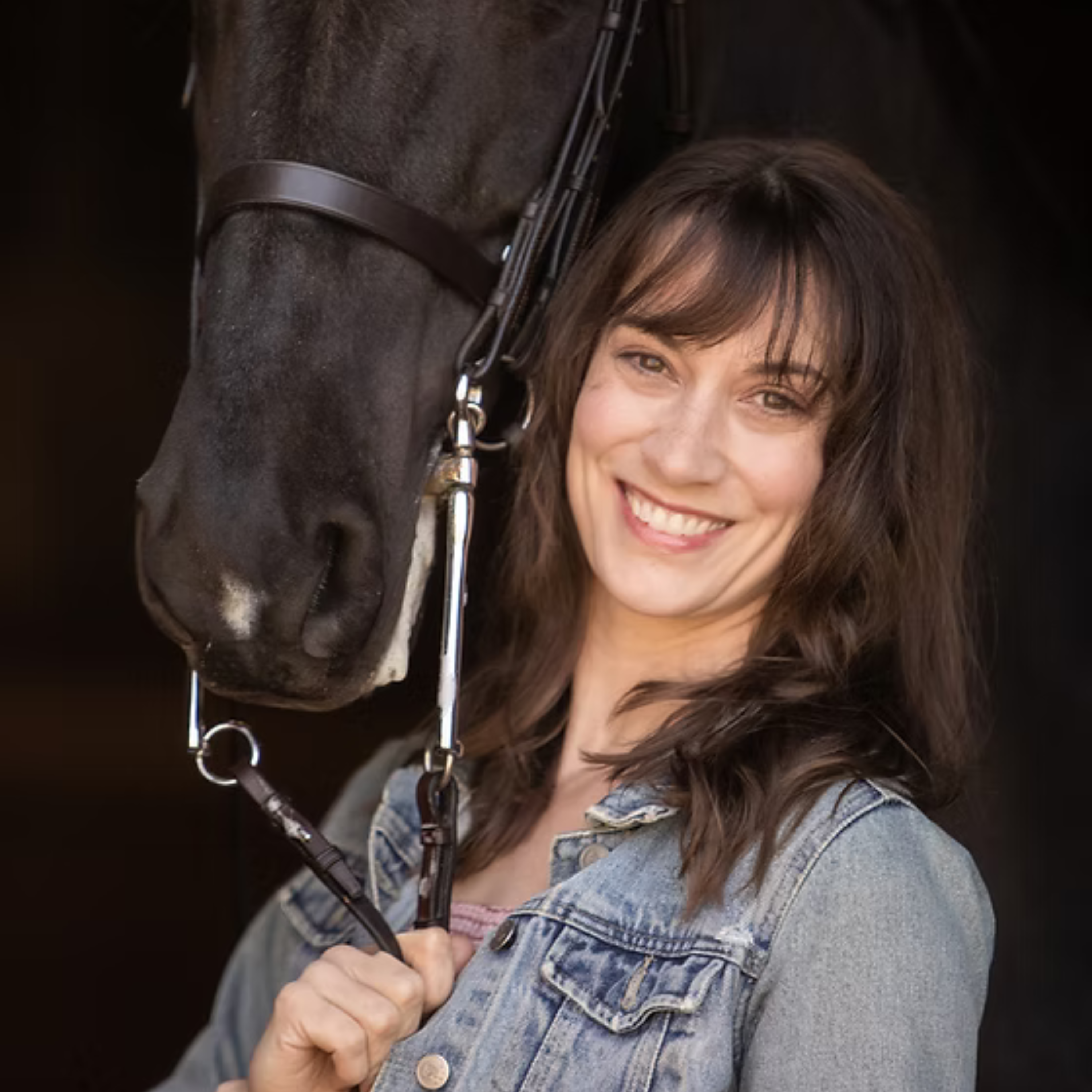
Author | Sky Watch
Emma Hudelson is a nonfiction writer and an Assistant Professor of English at Eastern Kentucky University, where she is core faculty in the Bluegrass Writers Studio. Sky Watch: Chasing an American Saddlebred Story is her first book, and it received the 2025 Equine Media Award and was a finalist for the Foreword Indies Book of the Year. Her work can also be found in the Cincinnati Review, the Chattahoochee Review, and the Rumpus. Emma holds a PhD in creative writing from the University of Cincinnati and an MFA in creative writing from Butler University, where she directed the Writing for Wellness program. She has two daughters, one husband, three dogs, one cat, and one horse.