The Horsemanship Behind Every Discipline with Brody Hickman


In this episode of The Long Ride Home, Alex Husner sits down with Brody Hickman, founder of Brody Hickman Riding Academy, for a conversation about horses, horsemanship, and the experiences that shape a rider across disciplines.
Brody’s path began with Saddlebreds and Morgans, then expanded into Quarter Horses, reining, Western pleasure, and teaching. Through each chapter, one theme has stayed consistent: before riders choose a discipline, they need to understand the horse.
Together, Alex and Brody talk about the value of building strong foundations, respecting the small details, and recognizing how much different corners of the horse world have in common. From the thrill of a Saddlebred down the rail to the feel of a reining horse in a sliding stop, this conversation explores the connection, timing, and care that sit at the heart of good riding.
Brody also shares how his riding academy is helping students become more thoughtful, capable horsemen by teaching the lessons that begin long before anyone gets in the saddle.
This episode is a warm reminder that every discipline may have its own style, but true horsemanship always starts with the horse.
Episode Chapters:
00:00 - Welcome to The Long Ride Home
01:30 - Brody’s Early Start with Morgans and Saddlebreds
03:54 - The Family Influence Behind a Life with Horses
12:11 - Learning the Feel of a Quarter Horse
14:30 - The Thrill of Connection Across Disciplines
18:03 - The Story Behind Brody Hickman Riding Academy
18:09 - Why Horsemanship Starts Before the Saddle
20:04 - Farm Management Lessons and Real Horse Care
22:46 - Teaching True Horsemanship and Horse Ownership
24:04 - Building a Foundation Before Choosing a Discipline
29:52 - What Brody Has Seen Across the Horse Industry
30:59 - Visibility, Awareness, and Growing the Sport
32:36 - Seeing Saddlebreds Through Fresh Eyes
40:39 - Why Different Disciplines Are More Similar Than They Seem
Connect with Brody:
Instagram: https://www.instagram.com/brody_hickman/
Facebook: https://www.facebook.com/brody.hickman.16
Follow us on Social Media:
Facebook: https://www.facebook.com/thesaddlebredpodcast/
Instagram: https://www.instagram.com/thesaddlebredpodcast/
YouTube: https://www.youtube.com/@thesaddlebredpodcast
#americansaddlebredpodcast #saddlebredindustry #equestrianlife
00:00 - Welcome to The Long Ride Home
01:30 - Brody’s Early Start with Morgans and Saddlebreds
03:54 - The Family Influence Behind a Life with Horses
12:11 - Learning the Feel of a Quarter Horse
14:30 - The Thrill of Connection Across Disciplines
18:03 - The Story Behind Brody Hickman Riding Academy
18:09 - Why Horsemanship Starts Before the Saddle
20:04 - Farm Management Lessons and Real Horse Care
22:46 - Teaching True Horsemanship and Horse Ownership
24:04 - Building a Foundation Before Choosing a Discipline
29:52 - What Brody Has Seen Across the Horse Industry
30:59 - Visibility, Awareness, and Growing the Sport
32:36 - Seeing Saddlebreds Through Fresh Eyes
40:39 - Why Different Disciplines Are More Similar Than They Seem
Alex Husner 0:00
Alex, welcome to the long ride home. I'm your host, Alex Husner. This show is about honoring where we come from, pursuing what still calls us forward, and trusting the power of timing in both life and in sport. Through honest conversations with riders, trainers, and leaders in the American saddlebred world will explore the stories behind the horses and the people shaping the future of this industry. Come on this journey with me. Welcome back to The Long Ride Home. I'm your host, Alex Husner, and I am joined today with Brody Hickman, who is the CEO and founder of Brody Hickman Writing Academy. Brody, so good to see you.
Brody Hickman 0:44
So good to see you too, Alex. I'm so excited about this podcast today. I've been thinking about it nonstop since I reached out to you. I'm like, I would be a good guest. I've got something to say.
Alex Husner 0:55
I knew that right away to get started, because.. and I think you know, I always love telling the back stories on things, too. I was actually at a conference for my day job, and I woke up one morning, and I got your Facebook message, and you had sent me the most amazing, compelling video about wanting to come on the show, and I thought, "Oh my gosh, who is this guy? Like, I need to know him. He's got a great story, and is clearly very passionate about saddle breads, which actually is not even the discipline that you really focus on right now, but before we get started, for our audience that might not know you, and I'm getting to know you, tell us a little bit about who is Brody. I
Brody Hickman 1:30
am Brody Hickman. I now run and operate and own Brody Hickman Writing Academy. I grew up, started writing right at the age of seven. If I'm not mistaken, I got my first writing lesson for my seventh birthday, and it happened to be at a Morgan farm, you know, especially even that was 20 some years ago, but there was a lot of Morgan and saddle bread integrated in the same barn, so they considered themselves some Morgan barn, but definitely had a few saddle breads in there, and I started riding when I was seven, weekly, my mom grew up in Montana competing on the rodeo circuit, the high school rodeo, so it was very different for her, but she had in her mind that she wanted me to learn how to ride English first. She's like, I want you to learn how to ride English, and then I think she had a route for me to go some sort of a roping rodeo route, but I fell in love with it. You know, my weekly lesson turned into, I think I was nine, and I would work on Saturdays at the bar, and whatever nine year olds can do, and it would pay, it actually paid for my lesson on Thursdays, which back then was $30 I think 35 bucks, which now I'm like, oh my gosh, like I would make no money charging $30 so that just grew into, you know, working on Saturdays, paying for my Thursday lessons, like I was saying, and it just turned into more and more work, I was riding more horses. I was at the barn every day that I wasn't in school, and that started at the age of 10. And I really want to say around the age of 10 is when I decided when I'm done with this school stuff, I want to be in a barn all the time in some way, and that has changed over time, like wanting to be a horse trainer, work with saddlebreds, do this, do that, but I knew some way I would come back. But I saw, I guess I've been riding now. I'm 27 so 20 years, and probably about 13 of them, 1213, of them were saddle seat majority saddlebreds and Morgans. So yeah, that's kind of my come up a little bit, a short version, you know. I went to a two year community college that, and I majored in equine business and training. It's a year in Eastern North Carolina, that was quarter horse based, and that's where my love for quarter horses kind of came in, and I was actually, I guess, better at that when it came to, like, a professional standpoint. Like, I had learned a lot more. The quarter horses at that college got me a lot more connections in the reigning and the AQHA all around from pleasure, the hunter under saddle. I worked for a lot of those horse trainers, and I fell in love with it, but I never did lose my spark for the saddlebridge. But that quarter horse background kind of led me up to where now I've decided to be an instructor, and a few years ago I opened up my riding academy, and here we are now.
Alex Husner 3:54
Wow, that's so cool. A lot to unpack there, and I've got questions, but one thing that's funny, this, you know, I haven't done a ton of these episodes so far, but everybody that I've had on had some sort of influence from their mom or a grandparent or a parent that got them into writing, and I think it's really important just to touch on that, because it really shows for, you know, all the moms and dads that are out there that might be listening, like your kids are probably following, maybe under your bill, maybe it won't be when they can do it on their own, but it's such an amazing sport because of that. The legacy that comes from it, I think, is really special. So, you rode, and I think when you were riding saddle seat, you were in New England, you're in New Hampshire, actually, where I'm from.
Brody Hickman 4:32
Well, I actually got a job up there later. I'm from North Carolina. Growing up as a child, I did right outside of Greenville, North Carolina, where I'm at now. Now, I moved up to New Hampshire after college, after the Quarter Horse spurt. I even took a little.. like, I have got to go back to this, you know? I was in my early 20s, I was kind of.. I had settled in, I had started a riding at Not Brody Hickman Riding Academy, another one out of a reigning training facility. They wanted a riding instructor. I was freshly 21 and I. Started panicking. I'm like, oh my goodness, is this like it now? And my now I just work Monday through Friday. I'm like, I want to do something different. And I applied for jobs in the Saddle Seat Professional Riding Instructor page. I actually came into that page after I became in there. I'm sorry, it was a different looking for help. I found that page on Facebook, and I applied to everything, everything up there, and I'm like, I don't have to take it. And then that's when I ended up moving to New Hampshire to the Lampropolises, who at the time was mostly just John and Sherry, and then Tyler was the trainer, and now that's all completely evolved. But back then I went to essentially work for Tyler, Jill, and or Tyler, Sherry, and John Lapropoulos. So I did get a lot of experience up there in the saddle seat, but as a child I did grow up and ride here in Eastern North Carolina.
Alex Husner 5:43
That's so cool, and I remember that barn and that whole team from back in the day. So, oh yeah, I thought about that when
Brody Hickman 5:50
in your first episode, introducing yourself. I'm like, gosh, she's.. oh, for sure. Yeah, I don't know them well, but
Alex Husner 5:56
like, I, the name is extremely familiar. I remember them at shows, and they, you know, had horses that would compete against, you know, the barn that we were at. So, from there, what made you decide to, for your actual true profession, to go back to the quarter horses that you worked while in college? Like, what was the calling to do that when you're clearly so passionate about saddlebirds?
Brody Hickman 6:16
It was, and so I went up north, and again, at that point I guess I was 22 I moved up there, and for the first year, honestly, I was just a typical 22 year old, and I just kind of did my job. I loved the horses, and I was really exploring the new area too. So, when work was done, I totally went out and explored New England, which was kind of half the reason I moved away. I definitely just wanted to make sure my job was surrounded around saddlebirds, because I never had that experience growing up, you know. The facility I grew up riding in was really academy-based, though horses, and I just always dreamed, I'm like, can I just touch one of the horses that are in a magazine, please? Can I, can I touch something that trots above level, please? You know, or see a horse in a brace in person, you know, a lot of the horses we went to were very local one day quick weekend open shows, but thanks to like the Saddle Horse Report magazine, National Horsemen, I was able to keep up with everything, and a little social media starting back then, this is like late 2000 so like 2000 789, Facebook, YouTube, definitely I would rewatch the same sale videos on YouTube, which back then I felt like there was only three sale videos on YouTube. I know I'm wrong with that, but and so I went up there, and truthfully, aside from I love the experience they gave me. I went to the horse shows, I got to see horses trot over level, horses wear braces. I got the experience that the young child in me definitely wanted to experience, but truthfully, I moved up there during Covid, two weeks before Covid happened, if you could say so. Everything was normal for about two weeks, and then boom, everything was done. And so we worked, we worked, you know, however everybody was handling it. Then it was a very odd situation, but I was definitely getting the experience I wanted. And then after a few years, you know, my best friends, and still good friends with Jill and Tyler Lampropolis. They were just full-time horse trainers, and they were pretty much the only friends I had. And I'm like, I just miss it at home a little bit. And so, when I came down here, I just naturally went back to something that I knew I could do on my own, something that was comfortable to me, which was definitely teaching, and definitely surrounded by quarter horses, reining horses specifically, but you know both of those disciplines, they, and it's a big part of my program, I'm sure we'll get into, but it's they both are the same adrenaline rush, you know, a reining horse running down and sliding stop, or a saddlebred turning, which I was able to ride a couple decent horses at Jill and Tyler's to give me that experience, but turn and just have that pass down the straightaway that you're like, that was great, like just that feeling. It's the I get the same feeling, there's no difference to me. So it's very like, what do I want? What do I want? So when I came down here naturally, I went into that, and now fallen in a deep love for my horsemanship program I've started, and you know, I love my angle to the Saddle Breads, I love my fan angle, and I, I just enjoy where, how I keep up with him. I'm not too into it, I don't know all the details about everybody, I don't know all this and just being a spectator, you know, you said in that episode with the author of Skywatch, I'm sorry, I'm blanking on her name, but she mentioned that you said a lot of times the spectators are people with skin in the game, and that sentence is why I was like, I need to message Alex right now, because, matter of fact, I have no skin, have no skin in the game, but you still slow down.
Yeah, oh yeah, oh yeah, no, it is my, it's my football, it's my football, and Louisville Super Bowl, and so I keep up with it all year. I keep up with my Richfield subscription. I pay the extra fees to watch the major horse shows. I do all the things to keep up with it, and then, yeah, I treat myself to Louisville. It is my vacation once a year, by the way. I take a week off and I go spend it with horses, of course.
Alex Husner 9:56
It's amazing, amazing. And I think, again, there's a lot to unpack there, but. Begin saddlebreds, and I think horses, just in general, I mean, like, they touch you, and it's very hard once, once you've been bitten by that bug, and once you've, you know, spent a good portion of your early years growing up with them, to just leave it forever, and you know, to your point about, you don't have skin in the game, you still, you choose to go to Louisville for your vacation, you know, there's, I, to be honest, I felt similar to what you described, of you were watching from the sidelines, you followed all Facebook feeds and watched Richfield video, and there were several years that I would buy the Richfield video for Louisville, because I still knew so many of the people that were there, and I wanted to see them, and it's like, you know, every time I watch it, it's like that deep yearning inside of, like, oh, it makes me so happy to watch, but, like, man, this sucks, like, I want to be out there, and I miss it so much, but I think there's a lot of people like you that I mean, not I've come kind of extreme that I didn't do it for 26 years, and then I jumped back in, bought a horse, but I think there's a lot of people like you or like me at that point that they would love to be able to come back and even just see it and just be around and just network as part of it, and I hope if anything, like more people do that, because when we do want more spectators, it doesn't need to be just all the people that own the horses that are there cheering, and the people that have remembrance and a memory for it are probably the most likely, or the low hanging fruit to get back at some level, and it doesn't necessarily mean that you have to come back, buy a horse, get super involved with it, but there's something still really special about just seeing it and being part of it, and for me, we've been to two shows so far. We went to JD Massey, we went to Asheville, and now when I get the magazines, because I've just saw those horses show, it is so cool, and I'm like, oh yeah, it's so cool, like I mean, it's brought us back to life in a way that I used to always get so excited when the magazines would come, but now it's there's reality to it, which is really cool. And one thing, when I came back into this, simply because of the fact that there's no Southbrood barns anywhere near here, I did think about what if I explore a different discipline. I wasn't close-minded to it, but I just, I didn't know anybody locally that did it. Like, there are some barns, but I had, you know, zero connection to that discipline or to any of the people, and so I made the decision to go the long haul and do what I love, but what was that like, you know, learning to ride the quarter horses after, you know, being in saddle seat for all those years.
Brody Hickman 12:11
Oh my goodness, so let me tell you, so I rode, you know, I think everybody's kind of like, oh, you know, I've ridden quarter horses growing up, and kind of trail type horses, I guess, so nothing that was super broke. I didn't understand what a broke horse meant when it came to a quarter horse, you know. I didn't know, and like, wow, this one's really broke, this one really knows its job. It was kind of like, you know, if you want to go left, pull left, you know, and you would kind of backyard, I guess, is a good way to describe it, which is what I was used to with the quarter horses, and that was kind of my only mindset about quarter horses, is they were like lazy, seemed to have no personality, and they were boring, I guess. Yeah, so I signed up at the community college. I remember where my head was then, thinking about going and riding, you know, having to ride quarter horses. I assumed that I just, I knew I would pick up on it, or have some sort of appreciation for it, but I had no clue, but you know, at the college at the time, they had 4050, horses, all quarter horses, all different backgrounds, and the first horse that I got assigned was actually a Western pleasure horse, and I got on, and Alex, this is how I looked all over its head, I'm gonna fall over its head, there's nothing near here, yeah. And my instructor was like, "Well, what do you need there? I'm like, "It's head, I need the neck up here. Like, yeah, they're like, "Loose in the reins, loosen the reins, you know? My horse, I'm like, "You know, holding it tight a little bit. You know, I'm like, "Well, it was a learning curve, let me tell you that. That's the short version, but I will never forget when I was trying to play it cool. Everybody's in there, although everybody probably felt the same way I did, and I just leaned way far back and looked down. I'm like, his neck and head are like off the ground. I'm like, you know, and it wasn't, but it felt like it was. Yeah, compared, I was used to it. That was such a different feeling. And then it took me, I want to say, no time to kind of pick up on it and understand what I was searching for, what I was feeling for, and then from then on it was over with. I mean, I was looked on it just as much.
Alex Husner 14:09
Wow. And so, just from point of curiosity, because I've never ridden Huntseed, I guess I've definitely done Western on trail rides, and we go on vacation and stuff like that. But, like, where is the thrilling part of riding in that type of a discipline, I mean, you mentioned the reining, so like, how does the throat come, like, in comparison to what you described, riding down the rail on a saddlebread that's flashy moving,
Brody Hickman 14:30
so you know, and then the quarter horses, there's so many variations, I'll specifically talk to you about, like, the Western pleasure, which is that very slow, and to put it in a typical voice, especially for probably a lot of the audience, they look like lame when they're loping, and they're that kind of, that's the Western pleasure. And then you have the reigning that is a lot more cowboy fast doing the cow maneuvers. The thrill in, like, a Western pleasure horse, when I get on one of those, the thrill is not the speed, the thrill is the way it feels, getting one to be so. Connected to you, where you know when I ride a pleasure horse, and I've got a big loose rein, I'm thankful to have a great lesson horse. One of the lesson horses of mine is a Western pleasure horse. He's my cantor teacher, my lope teacher, and he's such a, he's so funny, such a cool horse. But anyway, when I get on that horse and I put my hand down on that big loose rein, I should be able to control that horse just through my seat. If I want to go to the left, my belly button just drifts a little, and the thrill there is just the connect, you know that loose rein, so light, and then the same thing with the reining horses, I mean, you know, in every reigning pattern there is large fast circles you run and then you slow them down to a small slow circle, and that's in every pattern, but nothing is better than on a loose rein running a horse, and you sit back, and you know my cue is to kind of scissor my legs, I put some pressure in my first stirrup, never touch that bridle, and feel that horse, yeah,
Alex Husner 15:53
yeah, and then you just ride
Brody Hickman 15:56
that low, and then when I, you know, want to extend personally the horse I'm showing now, I stand up in two point, and as I'm slowly standing up in two point, it's like you're slowly pushing the gas pedal, no effort on my end, that's the thrill, you know. And then the raining, the sliding stops is amazing, the spinning is amazing, but the Western player and the Hunter under saddle, which pretty comparable, both of those, it's like when it's fun is when it just feels good, everything is just so connected and soft and easily guided, willingly guided, and when that is happening, and you were just cruising right, almost like you could put your 90 year old grandma up there, and but
Alex Husner 16:31
that's the thing, though, you really couldn't just put your 90 year old grandma, because your horsemanship and your ability to ride are what's making that happen, right, but to you, it, when everything feels that good, it does. It feels easy. Just thinking back on last weekend, I rode Chapstick for the first time in a couple months, and the only reason I wasn't riding him was we went to those two shows and we brought him there just to practice being on the road, you know, practicing in the work arena, practicing in the actual show arena. We wanted that to be a good experience, so I didn't ride them, just Andrea did. But last week when I was up there, we had several passes slow gaining that I literally, in the video at the end of one of them, I said I was like that was so much fun, like it just, it's like that feeling of like when it just feels so right, that like
Brody Hickman 17:12
it was just effortless,
Alex Husner 17:14
yeah, and it just like when you feel like you've got it, he's got it, the rhythm is there, and I think ultimately the takeaway is like it really, it doesn't matter if the horse's head is right here or if it's down there, but like when you also feel like you've mastered something, and in that moment, like I have really mastered the bridle with him on that pass, and it just felt so right, and I totally get that, that it doesn't have to be the fast moving action that is the exciting part, it is the suppleness and the and the connection with the horse, and the horse understanding what you're asking him to do, and that's what
Brody Hickman 17:43
drives me in it, because I get that question a lot, and especially with crossing over into both worlds, I find myself so much in the corridors world, which is not like an everyday occurrence, but I'm constantly advocating for the saddlebread, and then vice versa. Yeah, well, you know, it's a big part of my program is advocating for all disciplines. Well, I'd love to know more
Alex Husner 18:03
about the program. So, tell us about the academy, and like, what is your focus? Like, how did that evolve
Brody Hickman 18:09
in my riding academy? You know, with me coming from all different disciplines and traveling all over with those disciplines, I couldn't - I didn't really want to choose a discipline to kind of label my academy as, so I knew that I wanted to stick quarter horse based again, that was where I was most comfortable, and then western based, as in, I guess we ride in western saddles, it's what I had the most of at the time, and it's just what I just kept accumulating, but the point of my program is strictly a horsemanship program, when you come out for your first riding lesson, we, the riding lesson starts with, here are the halters, now let's go learn how to catch your horse out of the pasture safely, properly. Put the halter on, and let's say you know the lessons are an hour. Let's say catching the horse and learning how to put the halter on took 20 minutes. That 20 minutes is in that riding lesson, because you need that 20 minutes. We don't need to rush the little things, and that's my biggest takeaway, or my biggest point in the program is to not skip the little things that so many of these big skip, and because they don't have the time, honestly, you know, nobody has that type of time, and so I like to really make my program niche about the small things, safely catching a horse, and then that just grows all the way up until we're doing five link changes, you know, catching the horse, tacking the horse up, if that takes 30 minutes of our lesson, and that's 30 of our lesson, and you know, sometimes I don't have a ton of pushback, because I pretty much make sure everybody has a good understanding of the program, but you know, people want to ride the horse, and but I let people know I know you want to ride, but that is only a 10th of the whole point here, you know, I want you to truly know how to care for the horse, and that leads into my other thing, you know, every all my whole program is outdoors, I don't have a cupboard or an indoor, and so we have rain, and my arena gets wet, and it gets soaked, and I run my program off a tuition base, so every month, bare minimum, everybody has one less than a week they pay for, and they have to meet that minimum, and at first I was kind of brainstorming, and I turned. Into what I call farm management lessons, and that's kind of a wide variety, but in these lessons we learn how to take horses' vitals, we learn about nutrition, we learn about the sickness, how to deal with the sickness. I also work out of a boarding facility of about 40 horses, somebody has a cut, somebody has torn their fence down, somebody, I mean, you know, we fix fence, we treat wounds, and I really have a lot of hands on, and typically how I run my farm management lessons, you know, for example, last few weeks ago I talked about choking and colicking with a group of kids, we have like a lecture portion, I bring them in a classroom setting, we sit down, we talk about choking, we talk about colic, and then we actually go out, and we have the lab portion of our lesson, and that is, you know, checking the horse's temperature, listening to gut sounds, and then I'll kind of have, like, a hypothetical moment set up where the horse has, you know, drainage coming out of their nose, they've got their head dropped low, they're constantly coughing, you know, those are signs of choke, and I want the kids, and I'm really big on, you know, I always say everybody can walk trot and canner who can't walk trot and canner. How about tell me what happens if your horse is colicking? Then I'll think that's what I say. It kind of gets
a little more pumped about the boring farm management lessons. It's really the full picture for me, you know. I'm not all about the riding and the showing and the success as much as I think you're very successful, the more knowledgeable you are, and if you can truly care for a horse and keep yourself and the horse safe in any particular, and so that's really how I treat it. And you know, we have our group of lesson horses, but I constantly teach the general way to, you know, catch a horse. You know, my horses are great, they're less than horses, you know, a lesson horse, and they're great, they're sweet, they don't do anything wrong, but we don't get comfortable, that yeah, don't get comfortable with those moments. We still catch our horse properly, groom them, walk around them properly. We don't get comfortable, and I'm really big on that section of it, you know, all of the little things. I think being a groom for so long, I kind of am like, well, this are the things I'm really freaking good at, and I'm like, how can I teach the things I'm good at, you know? And then, of course, riding, I don't think I'm too bad at either, but, um, but I was like, no, you know, I'm, you know, I missed a day of lessons, that's like 10 kids that need a makeup ride, I'm like, oh my goodness, I need to think of something, and that's, and to tie into the reason I reached out to you, is we watch, if there's a war show going on, we actually watch Richfield as a group, and I have a lot of my students,
we watch the saddlebreds together, we learn about them, you know, on a pretty surface level. I have a few kids that ask more questions, but we go to these open shows with these saddlebreds, and I'm finding more of my kids are actually kind of sneaking up to the ring for the saddle seat division to watch it, and I'm game for it. You do not need to be on it, you know, but that's kind of where I wanted to come in and talk to you about, I'm like, I do nothing but talk about side of its for someone who's around all these quarter horses.
Alex Husner 22:46
No, and I think that's so cool. I mean, I think one, it's super cool that you are, you're teaching these kids about true horsemanship and true horse ownership, right? It's not just about going to the bar, I'm getting on a lesson, and then you leave. I mean, and that's an important part. I know, growing up that was always part of it, like on my lessons, I would typically, the groom would get my, the horse I owned, ready, but I would always put him away with the groom, but then the lesson horses, we would get the lesson horses ready, we would put them away, we'd clean our saddles, we'd clean the bridle, like we'd do the whole shebang, and I think that's an important part, what you're talking about takes it to a different level, that I haven't heard a whole lot of barns doing that, of like actually teaching what's going on medically with the horse, and how you deal with things, and I think that's a really cool part of it, is mostly kids, or do you have any adults that are in the academy
Brody Hickman 23:32
right now? I have 32 students, and 10 of them are adults, so 2222 under the age of 18, and then 10 adults. Yeah,
Alex Husner 23:39
wow, okay, yeah, and so they come up, they ride once a week, but then it sounds like, are they all riding together, or is there a separate one that's the class where you have everybody?
Brody Hickman 23:48
So the farm management lessons, with everything being outside, we have plenty of those naturally. I don't really have to plan, okay? So
Alex Husner 23:55
it's based on, yeah, the weather,
Brody Hickman 23:57
and I'm like, you know, last week I had three days of it, because of the weather, and so I'm like, if I plan it, I'll have too many farm managements.
Alex Husner 24:04
Yeah, no, but that's that's really cool, and I think it sounds like probably a good part of why you even thought to go that route. I mean, even calling it an academy, to be honest, like you were trained in equine business, so I mean, you went to school for this, I'm sure you learned a lot about that, and I think that's interesting perspective on this too. But what if somebody came to you and said that they wanted to learn saddle seat? Like, would you consider getting a saddle seat lesson horse, or like, where do the horses come from? I guess is right. No, I honestly, I would not be opposed to it. That's a really good question. It ties in to kind of a major point I left out about my program, but with the program being horsemanship based, yeah, I would totally be into getting a saddle seat type lesson, or some Morgan, or saddlebred, yeah, yeah,
Brody Hickman 24:46
letting somebody completely learn that way, but we still will go catch that horse together first, you know that type of for sure, you know, I would get you to a certain point, it's almost like a graduation process, so the way that everything works. Here that I will teach you how to do ABCD, and my, it's kind of like I non-discipline riding, you know. We ride Western, I guess, get you to a certain point, and then you can choose your discipline. So I want to get you to pick up correct leads, know your diagonals, bridle a horse safely, know where the tax sets, and then if I have a student, I have got probably 10 of them right now. I could send to a jumping barn, a saddle seat barn, and that trainer, you know, they could say, 'Hey, go in here, catch this horse in the stall, tack it up, bridle it. And there should be no reason, even though it's a saddlebred, and that they should not be able to go in that stall safely, catch that horse by reading their body language, knowing all of the stuff that we've gone over a million times. They should know where the saddle sits on the horse's back, if it's where it's supposed to go, where the girth is supposed to go. How to properly bridle a horse, and then they can go take a saddle seat lesson. But with my program, there should be no reason why. Again, I've got 10 right now that I could send to Andrea, and she could saddle this horse, put a bridle on, meet me in the arena, and until they go to get on, that's when they might say, you know, how do I hold my reins, or this, or that, but besides, no, when Andrew's like, low pop canter on the left lead, the kid should know what I should feel in the horse's body to know which lead I'm supposed to get, so there's small little things that change it, but that's how it works, is a graduation, and you know, some of them stick around, you know, it doesn't necessarily work like I send them off somewhere, but that is the point, is that I kind of sell myself as being like, come here first, let's learn how to do everything, yeah,
Alex Husner 26:32
I think you could have an amazing business model of doing what you're doing, but then also have at least a couple horses that could do hunt seat, saddle seat, or western, and teaching people all three, or the kids are adults, all three, and like determining what maybe they might be the best at, you know, because I've never heard of anything like that before, but that could be such a cool way for somebody to get into writing, because in a lot of cases, I mean, you get into writing because there's a barn that's close to you, right, or because your family did it, but I mean, who knows? I mean, I was born into saddle seed and into Morgan's first, and then saddlebreds, but if there had been a huntseed barn down the street, like, you know, I mean, I could have ended up loving doing that, but now, because I'm, I know what I know, and I'm sticking to that, I'm cautious about, could I go and ride another discipline, but I think when you open somebody up to being able to just be a true horseman, and to be able to ride whatever horse it is, and whatever saddle it is, and like your body knows to adapt. I mean, that just creates a really good rider all around, and I think that kind of plays into the academy factor there, which I think is brilliant. It does really cool. I
Brody Hickman 27:35
actually kind of run my, because of so many backgrounds I have, I do take my students to the horse shows. We take my lesson horses, and nobody in the Western Quarter Horse community really does it like this. I essentially run my core courses like it's my academy riders. They'll go in, they show a few classes, they're sharing horses, we're swapping tack, you know, we're doing kind of things that nobody else in our division is doing so much. But to me, it's so normal. I take a gang of kids up to the arena. We've got three horses, and everybody's showing that day, and it is very different. I'm not gonna lie, I haven't found somebody that pushes the things that I push, at least in my area, and I think it gives the kids a lot of opportunity. I'm really big, I didn't have a ton of opportunity growing up, you know, wanting to show big and go to the big horse shows, and do that kind of stuff. So I try and give some opportunity to some of my students, and that may not ever get that opportunity. I kind of see myself in a lot of them, and so I kind of bust my tail to try and get them all in the show pin. Riding a horse, I don't care what it is, fall in love with the horse is my biggest thing. And then you can choose whatever it is you want, you can have a favorite thing, but love the horse first, and so I push that a lot.
Alex Husner 28:44
I love it. Yeah, I can see you being, and I'm sure you already are, just a great resource to the community of the discipline that you mostly focus on, because that's one thing that's been surprising to me, getting back into it. I think just because I'm familiar with what I'm familiar with, and most of the barns in New Hampshire, where I went, the barn I rode out, and also the other ones, they all had lesson programs, and then you could have your show horse there, but there's a lot of barns, especially in North Carolina, that they, you know, even including the one that I write at, that they don't have a leg up program, like there's not a lesson program. So, how do you, as somebody new into the sport, like you've got to find a barn that has that? But I think there's a need for sure to grow all disciplines in the academy kind of model that you're looking at. I'm curious to ask you this question too, because actually, Emma, that came on the Sky Watch author, we were talking about the numbers, and like in saddle birds in particular, and how everybody's talking about how they've gone down over the years, but she pointed out in her research for the book that when you look at quarter horses, even though there are more quarter horses born each year, they have also gone down proportionally, but from your perspective, since you go to those shows, like, does it still seem like there's a lot of people at them, or like, have you noticed a drop off over the years in doing this?
Brody Hickman 29:52
I definitely have seen it over the last, you know, I've kind of been in the corridor horse scene for, I guess, right at 10 years now, and I have seen. You know, the numbers decrease in some events, you know, like the Western pleasure seems to be something that's going down, but at the AQHA shows, they have all the disciplines there, so you'll see Western pleasure horses, hunt sea horses, but like the pleasure division is slowly dying down. There's a newish division called ranch riding, and mean that is just, it's insane numbers in ranch riding, and the numbers as a whole, so much more than the saddlebreds in general, so you know, like the numbers are going down, but the classes, I would say, if I were to compare it to typical saddlebred class, the classes are still bigger, but to us it's still slowly dying, but again, like I said, it seems to be decreasing in some of the disciplines, and then in others, like ranch riding and raining, ever since that Yellowstone show come out. I mean, raining, yeah, I mean, it just blew it up. Taylor Sheridan has changed the industry for what I think is the good. I mean, it's brought a lot of, you know, how many people I can talk to about raining, and I'm like, have you seen Yellowstone? You know, yeah, do the slide.
Alex Husner 30:59
And to your point, I mean, there's rodeos now way more often. I mean, there's there's rodeos, probably about like 30 minutes from where I live in Myrtle Beach, and people that I know that are friends of mine that don't know anything about horses, they'll be like, 'Yeah, I'm going to a rodeo this weekend. I'm like, 'What, really? But it's because of the publicity. I mean, and I think I'm really glad that you brought that point up, because we talked a little bit about this before we hit record, but it's like, you know, I think within any industry, within the horses, I mean, horses, one, it's not a cheap hobby to get into, you know, it requires time, it requires money, it requires a lot of effort, and things like that. Oh, yeah, but there are people that will dedicate their personal hobby time to something like this, but there has to be that visibility to even know that there are other things out there, besides doing the traditional activities that a middle schooler would do, but I think there's just not really that education. I think in some of the other disciplines they've done a better job of bringing in different types of influencers or celebrities to be able to share that message, and I don't know if you did, but Andrea had posted a couple months ago about getting Snoop Dogg, to
Brody Hickman 32:02
come on, yeah,
Alex Husner 32:05
I mean, it would be, it would be fabulous, you know, and it's like it's gonna take something like that to bring the awareness, and I think that doesn't mean that, okay, everybody that Snoop Dogg's audience is is going to go out and buy a saddlebred, but when you have awareness of something, you start, you do end up finding the people that could be, you know, within that consideration set that now maybe they do start following the Facebook pages, and now they're like, this is something that I want to get into, and it's not a quick decision, but the more eyeballs you can get in front of it, I think it's just it's an important thing for all disciplines, really.
Brody Hickman 32:36
Yeah, I have a partner that has no clue into the horses at all, but quick side note, he is like, I think my favorite thing to watch is the Saddlebreds and the raining, which I was like, thank God, because that sounds like a great mix, and hearing him describe the saddlebreads, he's like, I just love how they hold their head up so high and they just act like they're the most important thing there, and he,
Alex Husner 32:55
oh yeah, you know,
Brody Hickman 32:55
we're like, oh yeah, they do, but you know, it's funny hearing that from him, and from like a complete outsider, no idea. Never seen a saddlebred, probably until he was around me to describe them the way we want them to be described.
Alex Husner 33:07
Right? Right. It's funny when you have somebody that you know is close to you to see their reactions to seeing all this stuff. I mean, for me, that's for sure my husband in this sport, and now that he's been to two horse shows, man, God, he literally released my first episode. I said he'd had basically a crash course, which he had in about three months there, but he's about an expert now. I mean, like, he really knows stuff, like he remembers which horses are at which barns and which trainers are who, and he calls when, if it's like a roadster class, he calls them the wheelies. He loves those. I was trying to test him when we were at JD Massey, each class, if we were just sitting there watching, I'd say, "Okay, at the end, I want you to tell me which one he thinks to the winner. And every single time, him and I were aligned, and I think that shows to the point of this isn't so confusing that nobody can understand what we're doing here, but you can tell, and most people have an eye for what looks like the best picture. It's fun seeing somebody else learn aside alongside something that you know all the answers to, but the questions they ask are a lot of fun. It
Brody Hickman 34:06
is. I'm kind of like, I've never thought about that, but yeah, I guess, yeah, it does make you think sometimes too. You're like, well, why do
Alex Husner 34:14
we do it that way? Okay, so you have a few funny stories that I want to end on a couple of these before we go, the first one that you mentioned was about when you did get, you conned your, your parents into lacing a saddle bread. So, tell me that story.
Brody Hickman 34:29
I did, you know, like I said, growing up in the.. I just was craving to be on a show horse, something above level, that's what I used to think about as a kid. You know, I was always on the academy horses, and I was searching, I guess it must have been on Facebook. This was 2014 time, and I was 15 at the time, and someone in town, probably 30 minutes away, had posted a saddlebred. They wanted to lease the horse out, kind of like a lease to buy. Now, this horse was probably he was an older horse, I think they ended up wanting like $15,000 For him, kind of knew the girl from showing locally, the horse himself kind of showed locally, but in my eyes he was like a show horse, he wasn't a lesson horse, right? So, you know, I tell my mom, I'm like, they want to lease it. At the time, I was working at the barn where I was riding, and they were like, hey, if you want to bring it here, you're working already, like, you can have a stall. My mom and dad were like, actually, maybe you can do it, since we don't have to pay a million bucks to do it all. Yeah, you know, I look back on it now. I was just talking to my mom a few days ago, telling her I was coming up here to talk to you. I'm like, why did you not investigate me more? You know, my mom kind of let me facilitate it a little bit. I'm like, I got it, I know, I know her, and she's.. it'll be fine. Yeah. Well, then they start calling, probably her grandmother starts calling my mom, I guess, like a month or two into the lease to buy, kind of like, hey, you know, you've had him for a little bit, like, are you thinking you want to go in and start making payments? Or, and the first phone call, I was sitting in the truck and I answered my mom's phone, she wasn't in there, and you know, I kind of played it off, and it was, I'll never call you back, start panicking, and of course, that ended, you know, a few weeks later her grandmother got a hold of my mom, and mom's, I owe you money, I didn't know, and you know, of course, but that's something I will never forget, is I cannot believe, and I had him in there with me for probably four months, I have the horse, and I showed him, wow, oh my gosh, now this was a little local moment, you know.
Alex Husner 36:23
Yeah,
Brody Hickman 36:24
you know, that scandalous, but it was funny. I'm like, I, you know, I, my mom got me a suit. She's like, well, you know, we don't have to pay for the horse or the stall, you know. She got me a Reed Hill suit, it was too big. Yeah, I was a big boy then, too. Nothing, tell me anything. I was finally in a full bridle on a horse that had a show package on, had a suit on, you couldn't tell me anything. Best day ever, I wouldn't trade it for anything. And then that second story I wanted to tell you was my first time to a major horse show, which until Louisville two years ago was the only time, I think it was 2012 and I went to junior league when it was on the Red Mile, possibly 2011 Around that time we were on a road trip. I did not feel well. We were going through Kentucky. My mom kind of been saying it wasn't on our itinerary, but she's like, "Rodie, if the stars align, we'll stop at the horse show for a few minutes and maybe we'll just stay over in Lexington that night. And I wasn't really feeling well. I didn't say anything all day, you know. I'm pestering her about it, pestering her. Well, she finally just agrees, and we go up to the horse show, and we're walking around, and I can tell it was a sickness, like I was going to be sick. Oh no, oh no, I did not. I was, you are not ruining this for me. I never seen these horses before. I mean, and on the red mile, I feel looking back now, so blessed to be able to go and see that. So, we get some food, or they do however the scenario goes, and we go sit down, and back then I was really big in watching a girl, her name was Joey Shaffel, and she had the perfect touch farm down in Florida. And then Hunter Chancellor back then was another exhibitor that I was just obsessed with, just a touch older than me. And there was a whole slew of them, Jessica Westoven was one of them. I used to watch her ch Can you hear me now? Loved that. Yeah, but anyway, I don't remember who else it was. A slew of those girls I saw. One of them was Hunter Chancellor, just the only one I remember. I got sick behind them. They know they did. They all turned around, like, are you okay? You know, oh my god, you know, get to the car, and I'm kind of crying, and you know, I feel much better at that point. But we left, and my mom's like, I'm like, those are the girls from the magazine.
Alex Husner 38:36
Oh man, they're all
Brody Hickman 38:37
kind of cute, and you know, they're dressed
Alex Husner 38:40
up. Yeah, yeah, I remember those days. Oh my gosh. Well, but you know what? So, from the two stories that you told, you made it happen. You're gonna, you're gonna get worse, and you were gonna get your parents to take you to that show, regardless. And I am also very glad that you got to see The Red Mile for Lexington. I mean, I, the last time I was there was the year 2000 but I mean it was many years after that that they moved the show, but getting to see that is getting to see a piece of history, so that's really cool that you got to see that, and literally that's probably the hardest ring in the world to ride in. When I watch my videos back now, I'm like, oh my god, in the rain you're going downhill and then you're coming uphill on the second straightaway, and it's like that was such a challenging show to write up, but so about the Academy. If anybody's listening, and myself included, I would love to come up one day, and I honestly, I would love to get a lesson from you on reigning and like just trying the different discipline. Like, I think, especially since I know you, like I said, I mean, I don't know, I'm interested in those. This one's.. I just don't know anybody here that does that, but I would love to come up and get a lesson. There could be other people that are listening. I know there's a lot of people in North Carolina that have saddle breads and not just have horses that listen to the show. But what's the process? Can people just come up for a lesson, or like, you have to join the academy? Like, how does that work?
Brody Hickman 39:54
Um, it can be.. it's pretty niche, you know. Somebody wanting to get an experience, for sure. Anybody can reach out to. Me and come grab an experience, typically I, you know, including into the program and doing monthly, but somebody traveling to me, I would never, not I would not hesitate to throw you guys up there, and if I'm not mistaken, you're in Virginia, right?
Alex Husner 40:11
No, I'm in Myrtle Beach, so, and I just, yeah, it looked like we were way closer on the map, but it's still basically everything that I need is three and a half hours for me, as far as horses, but there could be a weekend that I come up and I do that on one day, because I really do believe I think that there's value in for all the different disciplines to learn to ride the other disciplines, you know, I mean to truly become better horsemen and horsemen, I think that could be kind of cool, so maybe I'd be
Brody Hickman 40:39
going out of style, for sure. Yeah,
Alex Husner 40:41
yeah,
Brody Hickman 40:42
we all do the same thing, and we're a lot more similar than we realize.
Alex Husner 40:46
Thank you for promoting Saddlebreds to the people that are part of your academy. I think that's really important to have, really impactful to have somebody that's not directly in it be talking about what we do, and Saddle Seed, and Morgan's, and everything else. So, I think that's really cool. If anybody wants to reach out and learn more about you or the Academy, that's the best way for them to get in touch with you.
Brody Hickman 41:05
Facebook, Brody Hickman Writing Academy, message me straight up there if you want my personal page, just Brody Hickman. Both I will answer to, but yeah, anybody wants to come spin around, let me know.
Alex Husner 41:18
Thank you, Brody, so much for reaching out and for coming on. This is kind of like a different type of episode, but that's also where I wanted, when I started the show, you know, the goal wasn't just to have just all the people that everybody know come on. Like, I wanted to have different people from different perspectives, and you know, you are clearly very passionate about what you do, and that includes, you know, your love of saddle seed and saddle breads and Morgans too. So, really, really cool. Awesome, so
Brody Hickman 41:41
much for having me. I'm like over the moon. This was amazing. Are you gonna visit Louisville this year? It's my vacation, I've already got it marked.
Alex Husner 41:47
I'm TBD on that, because I know for sure Chap Six not going, so I don't know. And part of me is like, I want to wait to go to Louisville until either me or my horse can show. I mean, I've been to two other shows without showing, but like, I don't know. We'll see. I will let you know, though, for sure. So, I'd love to meet you in person. And for anybody listening, if you'd like to come on the show, or if you know of somebody who would be a good person to come on and share their story or their perspective, I'd love to hear from you. I'm not new to this, I'm old to this, but returning, but I don't have all the connections anymore, and so I'm, you know, just trying to figure out who makes sense to come on and share the story of the world that we love so much. So, if you're interested in coming on the show, or if you want to reach out to me, you can go to the Saddle Bread podcast.com And until next time, thanks everybody.
Unknown Speaker 42:31
Bye.
Transcribed by https://otter.ai
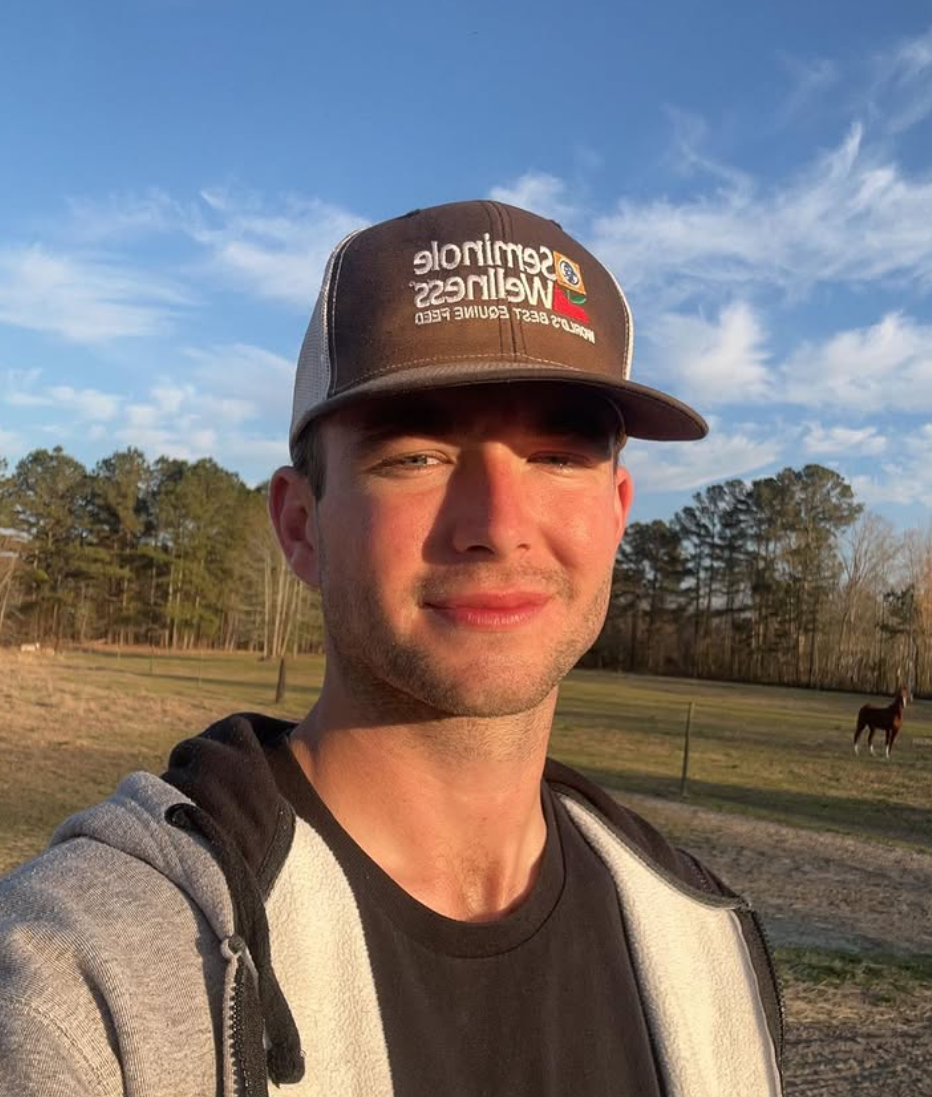
Founder, Brody Hickman Riding Academy
Brody Hickman is the founder of Brody Hickman Riding Academy in North Carolina. With a background spanning Saddlebreds, Morgans, Quarter Horses, reining, Western pleasure, and Hunter Under Saddle, Brody brings a cross-discipline perspective to his teaching. His academy focuses on building confident, capable horsemen by helping students understand horse care, safety, handling, and foundational riding skills before choosing a discipline.