The Comeback Ride: Key Waller on Legacy, Motherhood, and Returning to the Saddlebred Ring
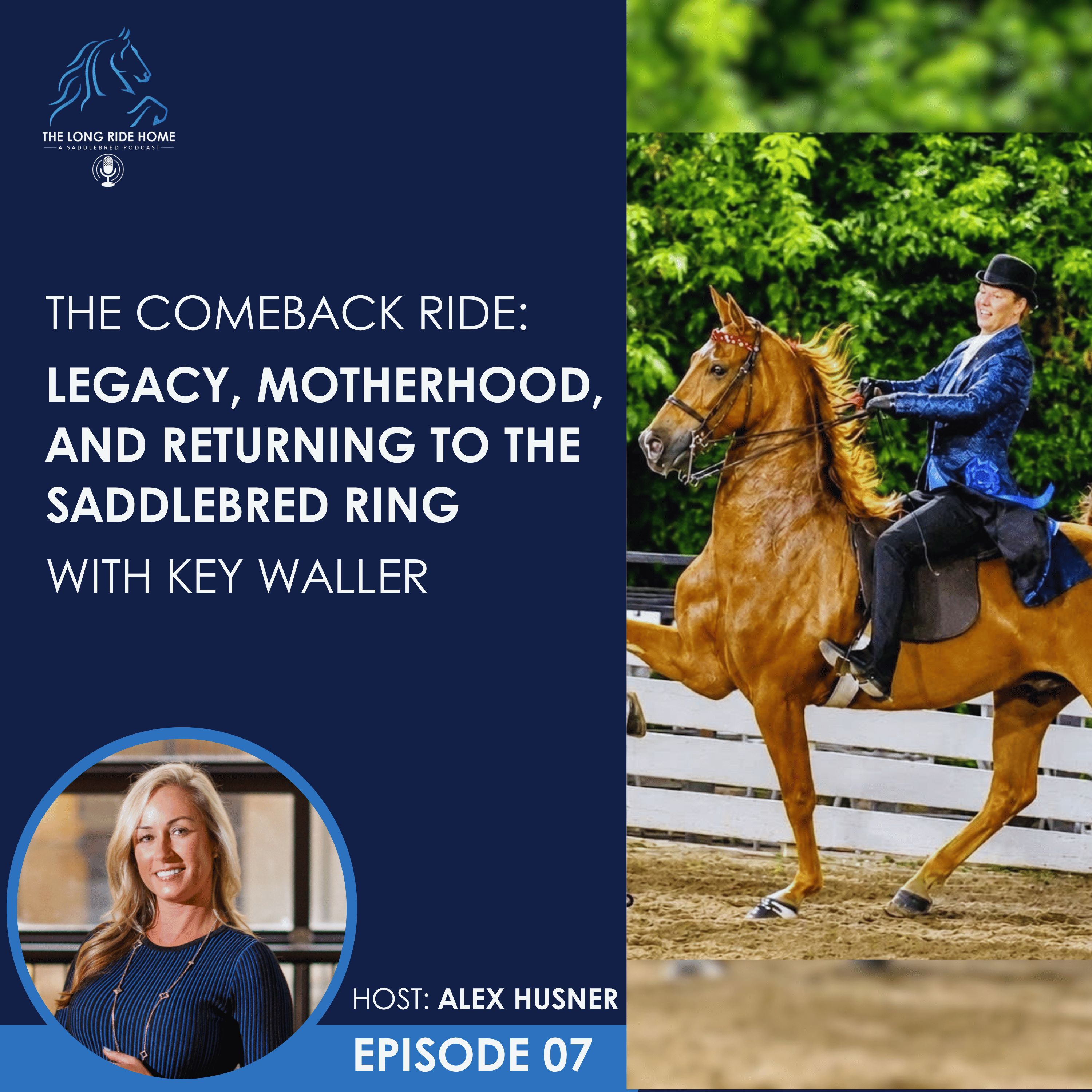


In this episode of The Long Ride Home, Alex sits down with Key Waller for a conversation about family legacy, motherhood, and what it feels like to return to the Saddlebred show ring after 11 years away.
Key grew up surrounded by American Saddlebreds at Blythewood Farms, where horses, breeding, and the show ring were part of everyday life. As a third-generation Saddlebred owner and breeder, she has always understood the beauty of the breed, along with the pressure that can come from carrying a well-known family history in the industry.
For Alex, Key’s story also reflects many of the emotions that inspired The Long Ride Home. After stepping away from the saddle herself for 26 years, Alex brings her own return-to-riding perspective into the conversation, connecting with Key on the nerves, muscle memory, small breakthroughs, and unexpected emotions that come with riding again as an adult.
Together, Alex and Key talk about the parts of the sport that stay with you, even after time away. Key shares how stepping into other disciplines, including hunters and reining horses, helped her keep learning, take pressure off, and reconnect with the joy of riding from a different angle.
Episode Chapters:
01:06 - Key’s upbringing in the American Saddlebred world at Blythewood Farms
04:10 - The pride and pressure of carrying a family legacy
04:37 - Why stepping away helped Key find a different relationship with horses
04:37 - What hunters and reining horses taught her about patience and learning
02:24 - Alex’s connection to returning to the saddle after years away
22:29 - The nerves and emotions that come with riding again as an adult
12:23 - Watching children grow in confidence through horses
15:04 - Pearson’s partnership with Domingo in the five-gaited division
14:15 - Key’s own return to the Saddlebred ring after 11 years away
40:56 - The difference between being a horse show mom and a horse show exhibitor
13:28 - Rebuilding confidence through consistency, trust, and time
37:10 - What makes five-gaited horses so powerful and unforgettable
44:59 - Creating a personal legacy in the Saddlebred industry
If you have ever stepped away from something you loved, carried the weight of expectation, or wondered what it would feel like to come back later in life, this episode is for you.
Connect with Key Waller:
Facebook: https://www.facebook.com/key.waller
Follow us on Social Media:
Facebook: https://www.facebook.com/thesaddlebredpodcast/
Instagram: https://www.instagram.com/thesaddlebredpodcast/
YouTube: https://www.youtube.com/@thesaddlebredpodcast
#americansaddlebredpodcast #saddlebredindustry #equestrianlife
Alex Husner: 00:03
Welcome to The Long Ride Home. I'm your host, Alex Huisner. This show is about honoring where we come from, pursuing what still calls us forward, and trusting the power of timing in both life and in sport. Through honest conversations with riders, trainers, and leaders in the American saddlebred world, we'll explore the stories behind the horses and the people shaping the future of this industry. Come on this journey with me. Welcome to The Long Ride Home. I'm your host, Alex Huisner, and I am joined today with Key Waller, who is a legend, I would say, and family legend within the American saddlebred industry. I'm so excited to chat with you, Key. Welcome to the show.
Key Waller: 00:47
Thank you. I'm so happy to be here. Thanks for having me.
Alex Husner: 00:50
Before we get started, I think you know, most of the people in the saddlebred industry for sure know who you are, but we've got some people that listen that are not part of saddlebred. So, and even for the people that know you, I bet there's plenty that they'll learn about you today that maybe they didn't know. So before we get started, can you just give a little bit of your background in the horse world?
Key Waller: 01:06
Yeah, so I am a third-generation saddlebred lover and owner breeder, everything. I grew up at Blythewood Farms in Cleveland, Tennessee. Grandparents started that farm in 1942 and ran it. My grandfather passed away in 1965. My grandmother kind of kept it going. And then my aunt as well. And I rode as a kid. And then I've ridden my whole life. I've shown saddlebred in college. I went to the University of Georgia. And when I went to college, I like to try new things. I like to do different things. I like challenges. So I ended up actually riding hunters for about 10 years in college, showed with a farm down there. And then when I graduated and got married, I it was always my dream to come back to the farm and work and kind of be a part of it. So my husband and I moved back to Cleveland and I did work at the farm for a couple of years. I mean just for a lot of different reasons. It kind of just wasn't the right thing for me at that time. So my dad was in real estate, which I think, you know, we've talked about that a little bit. He had an opportunity for me to, that was my major actually in college. So I ended up getting into real estate and doing that more as a career. And then I took a break from riding for a little bit, and then I started doing Rainers and did that for about 10 years. And then when my daughter got back into saddlebreds in 2020, it was really a lot of fun. And so just recently I've gotten right back in.
Alex Husner: 02:24
You know, that's the thing about this breed, and I think just just riding in general, no matter what discipline it is, it's like, you know, it's hard to leave it. You know, and for me coming back 26 years, I certainly understand because it's like there's probably not a day that's gone by that I I haven't thought about it. And I think, you know, when you're a kid and you grow up with it, it's just it's ingrained in you. I mean, it's part of your DNA. And for your experience, I mean, growing up with Blythewood and being part of a farm that had a huge impact, you know, on the breed and the the industry, it's stamped in you. You can't get away from it.
Key Waller: 02:53
It is very much stamped in me and my daughters. It's it's funny how that works.
Alex Husner: 02:57
And I mean, for people who aren't familiar with saddlebreds, I mean, what would you say was the impact of Blythewood on the American saddlebred world?
Key Waller: 03:04
Well, I mean, I think you know, it's one of the oldest breeding operations, continual breeding operations in the country, having started in 1942. And my grandfather, they bred a lot of horses. They had the number one breeding salute in the late 50s, early 60s. His name was King Ko. He was very well known back then. I think my grandfather was very well known for buying and selling horses. He even actually imported some horses to South Africa, which some of the lines are still coming back, you know, in today, and a lot of the South African horses that um people have. So that's that's pretty amazing when you think about the longevity of that. Then, you know, my grandmother has always been heavily in the breeding industry. So we've had other stallions that have been very well known over the years, like Fire Lane and Moreland Command and some of those. And then obviously, my aunt was involved with First Night Out. So, you know, he was a big breeding stallion in the 90s and 2000s. So it's it's a lot about breeding. Um, I mean, they always had great customers and, you know, top-notch show horses and um young horses, a lot of young horses. I think if you look at papers of horses over the years, you're gonna see a lot of Blythfood breeding there.
Alex Husner: 04:11
You know, just thinking back on all the magazines back in the day. I mean, saw many of those horses, and I was always very familiar with the name of the farm and the impact that it had. But it's also, I mean, it's gotta be whether in this industry or or sport or anything else, like when you grow up as part of a legacy, there's kind of a lot of pressure with that too. How did you deal with that back then? And like, how do you look at making your version of this your own when you do come from like, you know, so much history and legacy there?
Key Waller: 04:38
That's a really good question. Um, and something that I actually am probably working on at the moment. Um, uh as I delve back into this, you know, after a pretty big shift for our family's form. But, you know, growing up in it, you know, it's almost like the things that you don't even know you know because you're just like so in it. I mean, it's it's you're immersed in it, you're around it. And so there's so much that we know that we don't even realize from that experience. But you do, there is a lot of pressure, and I think that's why I've always enjoyed kind of doing something different because it maybe takes the pressure off a little bit and you can go and just do whatever you, you know, that when I did the hunters, that was really fun. I just love learning about horse training and horse management and just how people do things at the highest level. I find that really fascinating. I always have. When I quit riding for a little bit, it probably was a little bit because of some of the pressure and just needing a break. And so when I started back riding Rainers, I had a trainer named Heather Servies. I mean, she was incredible. She had done the raining freestyle at the All Tech Arena and had in Congress and had won a lot and done really well. I was so fascinated by that. And I just thought, you know, I just need, I just need to like take the pressure off, try to find the love, you know, and she helped me a lot with that. I do a lot of meditation, I do a lot of um, I've had a lot of therapy. I mean, there's a lot of things that I do that support me just in life. Yeah. But as I've come back to it, yes, I've I've kind of stepped back a little bit from, you know, what was the path that I was already on, and like, okay, what do I want?
Key Waller: 06:12
What do I want for me?
Key Waller: 06:14
What do I want for my children? And it has been fun to do that. It's been fun to reassess and get into that. So that's what I've been doing recently.
Alex Husner: 06:21
Yeah. No, I I think that's really an interesting way that you came back. I mean, like going into a different discipline and you know, finding that love for the horses again that is not tied to any expectations, right? I mean, like there, there's you don't have the legacy on that side, but you love the horses and you're, you know, true horsewoman. So I mean that that connection is still there. But what did you love about riding the reigning horses? Because you did it for quite a while, still doing that, you know, 10 years, I think you said.
Key Waller: 06:44
I did, and I still have my reiner at home. He's my practice horse. First Rainer that I bought in Texas. Yeah. I mean, it is such a very intricate discipline. To me, it's more intricate, differently. Like the thing I love about saddlebirds is just the excitement. Yeah. And, you know, the cheering and the crowd and the excitement of the show and the horses and the way that they feel to ride. Rainers is different, or it was for me. There's a lot of buttons, you know, and each button is very specific. And if you don't know how to push the button, you know, you're kind of lost. And I remember when I first started, I could barely get my horse to turn. And I'm like, what is happening? And my trainer, she's like, let me just get on. And she doesn't. I mean, he's just, you know, going like this. And I'm like, what am I doing? It was it was very humbling, but it was very good for me to have to step back and see that because even like helping my daughter, you know, when you've done something for so long that it's second nature, it's a little bit hard to be compassionate, I guess, for somebody who's trying to learn a new thing. Um, and so, you know, it was like, I know what you're saying because I used to train horses, but I have no idea I had to get this horse to do this. Yeah, yeah.
Alex Husner: 07:52
Exactly. And isn't that the wildest thing of like, especially as an adult now, somebody can explain something to you and you're like, okay, I totally get it right here, but I'm my body is not connecting to my mind to make it actually happen.
Key Waller: 08:05
It takes time and it takes muscle memory, and it takes time to really, you know. So after seven years, I really was able to, seven or you know, now probably eight or nine years, I can make the thing happen. But it really helped me a lot to be able to then help my daughters through all their sports and all their activities, and then also have a little grace for myself coming back to settle bread, being able to having gone through that process. It was really helpful. But the Rainers are so athletic, they're so beautiful, and they're so kind, and they will sit and I mean you'll you'll do some maneuvers and then you'll stop and just sit and talk, you know.
Alex Husner: 08:39
Yeah, they're just they're calm, yeah. Very calm.
Key Waller: 08:43
And sometimes the training of them, they have to stand in the center of the arena before they turn. So sometimes the work for the day is just to stand. Wow, that's all they can do that day. So, you know, it's really interesting. I loved it. I loved learning it, and uh I think it's helped me a lot.
Alex Husner: 08:57
That's really cool. Did you compete also? Yeah, yeah. Wow. What what were the shows like on that side of the world?
Key Waller: 09:02
Well, you know, it's funny because people talk a lot about accessibility to the breed, and I think that's the thing with saddle breads right now is you know, how do we get new people in and how do we promote our breed? And I've talked a lot about this. I think Rainers are really smart, and I don't know exactly. I mean, we're doing some similar things, which I think is wonderful, but what I've appreciated about the Rainers is they have a division called Green Rainer, and you go in there and you you have to get a certain amount of points to point out of Green Rainer, which I ultimately did. I ended up in the rookie before I had stopped. But you compete against other green reiners only. So you can be competitive. Like when I first started, I looking back on it, I did not realize how I was, but I was learning and I was going through it. And so instead of having to go compete against these non-pros that are incredibly talented and you know have been doing it for years, I got to compete against other green reiners like myself.
Alex Husner: 09:54
That's cool. Yeah.
Key Waller: 09:55
I go to a horse show in Ocala or you know, or even like we went to Tryon and we went to Murphy'sboro. And I could be third or second or third, you know, and I felt really good about that, even though I was about six divisions below, you know, maybe my ultimate goal, but you can work your way up. So I think it gives accessibility to new people, which is really helpful.
Alex Husner: 10:16
Yeah, that's interesting. And I mean, I you know, in Saddlebreds, some of the shows have the master's classes now, which I think that kind of speaks a little bit to it, that it's you know, if you're somebody in your 50s or 60s, you're not competing with the you know, 19-year-old that's like in tip top shape, which which helps. But that that is really cool though.
Key Waller: 10:34
You know, Saddlebreds are doing the select series, and yeah, you know, the academy stuff has taken off so much, which I think is so wonderful. So we we have some avenues for it, but it it made me not want to quit because I'm competitive.
Alex Husner: 10:46
Yeah, yeah.
Key Waller: 10:47
So I was good at it, I wanted to feel like I was in it.
Alex Husner: 10:51
Yeah, no, exactly. And I think from my perspective coming back, and I'm sure you've had this like aha moment at different times, either with the Rainers or with the Saddlebirds now, it's like, you know, the big wins for me right now are what we just described earlier when my trainer or somebody's been telling me I need to do something and I haven't been able to figure out how to do it, even though I can see what it looks like. I just I can't physically make my body do it. But when you get it, it feels so good. You know, it's like, oh man, that like that's that's as good as getting a blue ribbon somewhere. Cause it's like it's like it's just seeing the progress, you know, and feeling that impact of like, okay, I've really thought about it and I've really made my body think about it, and now we can move on to that next thing. And I and I think that, you know, generally, I don't remember what how I thought about this stuff as as a kid that well, but I do think, you know, coming back to it now, that stuff really means a lot to me, you know. And I think as a kid, it's like you feel like kind of more pressure, I almost think that I don't feel pressure right now. I'm not having shame and shadow. But like it's making the process enjoyable and like giving me the ability to feel it's okay, you know, to not be perfect, but like to know, like I'm not trying to be perfect around the ring, each direction, every gate. I'm just trying to focus on one thing. And I had Amanda O'Keefe, who actually was she suggested that I have you on the show. And she she said something similar that when she goes into a ride, she has three things that she wants to focus on, or or sometimes even just one thing. And then after the class, it's like, here's either the one thing or the three things that that I did well. And it's like it's it doesn't mean that I did everything well, but I at least got past this one thing we were working on.
Key Waller: 12:24
Yeah, we had that, I had that conversation with my daughters, you know. Both my daughters are now showing my other, um, my younger daughter, True, she had back surgery at 14 from a volleyball injury. And she is not as passionate about horses as probably Pearson and I are, but she's always been around it again, you know, multi-generational. So we were having this conversation. She showed her pony, she has a pony at Majestic Oak, and they have been phenomenal to help her. And um, we were having that conversation. I said, you know, she was focusing on walking. And I said, you know, the thing is, is when you get the one thing down that you were working on, you know, that that's it, you build, you build on that. But then it's like that thing, you want to maintain that thing and you want to keep it there, but then now you can work on having a little more pony, you know, asking for a little more.
Alex Husner: 13:06
And then the next, you know, you so it's it's just like a building process in your it is, and it's how you build up confidence in a rider, you know, whether it is a a child or somebody returning or somebody new to it, like you do have to build up the rider's confidence. And I think some of that falls on to the trainers too, okay, you know, making sure to tell them when they're doing something right, not just when they're doing something wrong.
Key Waller: 13:28
I agree. I mean, I can say, you know, before things were very different back when we were kids, probably, but I'm so amazed. Robert Gardner has been Pearson's trainer, and now you know I'm riding with him as well. He's a friend, and I've always been very impressed with him as a horseman. I think he's a wonderful horseman. His attention to detail is unparalleled. But what I think is really great is I think it's really hard to be a good horseman and also articulate to a rider what to do at the right time and be able to be supportive, but also, you know, have constructive criticism and all the different things that you need. And he was so great with that with Pearson. And I think consistency is really important. Like if your horse is consistent, then you can build. You know, if your horse is not consistent, then it's like you're kind of putting out fires all the time.
Alex Husner: 14:13
Yeah, you're you're chasing a target that keeps moving, basically.
Key Waller: 14:16
When your trainer comes out with a very consistent product, which both he and you know Majestic Oaks do, I see my head's growth being exponential, and and that's really cool to see, I think. And then also the same for me, you know. I coming back to it, I mean, I started riding Pearson's horse, and I was, I mean, I was really nervous at first because it had been 11 years since I'd shown a saddlebred.
Key Waller: 14:36
Yeah.
Key Waller: 14:36
It had been 11 years really since I'd ridden the saddlebred very much, but wow, so appreciative of the fact that the horse was the same every time I got one.
Key Waller: 14:47
Yeah.
Key Waller: 14:47
I could work on me, and I could work on, okay, we're gonna do this today, and okay, that was better, so now we're gonna work on them. You know, it was a quicker relearning curve, I guess.
Alex Husner: 14:57
Yeah, and let's let's talk a little bit about the horse. So the Northern Crown, aka Domingo, and your daughter rode him for which years? Four years.
Key Waller: 15:05
So we bought him as a five-year-old from Elizabeth Gough and Lisa and Donnie Pyburn kind of helped with that. They're friends of ours from my area, but um Robert found him and you know, called me and said, I've I've found this horse I think your daughter needs to buy. And I said, Well, that would be great, you know. But will you take him? And so we went and looked at him. And it was funny because Pearson was just barely like she'd shown a gated horse for a couple of years that we actually we bought from Robert, but this was a major step up for her. Yeah, and he was green-ish. I mean, he was five, but he hadn't been shown a lot. So we took the winner and uh she started showing him. I think it was in the 14 to 17 Five Gated Division, which is an insane division in the very competitive, yeah. And I have to say, I, you know, they worked really, really hard the first year. They were both a Darren Headlights, those two. Um and Pearson. And, you know, he was such big, powerful. He's a really big, powerful horse, and he's a show horse, you know. So when he gets to the horse show, he grows and he loves to show and he's very charismatic in the showroom. And she was just sort of like, oh my gosh. And she did okay that year, you know, she she got good ribbons, got to Louisville. And speaking of like constructive criticism, it was funny because Robert has never said anything to her other than just, you know, you're doing great, and we'll work on this. And they got to Louisville that first class, and I mean, I I think they both checked out. I don't think anybody ended up getting an eighth place ribbon, so she did get to show back, but she came out and he was like, You can do better, you know, and he like really and then later he was like, No, you know, I'm sorry, but I just I know you could do better. And she was like, No, I really needed to hear that, you know. But they had such a good relationship at that point that she could absolutely tolerate it. It's very important, but anyway, she didn't get a ribbon in the championship that year, but she was determined, and so they spent the whole next year and the whole next year she was undefeated, completely undefeated until the championship. She won it, she won her qualifier at Louisville, and she got beat by Izzy Fisher and for the love of Pete and the championship, and then went on to beat her in Kansas City, which was like wow. Yeah, all were just like, oh my gosh. And then the second last year was uh, I mean, almost the same. She was almost undefeated last year. Um, she got beat by a really nice horse, Denny Sir Charles and Demi Bolton at um Asheville, and then went on to win win everything and um you know, win the roses, which was just like a ton of amazing, yeah. Yeah. Gosh, I mean, this horse, he is such a special, special horse, and they have a special relationship. So, you know, I kind of thought we would sell him after that. I thought that he would be, you know, something that maybe somebody would want to buy. And I don't know, I think maybe the universe had different plans because he didn't sell. And I said, you know, I think I'm gonna show, I'll show him. I mean, I why not? And it has been an absolute blast. I mean, he's the nicest horse I've ever owned, he's the nicest horse I've ever shown. He's incredible.
Alex Husner: 18:03
That's so cool. Yeah, talk about memories of a lifetime, you know, going through that for both your daughter and for you as a mom. I mean, I can't even imagine how that feeling of pride is just, you know, oozing out of you. Absolutely. Yeah. And I mean, to think like, and actually I saw she had maybe you had posted, but it was a video of her on Facebook just recently talking about that, how the first year was, you know, kind of a struggle. And but then the next year they worked really hard and they came back and did so well. And it's like, you know, those are the stories that I just I hope more people share about how they got to where they are that are, you know, in the top ribbons at all these shows. Cause it's like, you know, it's very rare, rare case that somebody starts, gets a nice horse, and just takes off and wins. And I had uh Kelly Berry, who's in the Hunter Jumper world, on the show recently, and she said, you know, your horse doesn't know if he's worth a dollar or half a million dollars, you know, and it's a really good point because it's like, you know, you can't just rely on, well, we're gonna go buy a nice horse and everything's gonna be fine. It takes just as much work to ride the horse. I mean, like, there's so much at play, and that the sport is is so complicated, and it's far more complicated than I actually even remember it, to be honest. And how it really is addicting. And like for your daughter, I'm sure she was like, you know, she saw those glimpses of progress and like that she, you know, they could be really good. And that's what makes you like, we're gonna figure this out, we're gonna do it.
Key Waller: 19:21
Yeah, it's been amazing and and such a cool journey. And then for me to get to show him is like, you know, it was funny though, because you were saying coming back to it. I mean, for me, the pressure felt very different because, like you said, you know, when you're a teenager, there's a different type of pressure. I think you you know, you're just learning so much when you're young. It's just so much to learn. Now it's like, okay, I can I can sit back and see it, but I am taking my daughter's world grand champion horse and trying to and they're my kids are good. I mean, I taught them to be really strong individuals. And then, you know, when I started getting into this, they could sense my insecurity. And, you know, they were like, Mom, what are you doing? Like, you're great, you're doing great. And I don't know, I think at Rock Creek, this last show is when it really clicked. Like some of that muscle memory that I had, you know, the horse and I had built some trust back and you know, not back, but together. So some of that was starting to come together, but but it is hard coming back to it. I think there's a lot of you just you think about it a lot more and a lot differently.
Alex Husner: 20:21
Yeah. And when you did start riding again, I mean, how long ago did you start?
Key Waller: 20:25
So basically, I I keep my reiner at home, like I said. So I ride him two or three times a week and I I try to keep myself fit because obviously that's part of it. Pearson's horse, uh, Domingo, I call him Pearson's horse. I mean he's he's very lofty trotting. So one thing is we have to go up, you know, two stirrup holes to trot him. So yeah, I I I just said to Robert, I said, Hey, I you know, I'd like to ride him one day. And this was back in probably like November, maybe December. We let him down. Robert likes to let the horses down in the wintertime, which I fully support. But you know, he's so this horse is so talented, he doesn't take much shoe anyway. So we were able to kind of ride him a little bit along, which helped me because if I was gonna show him this year, I needed to not take off the whole winter and then just try to jump into it. So I was able to go ahead and ride him, just knowing that like the expectation is you know, I'm just learning, I'm not worrying about what he looks like. Yeah, which also is a really important thing for people to recognize is you don't you don't need to show at home, like you're not gonna go at home, you know, you're working through learning things with your horse, and it's not gonna always look pretty. Um and it's not gonna look good, and that's okay.
Alex Husner: 21:28
Yeah, it's a really good point.
Key Waller: 21:30
Because when you get to the horse show, you know, you hope that all those things that you learned and did come together, but you can't always have a horse show at home.
Alex Husner: 21:36
Yeah, yeah.
Key Waller: 21:38
Spent the winter, you know, doing like riding and like me figuring him out. And he's really, really game, but he's very kind. And so he, you know, he's very patient with me and go ride as often as I could, which really wasn't that often, probably once a month or once or twice a month if I could, kind of like you know, you were saying the other day. It's very it's far and you gotta be able to get up there. It was great. Great to get to do that. And then our first show was spring premiere. And I was an absolute wreck. Really? Oh my gosh. All my years of showing, I was a wreck.
Alex Husner: 22:11
And did you think that you were going to be that way? Because that's one thing that I'm thinking about of like in my mind, I'm like, I'm sure I'll be fine, but I don't know. Like, I really don't know. Until I start putting on my, you know, my suit and everything and my hair done. I'm like, I'm trying to prepare myself mentally, but like, did you anticipate that you would be nervous or did it surprise you?
Key Waller: 22:30
I don't think I had any expectations of it because I had shown so much as a as a you know in my life. And then the rainers is so different because you get on a rainer like an hour before you show.
Key Waller: 22:41
Oh wow.
Key Waller: 22:42
And you ride and you warm up and you practice and you stop and you stand. And so, you know, it's just a very different environment, which is the last showing I had done. Yeah. Always I remember about myself that once I got on the horse, I always just immediately feel better. Yeah.
Key Waller: 22:57
Yeah.
Key Waller: 22:58
And then some of the, you know, the muscle memory kicks in. But I was more nervous than I was expecting to be. And it and it wasn't even, I don't know what it was. It was just sort of like everything, you know, my system really heightened, and I just like, you know, kind of disconnected from things. But after that first class, it's been way better since then. I was even so out of breath. My kids are making fun of me. And I was like, I think I was just very, yeah, heightened. Like my whole rhythm was very heightened with going back and doing this for the first time in a while.
Alex Husner: 23:29
Yeah, no, I I know that feeling too. And it's like, you know, you can be as in shape as possible. But I think when your nervous system, you know, get has that hit to it, and it's like, you know, your breathing becomes shorter and like you're bracing, and it's like, and that just adds to more of like the internal anxiety of it. And, you know, I'm and I'm sure for you too, it's like this is emotional, also. I mean, like coming back to something after so long and with the legacy and everything, and you know, it being Pearson's horse. I mean, there's there's just a lot going on there. And and I think about more. The one thing I know for sure is gonna happen. I don't know how I'm gonna be before the class, but I know once I finish the first class, I'm gonna be bawling. Just know that in happy tears, but just of like, God, I can't believe it. You know, like it's just so long to get back to it.
Key Waller: 24:12
But yeah, I think that's that's what's really important. What I have, you know, speaking of what you've learned in terms of coming back to it, I think there's a couple of things that I've really tried to embody myself. You know, I I meditate, I do a lot of that stuff. But I think when you do something that's so high energy and so I mean, the class is long, but it's very quick as well. And then, you know, the horse show is long and your time to show is very quick. Yeah. So what I think about and what I've thought about a lot since I've been back doing this is it's important for me to be really present the time that I'm doing this experience from like getting dressed to walking over to watching the horse warm warm up to getting on, to just like I do a whole grounding thing. And I I I learned that in raining because there was more time, but I I try to carry that forward into my warm-up because it helps me to stay really present and really enjoy, even though it's super intense, and that's what we all probably love about it is the showing and the excitement. But if you can't even enjoy, you know, if you're so if you're so hyped that you can't enjoy it, then afterwards, you know, it's like, wait a minute.
Alex Husner: 25:21
Can you share a little bit more about like that process you actually go through of either the meditation and the grounding process? That's that's interesting.
Key Waller: 25:28
So, you know, I meditate. I mean, I used to meditate every day. I don't as much anymore, but I do um what's called a somatic meditation. And then I also do um what's called somatic affirmations, which I find really, really amazing and helpful. But, you know, you kind of you close your eyes and you just take some deep breaths and then you visualize the thing, whatever it is. It can be something that brings you joy, something that, you know, is anything really positive, exciting, whatever. So a lot of times, even when I'm preparing to ride, I'll kind of stop and breathe, and maybe in my hotel room and I'll, you know, breathe and then I'll close my eyes and I'll visualize, you know, a really good pass or whatever I'm working on, but it going really well. And with your eyes closed, you just visualize those things and and then you open your eyes and you you orient that into the present moment. So you kind of like anchor that in. And I feel that that like brings it into your body and helps you. So when that moment's happening, you know, your body's experiencing it, you're like, okay, yeah, like this is the feeling, this is the thing I'm trying to recreate or experience.
Alex Husner: 26:34
I mean, I'm a little woo-woo, but this is what I am among your kind. Uh, me and um a lot of my girlfriends are very much the same way.
Key Waller: 26:44
It helps me a lot. I mean, I've worked with a lady out in Wickenburg, Arizona with uh somatic experiencing, and I find it to be really helpful. So I do that. And then just as far as the grounding goes, you know, I my daughter, I I taught her this as well. But, you know, when you're warming up, I mean, even though you're focused and you're and you're listening to your trainer and there's so much going on, but you know, you just look around and you think about, well, I see that color or I see that, or I feel my horse, or I feel myself sink into the saddle, just any of the senses that you can pick up on, yeah, just helps you stay kind of present into the moment. So yeah, that really helpful.
Alex Husner: 27:24
Yeah, no, a a hundred percent. And I don't meditate as much as you. I meditate probably more than the average person, but I mean, it's maybe like once a week or so. But I I got into transcendental meditation a couple of years ago and had a friend that just swore by it, and I did the whole training and everything on it, and it was good. And I think it for sure helps when you know, I mean, you look at anybody who's been super successful in life, and if you trace it back, almost all of them meditated. So that's kind of why I got into it. But I'm like, you know, there are times when even if I don't sit down for the full 20 minutes, if I just take a minute at my desk or if I take a minute, you know, at the barn, like just to kind of like you said, I mean, it's it's it's a grounding practice within, but like just to steady your mind, you know, and it's like I think we could we all especially way more now, even than when we were kids doing this. I mean, there are endless distractions, you know, mostly related to what's in our our hand or phone. And it it can be really hard to keep that mental focus, but with any sort of sport too, I mean, that's you know, traces back to all the best athletes that they have some sort of a practice like this. And um, actually, I just written uh read an article in one of the many magazines that Sandy Gallagher had written about what she does before a show. And coming back to this, I knew her name for sure, but I had no idea that she had anything to do with the book The Secret, which that book literally changed my life back in 2014 or so. I was going through a lot of stuff with um my mom had just had a brain aneurysm, and my grandmother, we were trying to move her into assisted living, and it was just, I was so overwhelmed. And I found that book. And when I look back on my professional career, from that book forward, like really changed things for me as far as how I understood that your mindset controls your future. I mean, like you can literally map out the future what and what you want. And a lot of that, what that book talks about is the visualization. And Sandy said in this article about same thing what you said of like, you know, visualizing a really strong past or like visualizing something that you want to have happen in that competition or in that ride. And I try and do that now just when I go up to practice. But she also had something that interesting that I thought was a good tip in that too of, you know, in your caboodle or your hat box, have a picture of yourself doing something different, like with your family or with your friends, or another sport that you do, or something that you're proud of. So that like when you do get discouraged, if you did have a bad ride, remember this isn't everything, you know, like you do have other things and like you know, and that that's just like you you have to keep yourself in that mindset. And I think as a kid, that is it's really hard to teach kids that, you know, and I think that's where I got discouraged sometimes as a kid. And you know, I look back on it now and had all my Richfield videos digitized and rides that I remember thinking weren't good back then. I I watch them now and I'm like, what was I even upset about?
Key Waller: 30:05
Like we're right. It'd be really hard on ourselves when we're younger for sure. And yeah, now you can try to have a little bit more uh, you know, perspective, I guess. And yeah. But that's the other thing I think a lot about too, with showing horses. Um, is for me now what I've realized is it's really important, I think, to have also a really awesome, you know, barn family or or horse friends, or just people that, you know, and that's why I think it's important to also, you know, try maybe even breed or or do do other things than just one horse, because that particular part of it is really a very small time. I mean, it is it is the focus, and I love it, and I love the competition, and I love being, you know, my best and trying to be better each time. I mean, all of that is obviously why I do it. But when you think about, you know, when you spend a week at a horse show and you only show for a very short time, I think it's really important to have outlets and friendships and you know, other people to support and other people.
Alex Husner: 31:10
Yeah, well, and it I mean, just the sport in general, it's interesting because it's like, you know, we're all we're competing against ourselves at the end of the day. I mean, it's an individual sport, and it's like everybody is going through a different journey of where they're at in riding and with their horse and at that show. And it's like there's so many stories that are going on at every single horse show in everybody's minds, from the riders to the trainers to the grooms to, I mean, the whole thing. It's like there, there's just so much going on, but it's a really good point of like, you know, it is bigger than just you and your story, it's about the other stories going on around you and and just appreciating them. You know, it's like it's this is definitely not always easy, but there's a lot of joy to be felt. And sometimes that joy is just from seeing somebody else. And honestly, like when I saw, I think it was the picture from Rock Creek, it might have been from did you win at Spring Premiere too?
Key Waller: 31:57
I won at Spring Premiere and Dogwood Classic.
Alex Husner: 31:59
Okay, so there was a video I had seen before we got connected, and I remember you had in the post that you're after 11 years coming back, and I'm like, oh my gosh, I have to talk to her. But the smile on your face was just you know, ear to ear. And you it was such genuine joy and happiness. And I think that's like now when I watch shows or we were watching um Shenandoah on TV a couple nights ago, and I saw this gal that won the amateur five gated class, and like she had that look that you didn't. It was just like you can tell she's worked so hard and like just so appreciative and like just grateful. And you know, that's beautiful to watch, even if it's not you experiencing it in the moment.
Key Waller: 32:36
Yeah, yes, absolutely. No, and I you were talking about competing against yourself. I think it's so funny. My daughter, True, has been really interesting for me to work with because she's not as passionate about the horses as Pearson and I, she doesn't understand really what makes a nice horse, particularly like she asks me now, you know, what is this or what is that? But it it is not natural to her. So I've got this really beautiful pony and she's been driving him. But it's interesting because for her it's very detailed, and she she just showed two minutes ago, I guess it was, in Shelbyville, and she won. She had a great drive.
Key Waller: 33:11
Awesome.
Key Waller: 33:12
She was really cute, but she was like, Mom, I mean, I don't really know if my pony is better or worse than these other ponies, but I just know that I did better. And, you know, I'm just really competing against myself because I want to be better, and I feel like this was better. And I thought that's really cool and a really great thought because if you take all the other stuff out, yeah, that's that's another thing that I have implemented, speaking of the grounding and staying present. I I kind of started thinking about this with raining, and I try to do it with side roads too. So in raining, they they announce your score. So before you even leave the rain, you get your score. But what I try to do is I try to think to myself, how do I feel like this went before I even hear my score or my tie, you know, in a class? Do I feel like it went well? Do I feel like I did the things that I was trying to do? Did I enjoy it? Because it's almost like once you hear somebody else's perspective on it, whether that's a screen or a you're like, I guess I didn't do that well.
Alex Husner: 34:06
Yeah.
Key Waller: 34:08
Maybe I didn't do well, or maybe I'm like, well, I did guess I did better than I thought. But it's like that's somebody else's perspective. I want to like really focus on my perspective of it before that happened. Um so it's been interesting to talk to her because she's so focused on that, you know, herself because that's all she really can focus on.
Alex Husner: 34:26
I think that's a right. I mean, I'm sure she's learned that from you, you know. Like you have to have that doesn't just come from anywhere. I mean, like you you learn it from somebody or from what you've what you've seen, you know, and I think that's really important, you know, these days for riding now as a junior exhibitor is very different than it was when we were younger, because again, there there weren't cell phones back then, there wasn't social media back then. And now it's like, you know, we really what you see is all the highlight reels, and it can be you know devastating when you're a a a young child who's learning so much about them yourself personally, but then also competing at this very high level in this, you know, a sport that takes a lot from from you, from your family, from everything. Like, you know, that pressure's there. And it's like, I think it's really important to emphasize that more, you know. I think that's really a good point.
Key Waller: 35:13
Yeah. And I think too, you know, the other thing we were saying is, you know, Pearson's journey, like with the it not going as well in the beginning. I mean, I don't care if you're a successful real estate person or a movie star or whatever. Yeah, there was a backstory, you just don't know it, you know.
Key Waller: 35:29
Sure, yeah.
Key Waller: 35:32
I was so glad that they interviewed Pearson for the academy because she did academy and yeah, when she was 11 years old, we had this pony, and oh my gosh, he would like dive in the bridle so bad. And she I have a video of him pulling her over his head, you know, at a trot at the horse show, and she could hardly get him to line up, you know. But I mean, she hung in there. It taught her, you know, it taught her how to how to do it, but that was when she was seven, you know, now she's 19. There's 10 years between there where she got from that point to this point.
Alex Husner: 36:04
Yeah, a lot of things that led to it for sure. Yeah. So I want to talk a little bit about riding five-gated, since that's now what what I'm doing. And I had never done this as you know, a child or junior exhibitor growing up. And quite honestly, like when we met with Andrea and Andrea and said that we wanted to get a horse, I came back into this thinking I wanted a three-gated horse or a park horse. And my my last horse was a three-gated pony. So I figured, you know, that's probably like the lane that I'd want to go into. And since coming back, I've realized it's better to not take that angle of like saying, I want this division or I want this color horse or anything like that. I mean, it's more about finding the right horse and the right fit. But I really didn't even consider five-gated just because I hadn't ever done it. And when this opportunity came about, I was like, I mean, why not? You know, this would actually be kind of fun because it is so different than what I've done. I have a lot of respect now for all the people I knew back in those days that rode five gated because it is, it's challenging. I mean, like it is definitely it's learning many other skills that I never learned back then. But what is it that draws you to Five Gated? Like, what's the thing that just makes you keep coming back or wanting to have a gated horse?
Key Waller: 37:11
I don't know. I I've always been a gated horse girl, you know. I think I like speed, which might have been also why I liked raining. But I feel like, and this is what happened at Rock Creek the other, you know, the last night, there's nothing like coming out of a turn and like cutting that turn and like shooting your horse down the the straightaway, yeah. Um, and just having them racking so slick, you know, and uh it's like it's kind of a feeling that you that you can't describe. You you kind of have to feel it. But I've always just been so enamored with a gated horse, they're so powerful, they're so smart. You know, not all horses are gonna be gated horses, which I find interesting in the saddlebred industry because people sort of assume a lot of things about saddlebreds. Yeah, having grown up in, you know, breeding horses, you know, you it takes a lot for a horse to become a gated horse. I mean, they have to be game enough, they have to be, you know, they have to have a certain way of moving that that lends itself to that, and then they have to be trainable, and then they have to, you know, it's like the process of they rack and then they have to go back to trotting, and then they have to be able to kind of put that all together. So much like the rider of the gated horse, the gated horse itself, I feel like has a lot of um of steps that they have to learn to be able to put that together. And I've said this to people recently just because a horse can rack does not mean he's gonna be a five-gated show horse.
Alex Husner: 38:31
Right, exactly. Yeah, and here here's a question I have, especially since you come from the breeding background. But when uh a horse comes into a training program, do most breeders or trainers, do they always try to see if they can be five-gated first? Or is there ever a decision without even trying that this is gonna be just a three-gated horse?
Key Waller: 38:49
I mean, I think it totally depends on. Well, I mean, first of all, it kind of depends on confirmation and gameness. You know, some horses are just very happy to do, you know, three gates, and because it does take a pretty gritty horse to hang in there and do all the all the things. That's not good or bad, I don't think. I think it's just there's there's a spot for, you know, a lot of different horses. You can also sort of see, like Pearson. Um, we had a horse that was um going through the sale that we ended up buying back because Pearson wanted to break a horse to ride for the first time and she broke this horse to ride. And the whole time I was like, This horse is gonna be a gated horse because he shuffles. Yeah. You can see it, you know, you can see when they come, when they're running along beside their mother, you can say, you know what, that horse is gonna rack because they shuffle. Yeah. If they do that, then I think you're definitely thinking, Yeah, I'd like to try to rack this horse. You know, some horses don't. They just the way that they move does not lend itself to racking. And so probably if you see that, you think, you know, I'm probably not gonna do that. Another thing do a lot of times is they just rack them to get them broke because it is harder. So you rack them a little while and then you think, okay, well, this horse may not rack, but you know, now they're we've handled them more and they've gotten tired every day. And so now we'll go back and you know, go back to three gates or whatever. So I think people will will try it, sure, for several different reasons. But yeah, those are kind of the reasons why it makes sense.
Alex Husner: 40:10
Yeah, and and I think especially in what you mentioned about the babies, like it comes down to their breeding too. You know what I mean? Like if they come from chapstick and your horse are are both northern kiss babies. So it's in their it's in their DNA to slow gate and rack. But yeah, and it is so fun. It is such a fun gate that when I look back, I'm like, I can't believe that I never even really thought to try it, really, you know, as a kid. I guess we just we didn't really have a whole lot of five-gated horses at Cricut Hill when I rode back in the day, but it is definitely when it when it feels right, it just it feels great. And that moment that you described in the show ring, it's like that's my visualization. I'm keeping it in my head.
Key Waller: 40:47
It does. It is so fun. Yeah, it kind of gives me chills. Just thinking about it.
Alex Husner: 40:50
Yeah, it does. It does. So, what's the plan for this year? I mean, for you and Domingo, what's what's coming up next?
Key Waller: 40:57
Well, I think our next um show will be Lexington. I don't know exactly what we're doing. Um, it kind of depends on my kids showing too and what they're doing. Cause I've been, I have, I've sort of taken a little bit of a backseat to my kids, um, which I've loved. I mean, I've I have one I it was my choice to do that, um, and I wanted to very much. But, you know, now Pierce, this will be Pearson's last year before going to college, and she's got a road horse under saddle that she's showing, and then True has her pony. So I don't like to show the same night as them. I can show at the same horse show, but I don't like to show the same night because it's very different to be a horse show mom than it is to be a horse show exhibitor.
Alex Husner: 41:33
Oh, totally, yeah. I can only imagine.
Key Waller: 41:36
I struggle with that at least at this point. So we'll see. Uh my plan is Lexington, and then um, and then hopefully Louisville is is what I'd like to do. I mean, it's been a long time since I showed at Louisville. I mean, that's a feeling like no other, and uh excited to get to do that with uh Domingo because having watched him, Gary Pearson, through all the wonderful things and being the show horse that he is, like the thrill of of him, like um, you know, he just he like grows. It's it's like hard to describe.
Alex Husner: 42:03
Yeah, gosh, I can only imagine.
Key Waller: 42:06
So that is very exciting, and then we'll see from there. I have no idea what it might be. Yeah, if anything, this fall.
Alex Husner: 42:11
What do you think Domingo's thinking? Like, do you think he gets like, okay, like Pearson's, she's gonna go away, but now you know, I've I've got the other, I've got my other mom. Like, what do you think he thinks about all this?
Key Waller: 42:21
I do. I just love him so much. You know, I loved that horse the first day I saw him, and he has had so much personality the whole time, and you know, he's such a show horse. I mean, he's good at home, but he's great at the horse show.
Key Waller: 42:35
At the show, yeah.
Key Waller: 42:36
I think that is so special. You know, a lot of saddlebirds are that way. I think it's really special when they have that personality because you can't you can't recreate that. I mean, that's where that's just kind of how they are.
Alex Husner: 42:47
No, that's so cool. Well, I'm sure when he gets back to Louisville, if you guys do get there, I mean he's he's gonna know immediately, like, okay, I remember this one.
Key Waller: 42:55
Yeah, and he's funny too, because man, he Pearson would say to me, She's like, Whatever he, you know, if he's messing around at home or whatever, she's so funny. She's like, Don't worry about it. Just don't worry about it. He's gonna be he's better at the horse show. He's better at the horse show. And I'm like, Well, I don't, you know, I don't know. I mean, I'm I'm yeah, good about how it's going at home, but you know, but until you do it, you can't.
Alex Husner: 43:15
I'm excited to see what that's gonna be like for Chapstick because I think it's gonna be very similar. He's been to two shows to practice and in his practice rides in the arena and in the uh warm-up ring. I mean, he was incredible. So like I I think it's gonna be the very similar tale once he actually has it's really cool, and I think that's my daughter True about you know, showing.
Key Waller: 43:35
I said, You cannot recreate a horse show, you know, for yourself, for your horse. I was like, there's so many factors, and then the horse the horse feels it, they sense it, they know you know. I said, because she was talking about how much better she felt like she did in her second horse show. And I said, Totally. I said, for me, you know, because it had been so long, the first horse show, Spring Premier. I showed twice. I was like, the first I was a wreck.
Key Waller: 43:56
Yeah, yeah.
Key Waller: 43:59
The second class. I felt much better. You know, at Dogwood, I felt much better. And then by Rock Creek, I was like, okay, you know, I'm starting to do that.
Alex Husner: 44:06
Getting in the groove again. Yeah.
Key Waller: 44:07
But I was like, you can't, you just can't recreate that at home. I mean, you just have to go show. And I think that's the hardest thing about people who, you know, do well and border on perfectionism, which, you know, is a struggle. And you don't want to put yourself out there. The hard part is you just have to do it. You have to go show. And you have to make the mistakes and you have to correct the mistakes, hopefully. And that's what I try to explain to my kids. And I try to give myself grace as well for that.
Alex Husner: 44:32
Yeah. And the horses, you know, I mean, for them too. It gets across all right.
Key Waller: 44:36
At the horse.
Alex Husner: 44:37
Yeah. Yeah. Well, I've got one last question to wrap it up. When you look at your lifetime in horses, I mean, from as a kid being part of the legacy of the farm and the reigning horses, your daughter's riding careers, both of them. And then now your return, what does that say about you as a person? Like what does your whole riding career say about like your lifetime and the impact that you want to have?
Key Waller: 45:00
I think that when I was growing up, I didn't think about it. It was just my life. It was just what I did. It was just what we did. And there, you know, my life was having gone away from it a couple of times. I think now I get to choose it. Now I'm choosing it. I'm choosing the path that I want to be on. I'm choosing to surround myself with people who I would say lift me up, who support me, who have similar goals, who are incredibly successful in their own way, which I feel honored and grateful to be around. Like, you know, all the people at Majestic Oaks, as well as like Robert Gardner and all of the people in Utah Allen and Hannah and the people there. I just I love being around those people who put so much into it and work so hard in the saddlebred industry that my family's been a part of for so long. And then also at the sale, I bought a stallion and his name was Look Again. I wasn't necessarily planning to do that, but I had in the back of my mind that, you know, my family's been in the breeding business forever. And I haven't really had a chance to do that myself. Um, I've bred a horse or two here and there, but not like I really wanted to. I just sort of had a number. I was like, okay, if he goes for more than this, then you know I'm gonna let him go because he will end up in a great spot. But if he doesn't, I I think I would love to have this opportunity. I bought him and he's standing at Lillow Bank right now, and he's so beautiful. And so I just feel like I want to be very intentional about my impact on the Saddam Bird industry and also my experience in it. Like I want I want to enjoy it. I want it to be like I've had so much fun watching my girls do it. It's been such a joy. And um, I mean, there's always hard times, there's always, you know, difficulties, but I just think surrounding yourself with good people and being, you know, just being present, like you said, you know, visualizing your path and and trying to be really positive about it and grateful. I hope that I can have my own legacy, I guess. Yeah. Children can have their own legacy, which parts of it are are brought from from my family and what they what they taught me and what I've learned, but also I can sprinkle in my own.
Alex Husner: 47:14
Yeah, because I mean this is a new era for you, really. You know, I mean, this is connected but separate, you know, I mean, from what it was. So um, for sure you're building and have been been building a legacy of your own. But I think, you know, your impact, it goes beyond even just your children. It goes to the people that you're also that you enjoy being around in your barn and what they've learned from you, you know, and just what they've learned from your daughters and seeing how you coach your daughters, you know. I mean, like there's there's so many things there that, you know, I think we're all creating our own legacies every day and and we're impacting other people. And sometimes we don't even know that that's happening, but um, it's it's a you have a good story for sure. And I I hope that I'll see you. I don't think we're gonna be at Lexington. We might be at Louisville, but if if we are, I will for sure make sure that we get to connect because that's I know.
Key Waller: 47:57
I'd definitely love to meet you in person.
Alex Husner: 47:59
Well, thank you so much for coming on, Key. This was great. And um, big thank you to Amanda if she's listening for that suggestion. But yeah, thank you so much. And if anybody wants to get in touch with you, what's a good way for them to reach out?
Key Waller: 48:10
Well, they can easily reach out on Facebook, that's probably the easiest way. Yeah, just message me on Facebook. I've got I've got the look again page, which is and then just my personal page. So I love to support people, I love to talk about horses, I love to, you know, share and receive knowledge. I mean, uh I love it. So I'm open to any of that anytime.
Alex Husner: 48:29
Awesome, great. Well, thank you again. And if anybody wants to get in touch with me or if you're interested in coming on the show, I am trying to have conversations similar to this one and just looking to connect with more people. So uh you can go to thesaddlebreadpodcast.com and there's uh a contact form right on there that goes into my email. But until next time, thanks for tuning in, everybody.
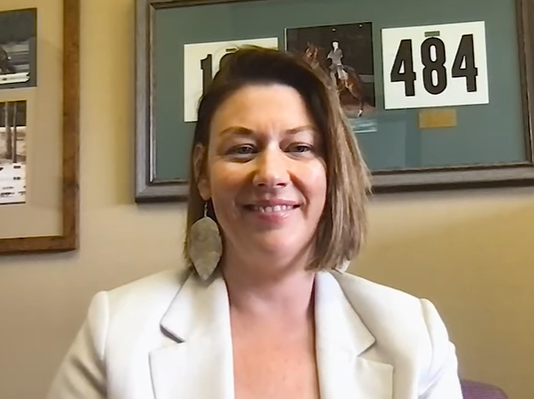
Key Waller is a third-generation American Saddlebred owner, breeder, and rider with deep family roots in the industry through Blythewood Farms in Cleveland, Tennessee. After years of riding Saddlebreds, hunters, and reining horses, Key has returned to the Saddlebred show ring with a renewed perspective on legacy, motherhood, confidence, and the joy of riding.